
Introduction
Due to a change of plan in late 2022, I missed being inside the Arctic Circle for the 2022 Winter Solstice. So I have decided to have another go this year.
In the interval I read Arctic Dreams by Barry Lopez, a brilliant book which makes me think more deeply about, among other things, how radically different life must be when years cycle between 24hr darkness and 24hr light and days and seasons lose meaning; and what this means for mammals that live there year round, and for birds that shape their years following light. There are other things in the book I also want to ponder from an Arctic perspective, mostly about we humans and our changing relationships to all of this.
What I would most like to see are Musk Ox but they were apparently never native to Svalbard, and although introduced, never established themselves, mainly because hunters couldn’t resist hunting them. To see Musk Ox in the wild, I’d have to go to the far north of Greenland or Canada and that really would be a tough adventure, and not something I could now easily justify (or, I suspect, do).
I may never do this again, so to go as far into the Arctic Circle as I can, I plan to Interrail again to Norway, then fly to Svalbard before the Solstice and stay for some time to get a feeling for the darkness. I won’t be hard core and make an igloo, I’ll stay in a hotel.
Sidmouth to London, Wednesday 6th – Saturday 9th December 2023
Leaving Sidmouth is tough. I don’t like making detailed plans in the face of so much that I can’t know and am anyway uncertain about such an extravagent trip, and why I’m going up into the darkness.
Everything nowadays requires justification, particularly when I go on about the environment and the harm we are doing to it, and my justifications don’t convince even me. I’m just lucky to have opportunities. We humans are energy hungry beings, relentlessly thinking, doing and filling our time. But remaining at home through the winter, endless hours in bed without heating and with little sense of purpose, seems even more pointless. I hope this trip reboots my brain somehow, changes my perspective a little.
The closer to actually going, the more things I realise I could and should have been doing around the house (and garden!) over the last months. Some things I feel I cannot just leave undone. I lose myself in cutting back brambles that are overflowing into the council car park behind my house. I clean and fill bird feeders to make things easy for Joan who has offered to look after the sparrows. I take things to the charity shop. I clear the side-passage and tidy the outhouse. I find my Will and leave it on the table. The loppers in the hall are for Mal, by the way, if anything happens to me. And days creep past in a sort of stasis. These moods remind me of cow caesarians at night in unlit barns, time seeming to stand still while hours pass by with me wishing the earth could open up and swallow me (and the poor cow!).

Then I am sort of ready and there is a train strike.
Rob and Morven and Fleury are kind and patient as I keep postponing, but I eventually get to London on Friday evening, go to St Pancras, book a Eurostar ticket to Paris for Saturday because that seems to be the only option, regret it at the bus stop, and return to the kind and forgiving Eurostar man just before he goes home for the night to change it for a Sunday ticket to Brussels.

Saturday in London: I sort myself out a bit more, discard a few things from my over-stuffed bag, write Christmas cards, walk round Hampstead Heath re-aquainting myself with my old Nikon D80 & fisheye lens that I believe is my best chance at Arctic night photos, and we have a thought-provoking conversation over dinner about whether we humans (Fleury ignores us) will merge with machines and get to live on Mars. We also watch an episode of Strictly.


London to Oslo, Sunday 10th – Thursday 14th December 2023
Sunday: Post cards, bus to St Pancreas, 13.01 Eurostar to Brussels 16.06, go to the ever helpful help desk to find out how much further I can get tonight, get the 18.25 Bruxelles-Koeln 20.15 train, and the 20.31 Koeln-Duesseldorf 21.01 train and check into the Hotel Ibis which is within the station. On the last leg a Dutch woman with a backpack larger than my own gets on and sits next to me. She has been away, for months I assume, but no, just for a week, to a conference on Mayan hieroglyphics. Our world views overlap which makes for easy if slightly pessimistic conversation.


Monday: I seem to remember that Duesseldorf is part of Germany’s industrial Rhineside heartland, so after a good hotel breakfast I follow a corridor of parkland to the river. On the way I find a fine old-style department store that sells Leuchtturm1917 diaries, which takes the pressure off my stop in Hamburg railway station. I note everywhere I go, even in Germany, that though better than Moleskine, Leuchtturm are losing out in the commercial race. Perhaps I should apply to be international sales director for Leuchtturm. Clearly their current sales department are not up to much. I’ve always thought I could be good at selling a product I believe in.

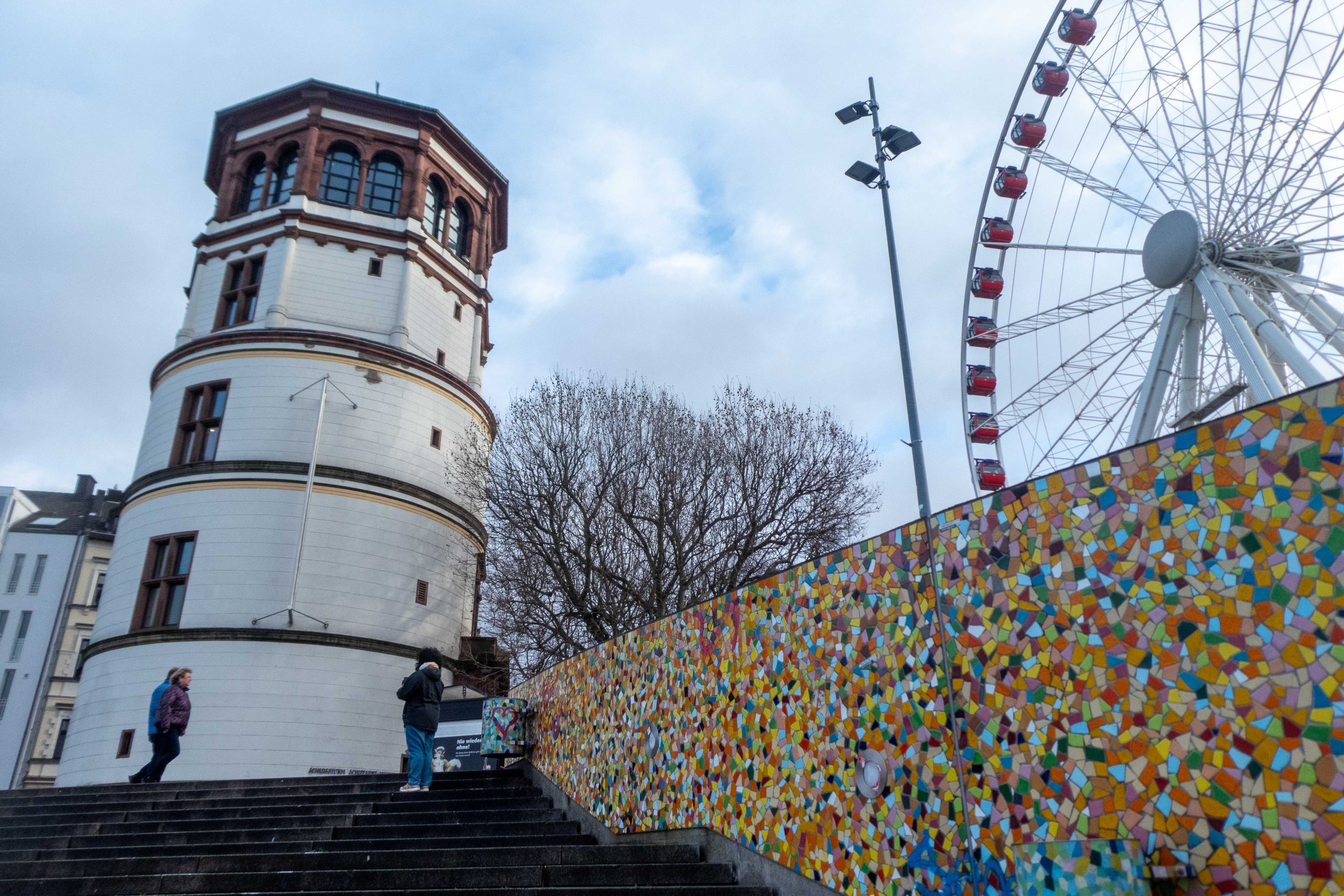
Back at the station the bookings room is busy and I am cutting it fine to get the 12.32 Duesseldorf-Hamburg 15.51 train. I hurry to the platform and jump on the train just as the doors are closing and the train promptly sets off. The wrong train. However a calamity becomes a collective triumph. Everyone rallies round and a young Asian man skilled in Apps discovers the late-running Hamburg train will follow this Essen train to Duisburg, the next stop, before their routes diverge, and tells me which platform to go to. After that things go smoothly. The flat and wintery north German countryside passes, but I am lost in summer in Frenchman’s Creek, a branch of the Helstone River, Cornwall, the setting for the third of four stories by Daphne du Maurier in the great block of a book I’m carrying with me.
At Hamburg’s labyrinthine railway station, just for interest I try to find the shop where in January I’d bought my 2023 diary. But I can’t, and I count my Duesseldorf blessings. However the search passes the time till the 16.55 Hamburg-Koebenhavn 21.36 train which I get on looking forward to the buffet car for a hot chocolate and some hot water to refill my flask.
So imagine my disappointment to discover we are on an ancient train with no facilities that has been gamely drafted in after some last minute hiccup. And imagine my further diappointment when, in a small dark station just across the Danish border, we are halted because of an incident further up the line that takes hours to clear. Eventually I learn that some drinking water bottles have been delivered to the train but by the time I get to them, they are all gone – and I spend the rest of the journey looking rather old-fashionedly at the various groups sitting with clearly unneeded bottles of train drinking water lined up alongside full water bottles they’ve obviously brought onto the train with them.
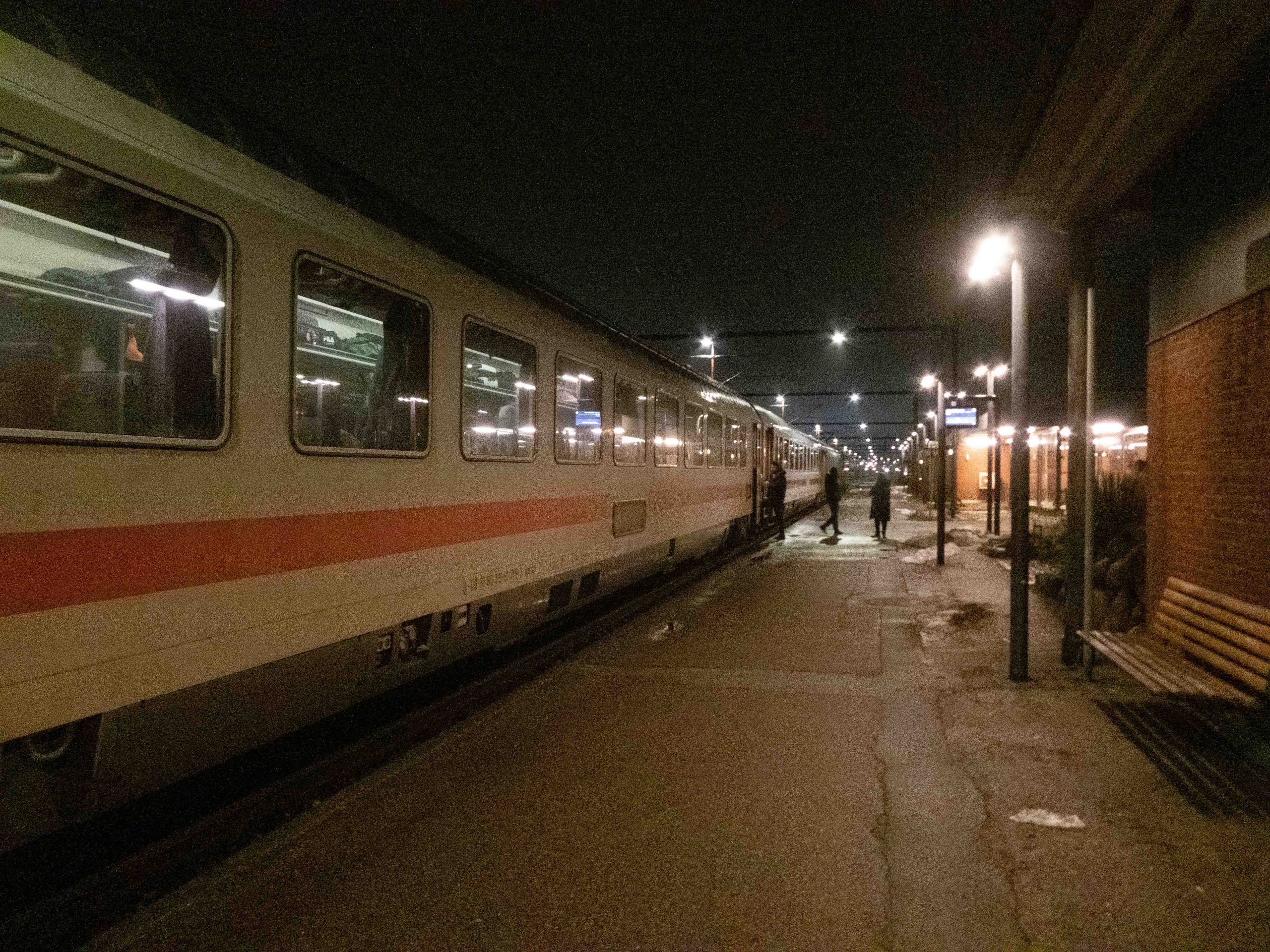
However I am not alone at the scene of the emptied water bottle drop. Two young Indian men have also arrived late to the party. There is a non-functioning thermos sitting there, I find a way into the cold water sploshing inside it, and we manage to share that between us. They are fun company and we meet intermittently over the next couple of hours when I walk up and down the train for exercise and to pass the time. It turns out they are computer data experts from Bangalore specialising in the AI driven analytics that allow big companies to target advertsing at you as a result of your digital history, including your phone conversations – that ‘well I was just chatting to someone about new kitchens and suddenly I am getting Ikea adverts popping up in my You Tube feed’ phenomenon. Well, that’s thanks to them! They get contracted out to big companies across Europe and the US for months and sometimes years and have a good time and get well paid while doing it. They are currently contracted to Ikea in Malmo and are returning there after a weekend partying in Hamburg. I tell them, Sue, about your Ikea kitchen experience. I ask them how they could use their skills to push environment-positive behavioural change and they admit concern and agree to think about it … but at some point in the future.
Eventually the train gets going and a kind guard helps me phone a hotel in Koebenhavn to book in, and check they’ll be open at 01.30 when we finally arrive.
Tuesday: A good hotel breakfast and chat to another solo traveller, a young Israeli man who is having trouble with an ingenious cheese slicer. He is pro-peace and is flying around Europe for two weeks to get away from the hell that is currently Israel/Palestine. I tell him about Interrail for future escapes.
Then it is back to the station for the 11.30 Koebenhavn-Goteborg 15.20 and 16.08 Goteborg-Oslo 19.46 trains. Today everything goes smoothly. I finish ‘Frenchman’s Creek’ and munch my way through more dried fruit and nuts. For the first time in my life, I have discovered that nuts are utterly delicious! Oslo is colder and more wintery. I stop at the Seven Eleven store where I thought I bought stamps last time. I am wrong about that but the friendly man there turns out to be from Narvik up near Tromso, so I pick his brains for travel after Svalbard. Then it is a short walk to City Box travellers hotel and I am soon checked in and ready for bed.
Wednesday: Today I actually have to make plans about Svalbard. After a good buffet breakfast in a cafe with a back door into City Box that gives guests a discount, I go to the Oslo tourist office. As well as getting useful tourist information, including how to get to the airport, the young woman sells me stamps, recommmends that I read ‘Capitalist Realism’ by Mark Fisher (which I will do when I get home – I wikipedia him, the book sounds good, but his story is sad), and tells me the story behind the super-size bronze tiger that sits outside Oslo station.
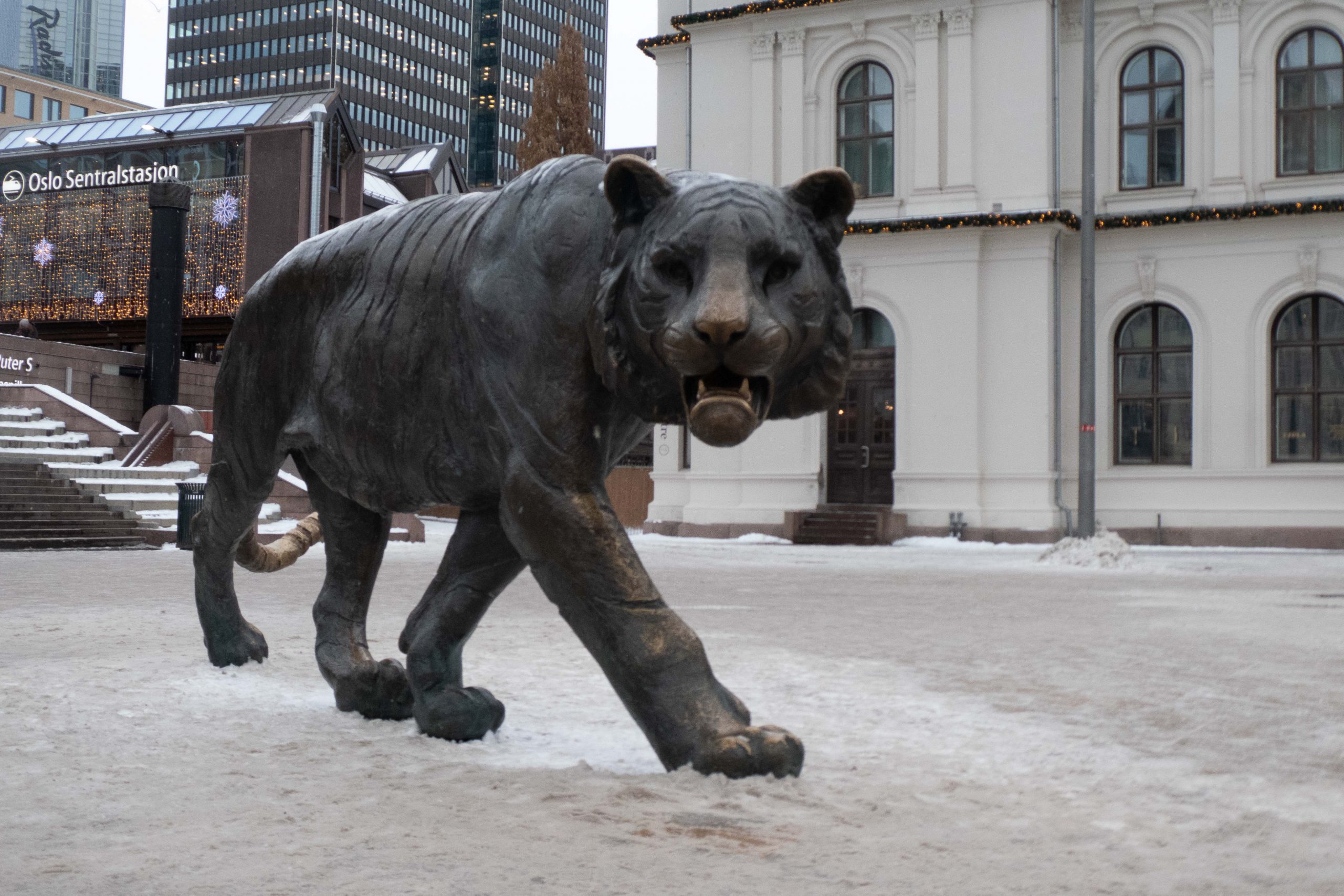
The tiger as a symbol of Oslo comes from a poem by Bjørnstjerne Bjørnson (one of the big figures in shaping Norway’s emerging national identity in the 1800s and a friend of Edvard Grieg), one verse of which goes:
“I heard once of a Spanish feast:
Within the ring a rustic beast,
A horse, to fight was fated;
In came a tiger from his cage,
Who walked about, his foe to gauge,
And crouching down, then waited.”
Bjørnstjerne Bjørnson: Sidste Sang (the Last Song)
It seems Bjørnstjerne Bjørnson identified with the horse – a symbol of solid country strength, who in the full poem (to be found with a bit of searching within this collection of his poems https://www.gutenberg.org/cache/epub/6619/pg6619-images.html ) bests the tiger – a symbol of voracious city culture. I wonder if the idea of tiger economies comes from this poem, or was an older term. I’ve been assuming it is very new.
I spend the afternoon going through Svalbard flight and hotel possibilities. It seems Christmas and New Year are going to be a challenge whether I stay in Svalbard or drop south to Tromso area, so I book a flight to Svalbard on Friday 15th December and a hotel there till 27th December. I will work out what to do next when I’m there.
I go for a wander in the evening for exercise. I find an excellent bookshop. I have decided to give up on Daphne – Jamaice Inn, Rebecca, and Frenchman’s Creek were good, but My Cousin Rachel sounds less so, so I’ll give her a miss and leave the book at the hotel for someone else to read – and buy three new-to-me modern classics: ‘The Man in the High Castle’ by Philip K Dick, ‘Last Comes the Raven’ by Italo Calvino, and ‘The Heart is a Lonely Hunter’ by Carson McCullers (the title alone worth the price of the book!) and I find I am more excited about reading than I have been for ages. I pass a pub blaring good music and go in for a beer. The band are talented 17 and 18 yr olds from the local Arts High School.


Thursday: Today I have been writing this! I did go back to the Tourist information place to buy a train ticket, and chatted to the young woman again. I aslo have a wander round in the early evening and contemplate going to Ofenbach’s Ophelia (I think) at the Opera House and would have if I wasn’t leaving early in the morning.
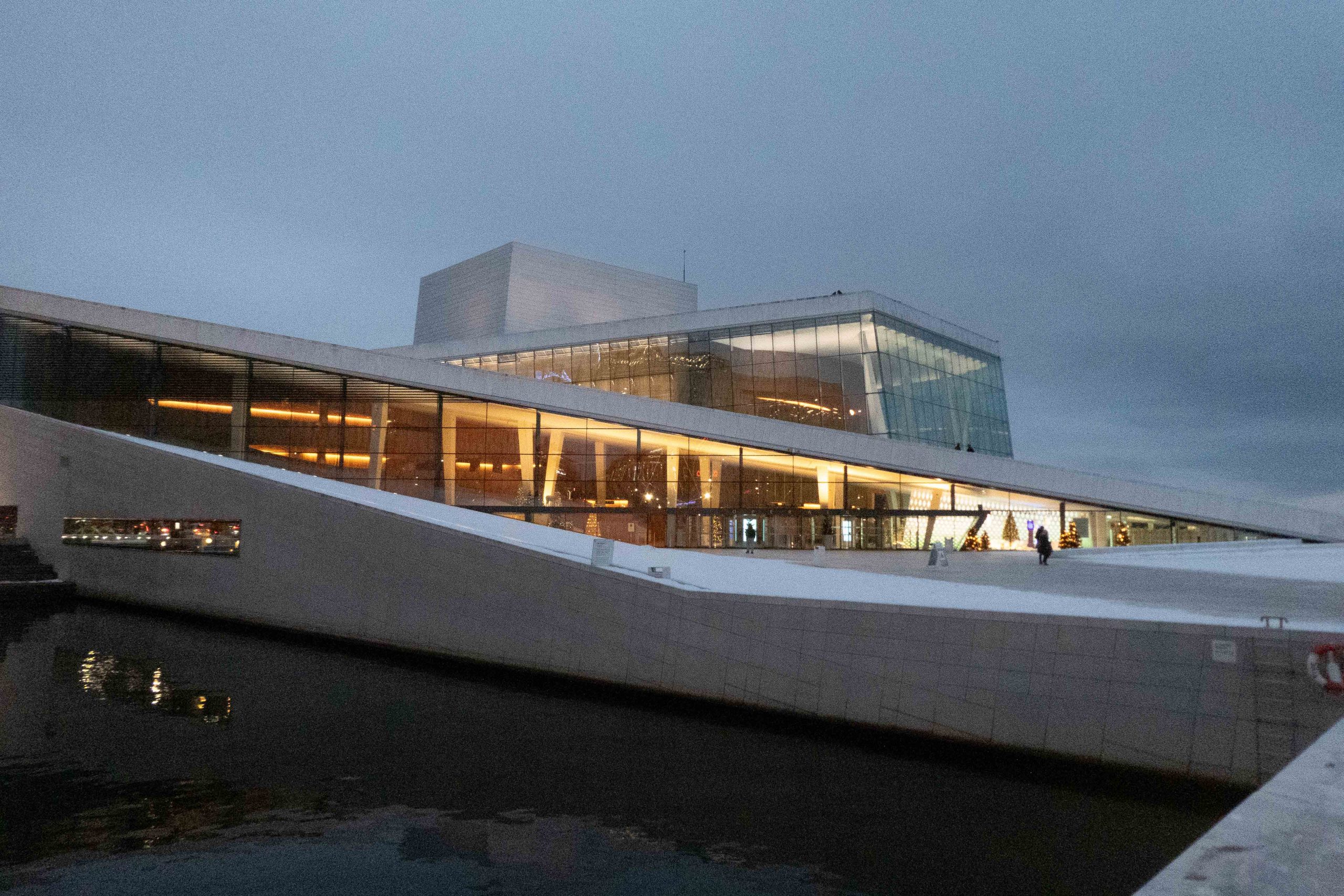


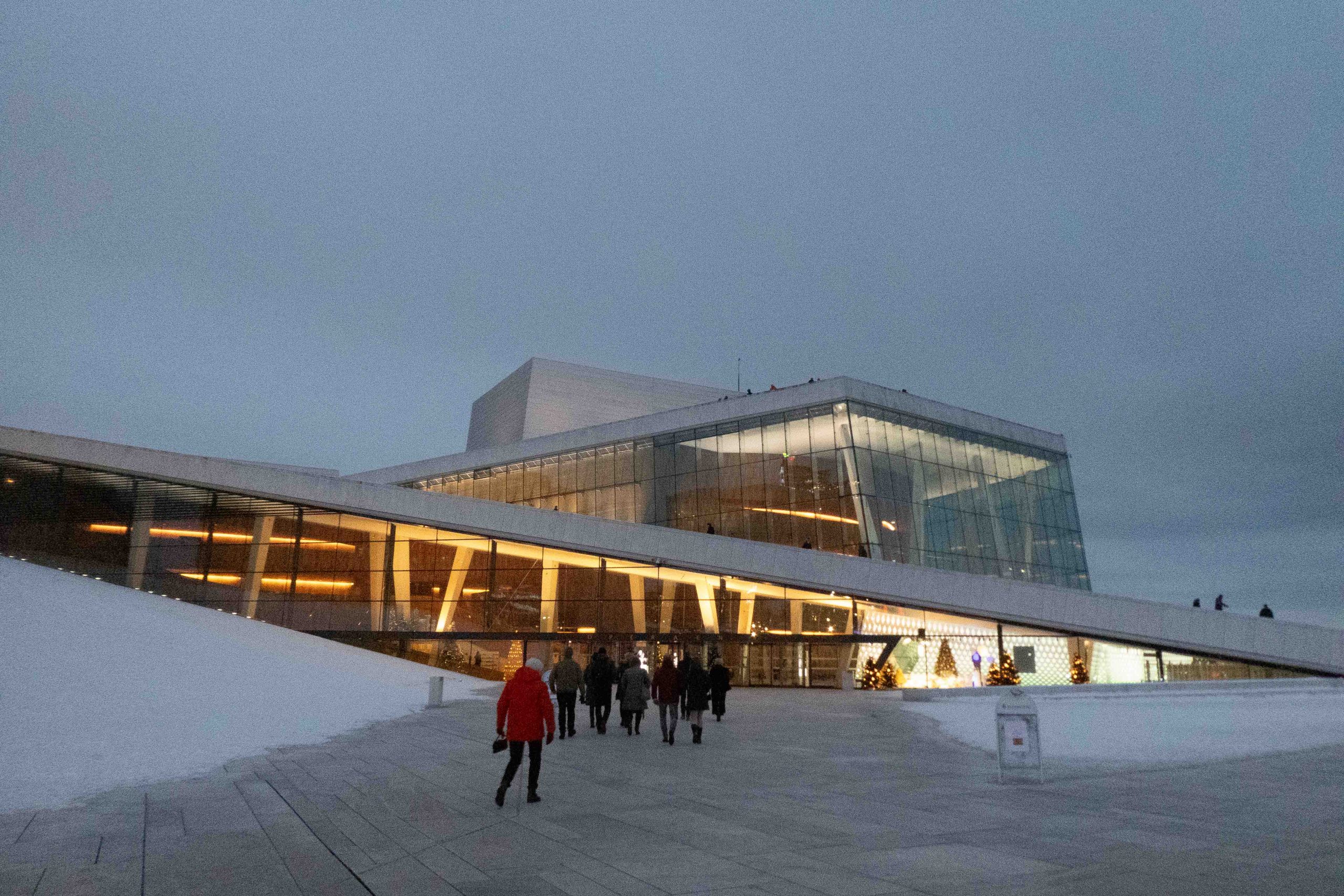
Next entry should be from Longyearbyen, Svalbard ….
A company logo spotted from a train in Sweden sums up my assumptions about the Arctic regions I am headed for, their precarious state and precarious state of Polar Bears.

Lessons about airports: Friday 15th December 2023 (part 1)
Everything you are about to read is my own fault.
It is some years since I have been to an airport. I have been led to believe that Oslo airport is highly automated and this slightly concerns me. But I believe I have sorted everything on-line, adding a piece of hold baggage to my basic ticket. Despite having to make an early start and an unusual encounter in the hotel lobby with two musicians who look like they snuck in through the elecric doors when they opened for someone else and camped there overnight surrounded by all their instruments and bric-a-brac, and who when I tried to help one get a cup of free coffee from the guest kitchen starts telling me about how rich people in the Cayman Islands eat babies and drink their blood and they get away with it because they own the islands and can do what they like, and you can tell who has been drinking the blood of babies because their teeth have holes in them and sharks find them repulsive to eat (and so it goes on until I manage to lead him gently back to his friend), I still manage to arrive at the airport 90 minutes before the flight believing I have plenty of time. I have checked-in in advance and a boarding pass has pinged into my phone while I am on the local train which I am using instead of the airport express on the good advice of the woman in Oslo tourism.
Expecting quite a small quiet airport, I am surprised on arrival to find it so big and busy. With no-one to ask for advice or guidance, I head to security and wait nearly 15 minutes to get to the x-ray machines before it dawns on me that I am the only person around me towing a big bag so, as the security man confirms, I need to fight my way back through the crowd, hurry to the other end of the airport concourse to find the Norwegian Airlines baggage check-in desk. That bit is straightforward so I return to security for another 10 minute wait in the queue (the morning rush is reducing). I am feeling ok. I still have plenty of time. The security woman singles out my rucksac for a detailed dismantling. And finds my Swiss army knife with a blade nearly 0.5cm longer than permitted. I argue they should measure the actual blade, not from the hinge, but they refute this with the help of graphic stabbing gestures. I am torn. I used this knife to operate on my little finger just 24 hours ago, relieving an excess of pressure around the nail, and some follow up work may be needed before I make a full recovery. I ask what options I have and am told I could put the knife back in my rucksac, return to baggage check-in, and pay probably more than the value of the knife to check my rucksac into hold; or I can give the knife to them and they will destroy it. I ask can they not give it to a charity shop, or to a boy scout, or to a local youth club? I am told no, they have to destroy it. Can they put it into metal recycling? No. My brain cannot accept the waste of such a high-quality fully functional tool. So back I go to baggage and there I meet my first act of kindness. The woman in the Norwegian help kiosk recognises my urgency, agrees to put my rucksac into hold with no charge, and seeing a queue at the baggage check-in desks, handles it all herself. Back I go to security. The early morning rush has died down even further and it is now only about a five minute wait till I get to the front of the security queue for a third time, and pass through the security scanner for the second time. This time I am not held back. Like a race horse out of a starting gate, I bolt for the departure hall, but pull up startled when I emerge into a huge, confusing market place. I see an information board, look up and see 09.20 Longyearbyen Gate G17 ‘Boarding now’. EFG gates seem to be signposted in two directions, so I bisect the angle and cut through some shops at a canter hoping for the best. Emerging into some clear space, I see in the distance where the EFG corridor leads out of this tawdry emporium. I change up a gear. My legs haven’t run like this in years. I am feeling good. It doesn’t last. My right leg is tightening and my left calf is sending pain signals. Confusingly I find a passport check in my way, am stamped out of the Schengen zone, pass through an opaque floor to ceiling sliding glass barrier, and am off again more slowly towards G17. Approaching the gate, it is a huge relief to see passengers still sitting there, as I hand my boarding card to the man at the door. He looks at it, looks at me, and says, but this is the SAS flight and you are flying Norwegian. Norwegian is leaving from A21.
Now let us pause for a moment and consider the chances of two planes flying from Oslo to Longyearbyen at exactly the same time on the same day from the same airport. The only difference is that they fly from different gates. And unfortunately for me, those gates are at opposite ends of the airport. And they are departing in 15 minutes. I am thinking this is a lost cause. And then I hit the Schengen passport barrier. I bang on those sliding glass doors, I bang on anything I can find to bang on, but from my side it seems like everyone on the other side must have gone home. Until unexpectedly two passengers emerge from a door further down the passageway, and I am through it in a jiffy. To the surprise of the two women stamping the passports. Imagine that happening at Heathrow! Anyway, they are remarkably calm and helpful, scrutinise my passport while I explain my predicament, hand it back to me and let me go. Back I head back through the shopping area, my legs can barely manage a limping trot, and I am sweating, swearing, and my breath is a rasping wheeze. Then I feel my left calf go, and I am down to just a limp. A21 seems to have disappeared off the signs like the half floor in that Mariakami novel and I finally find an official to ask. He explains that because my flight stops at Tromso, it is a domestic flight and I have to go to domestic departures, which will mean retracing my steps till I see the sign for baggage retrieval, drop down into the baggage hall, cross it, take the exit on the far side, go right and ascend a level. Once in domestic departures I will have to go through security again. I want to give up in despair, but what choice do I have? The thought of being stuck in Oslo airport while my roll on bag is on its way to Longyearbyen and my rucksac disappears to who knows where is too awful (as first world problems go). So I set off again on this seemingly never-ending obstacle race. Half way across the baggage hall I see a Norwegian functionary and I ask if it is possible to let my flight know that I am on my way (even though it should probably have closed its doors and be taxiing to the runway by now). He merely looks bewildered. I push on. I have been increasingly aware throughout this ordeal that I must seem a very strange sight, an old man running with a nasty limp around the airport making rasping noises and looking upset. So this time, my fourth time at security, everyone in the queue very kindly lets me push though to the front, the security people find no reason to detain me, and away I go again. And there is Gate A21, and there is still a man at the desk, and he lets me through, and I am on the plane. Which for some reason no one explains, leaves about 20 minutes late.
Ignoring that I am going to arrive in Svalbard barely able to walk after having felt, up to this morning, in better shape than I have in several years, I feel remarkably happy as I sit by a window looking out at the snowy landscape below and a sun that gets lower and lower in the sky. We land in Tromso and all have to get off the plane to go through the Schengen stuff again which is confusing but turns out ok as we troupe back on to the plane, and take off into the last trace of sun I’ll be seeing for a while. Night falls at about 13.00hrs and we land at Longyearbyen at 13.35.

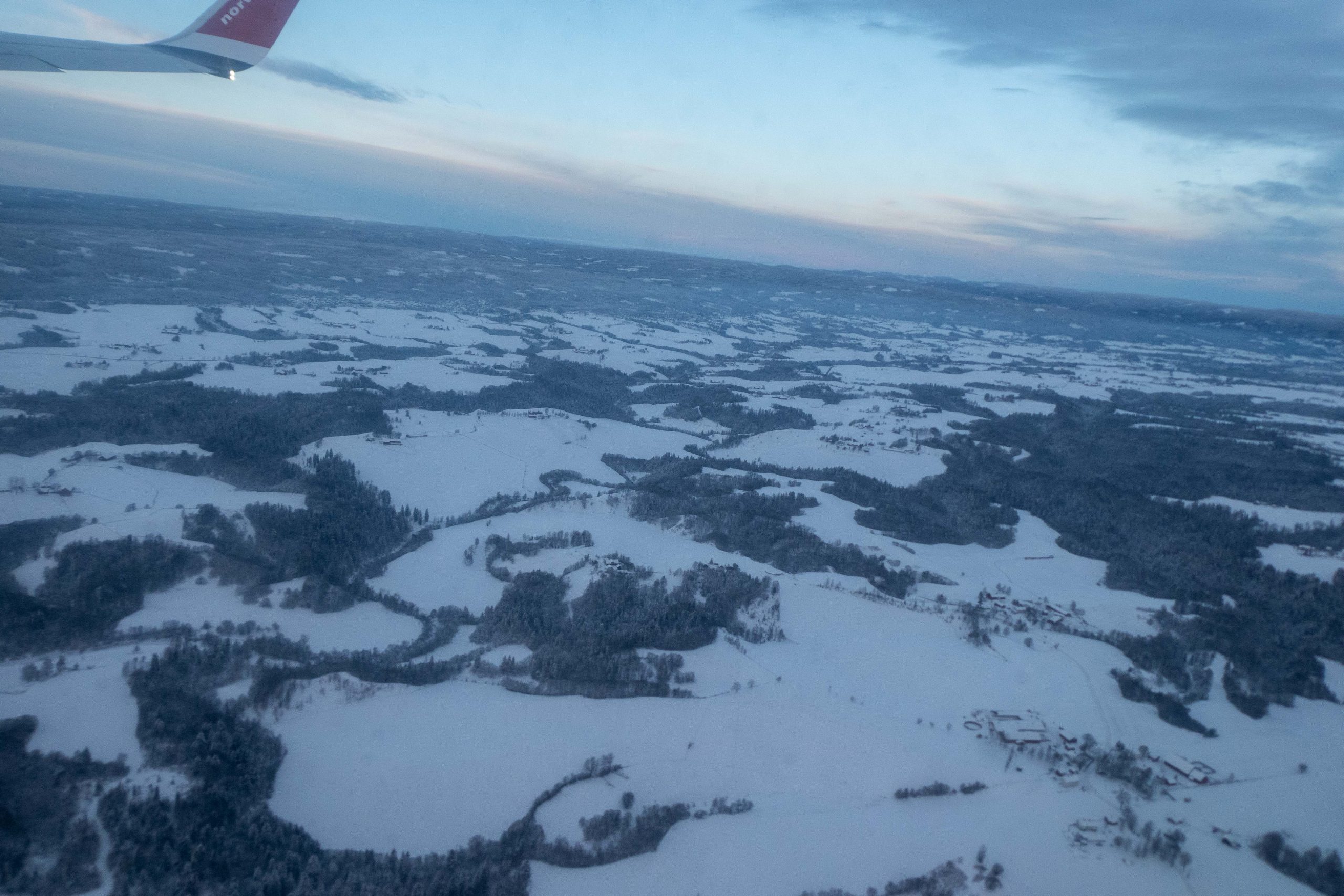
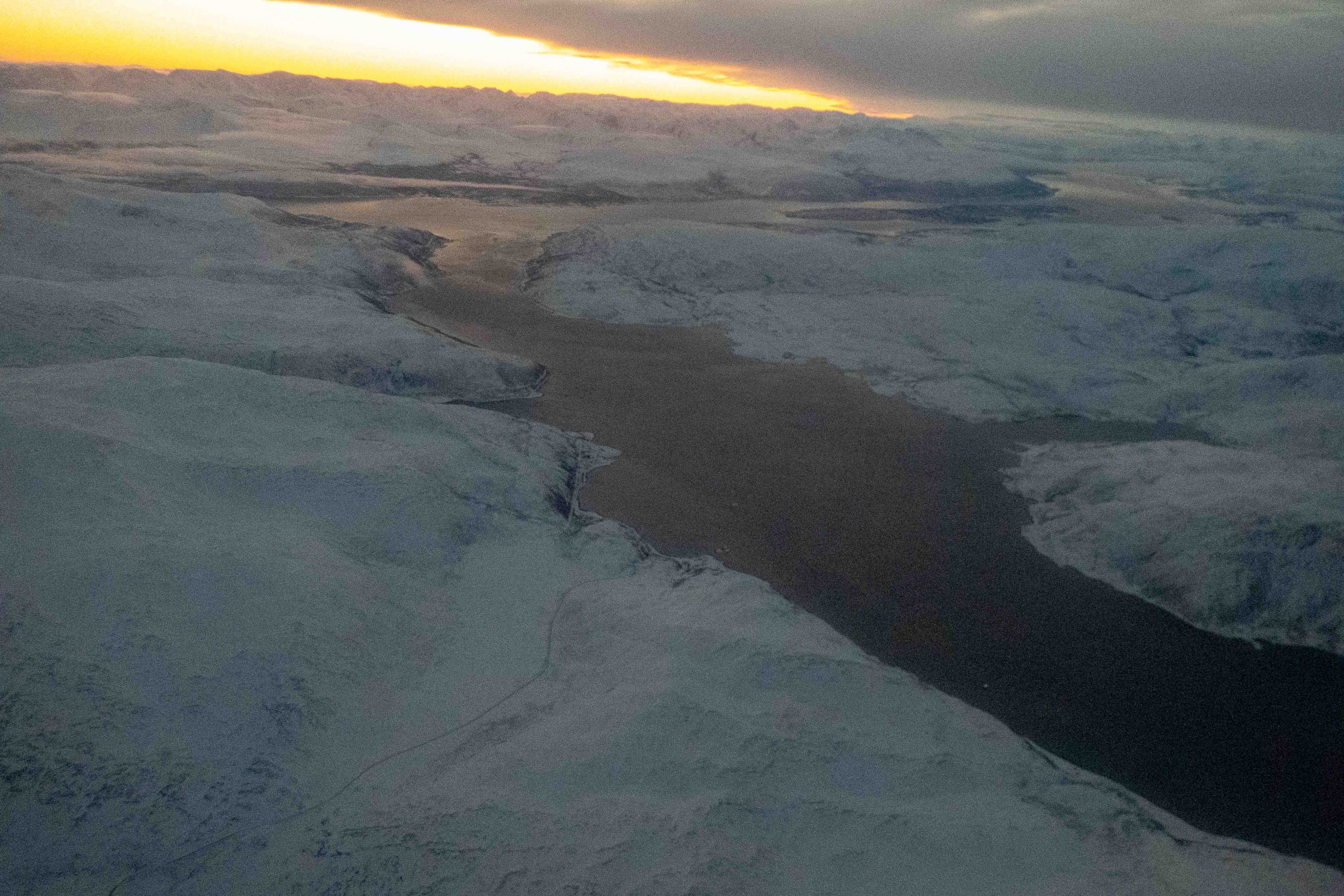


Welcome to Svalbard: Friday 15th December 2023 (part 2)
We disembark, I hobble to the arrival hall and to my amazement my rucksac is one of the first things to appear on the baggage retrieval carousel, quickly followed by my roll along bag. Then onto the airport bus and a drive into town with glimpses of sea alongside the road in the darkness and to the hotel.
After sorting out my room I head out determined not to be disheartened by my changed locomotary circumstances. I limp slowly down Longyearbyen’s pedestrian main drag, stopping for a hot chocolate in a cafe, before walking up a residential road leading up hill to a water tank and the remains of an old coal lift which sit just beyond the town lights but just inside the Polar Bear safe zone.
Wisps of cloud drift across in a starry sky far clearer than the forecast had suggested. With the town to my left, below me Adventfjorden leads into Adventdalen. From the ridge the other side of the valley emerge plumes of twisting light that wrap around each other before trailing off across the sky – an aurora to welcome me to Svalbard!
Longyearbyen: Saturday-Sunday 16-17th December 2023
After breakfast, I play with my camera. I need to be ready to use it outside with freezing hands when the need arises.


Then a day exploring the town.
Longyearbyen, at 78 degrees north, is apparently the northernmost town in the world. It occupies the narrow Longyearelva valley which drops into the top end of Adventfjorden, a tiny crinkle in Svalbard’s complex topography (see map below). Nybyen at the upper end has few buildings, the town becoming gradually more populated from the school half way down at Haugen as the valley fans out slowly towards the sea. Top to bottom is nearly 3 kms. Strict building controls are intended to keep building density low and there is plenty of space for reindeer to wander through, and even a (very) occasional polar bear which has chosen not to respect the polar bear free demarcation line.

I go first to Visit Svalbard, the tourist information centre located conveniently next to Hotel Svalbard Polfareren where I am staying. The woman in charge, who seems to be inducting a new assistant (European and born here, probably quite an unusual demographic), shows me round their brilliant website. I enter my visit dates (up to 31st December, because I’m now fairly sure I’m extending past the new year) and 38 possible activities pop up, together with a filter of activity types. A lot involve going out of town to get better views of the aurora by dog sleigh, snowscooter, minibus, or on foot, often combined with other activities such as visits to glacier caves and old mines, or food and drink. It is a good way to get a sense of what is around.
Then I wander slowly down through the town, happily surprised when a reindeer wanders across my path. The reindeer on Svalbard are all wild and this one (and the ones in the photos) seem smaller (and cuter) than the herded reindeer I have seen in north Norway though as those have been in tourist towns, they may not be representative of true Sami pastoralist reindeer. [I learn later they are a distinct more compact sub-species thought to have originated with a small group that floated across on some ice from Norway or Greenland around 5,000 yrs ago.]
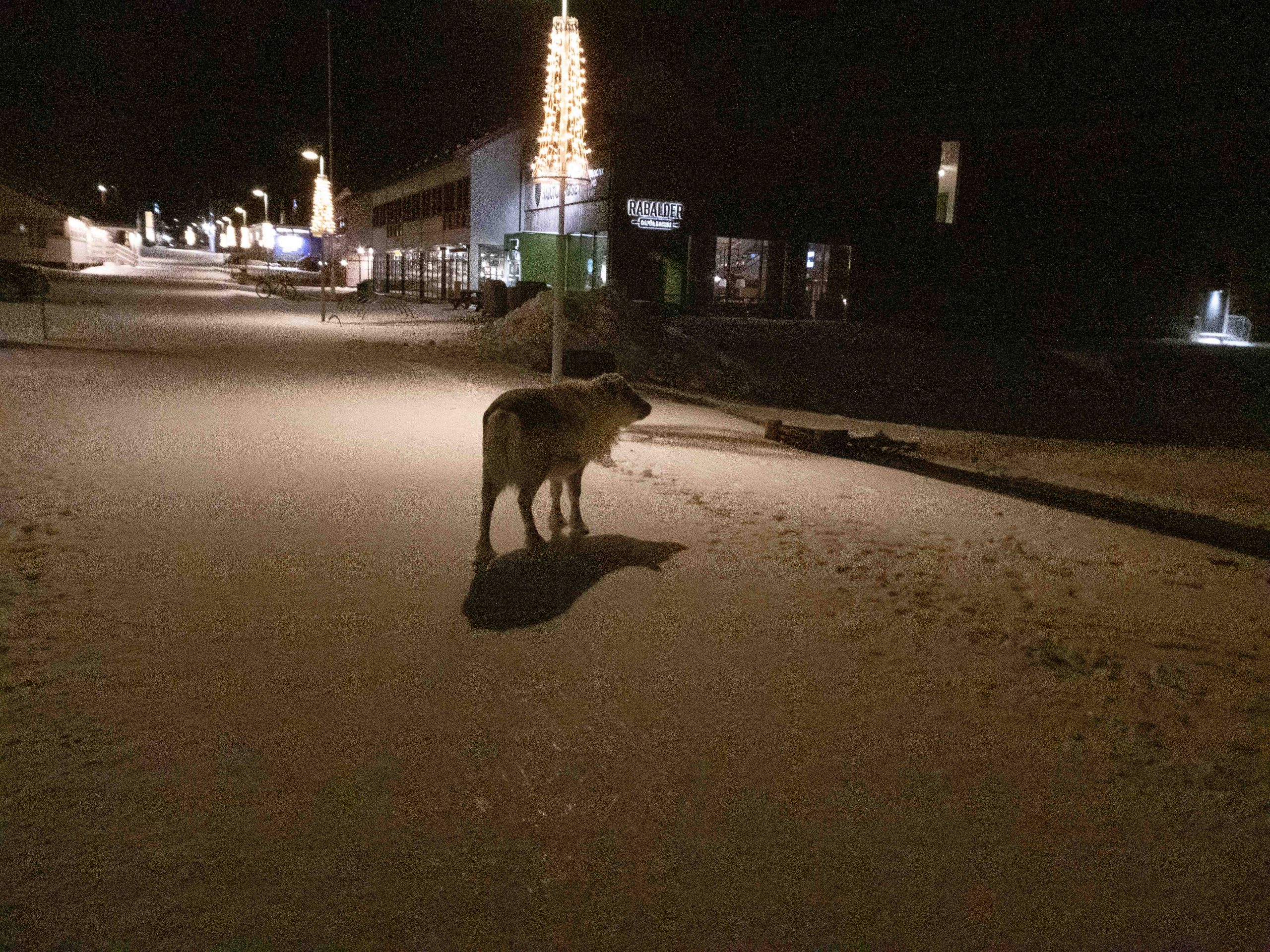

Cafe time is time for Huskies cafe, the second of the two proper cafes in town. Huskies, as the name suggests, has Huskies hanging out in it, either belonging to the owners, or sometimes apparently as a sort of doggy day care.
Huskies seems a good place to ask about huskies. Apparently there are about five main dog sleigh companies (all for tourists nowadays) and all apparently treat their dogs well, though it is perhaps easier for the smaller ones (30-40 dogs) to know their dogs individually than for the larger ones (300 dogs). Retired huskies hang out at the husky camps after they retire, unless they are bought or adopted as companions by town folk. I intend going on a husky sleigh trip to learn more. I can quite believe the dogs, as long as they are well looked after, love their work.
I spend a long time chatting to one of the two owners of Huskies. She is from Glasgow and like a lot of people here, came here for a visit and decided to stay. I can see the attraction. She finds the permanent darkness restful, taking away any pressure to make use of the daylight as the days get shorter lower down the latitudes. The summers, she finds, are more exhausting. She and her business partner do all they can to be squeakily green, but sustainability awareness in Svalbard is apparently mixed. Svalbard has a population of 2,400 from 54 nationalities and a fairly high turn over of inhabitants. Apparently anyone from a country that is signatory to the Svalbard Treaty can stay in Svalbard without a visa. Not everyone here comes for the pristine environment, there are other attractions such as peace, security and higher wages than some countries. However the complex demographics make it difficult to get the local population behind a drive to become plastic free, for example. Huskies, like Fruene the other cafe, is also a shop and they have two books on how Svalbard is being affected by climate and other demographic change – one by a local journalist, the other by an Anthropology student who did her thesis here over a few years. I am bound to end up buying at least one of them. I can see myself hanging out in Huskies.
I feel I haven’t done enough exploring so instead of just going back to the hotel, I walk up to Nybyen at the top of the valley. As well as just to get outside and get some dark sky, I am going to check out a couple of guesthouses, one at Nybyen, the other at Haugen, which I am considering moving to when this booking runs out. I get a tour of Gjestehuset 102 in Nybyen and end up having a great and wide ranging conversation with a few guests, all like me male solo travellers. Two Austrians seem particularly intrepid – one has rented a gun and goes wandering off by himself beyond the polar bear demarcation line. The other, when I mention my desire one day to see Musk Ox, tells me how he nearly bumped into one on a walk in the National Park south of Trondheim in Norway which has a herd of introduced Musk Ox. They were both walking along the same narrow track, he one way, the Musk Ox the other, and they met at a tight blind bend. He just had time to jump aside as the Musk Ox stopped, looked, then put its head down and charged thunderously past – vicariously exciting but apparently terrifying in real life! He has given me all the details of trains and mountain cabins to get to the area, but that would be something for a summer visit.
I return down the valley with zephyrs of wind and whipped up snow howling around me, but I am well wrapped up and it is delightful. Just as I am getting back to the hotel, my plucky left leg tells me it has had enough for the day!
Back at the hotel, I finally sit and write about Oslo airport till 01.30. Today, Sunday, has been a rest day, reading Philip K Dick’s ‘The Man in the High Castle’. It’s been a week since I left London, and what a full week it seems to have been!
Enjoy Longyearbyen, Svalbard vicariously through these websites (all should open in new tabs):
Accurate, zoomable interactive map of Svalbard produced by the Norwegian Polar Institute: https://toposvalbard.npolar.no/
A 360º panorama across Longyearbyen updated every 15 mins -LNS SPITSBERGEN AS – BOREALIS 360º: https://lns-spitsbergen.kystnor.no/
Longyearbyen weather forecast: https://www.yr.no/nb/v%C3%A6rvarsel/daglig-tabell/1-2759929/Norge/Svalbard/Svalbard/Longyearbyen
UNIS: A view of the sky above Longyearbyen right now with a Sony A7 all sky colour camera: http://kho.unis.no/data/SonyA7s.html?fb
UNIS: Aurora forecast for Longyearbyen and other places in Svalbard, elsewhere in Norway, and over the rest of the world: http://kho.unis.no/AuroraForecast.html
Governor of Svalbard website: https://www.sysselmesteren.no/en/
The next blog entry will be delayed
Now I am here, I am trying to get my head around the place …
The only bird I think I am likely to see here is the Svalbard Rock Ptarmigan, which sounds a plucky characterful bird, so I am actively looking. The only other birds which reliably stay in the area are some sea birds including Eider (Common and King) and Long-tailed Ducks (among my favourite birds) but I assume they are likely to be out to sea and unless the full moon helps me, even with my new binoculars I am unlikely to be able to see any – Svalbard has a lot of sea (much of which should be ice by now but isn’t).
The librarian has kindly given me a temporary library card that will allow me to use the library even over Christmas and New Year. Two books I plan to read here are:
‘My World is Melting – living with climate change in Svalbard’ by Line Nagell Ylvisaker [now read!]
I need to find the title of the other one – an anthropological study of the Longyearbyen community: [‘The Paradox of Svalbard: Climate Change and Globalisation in the Arctic’ by Zdenka Sokolickova – now bought!]
Some Solstice Aurora photos from Longyearbyen
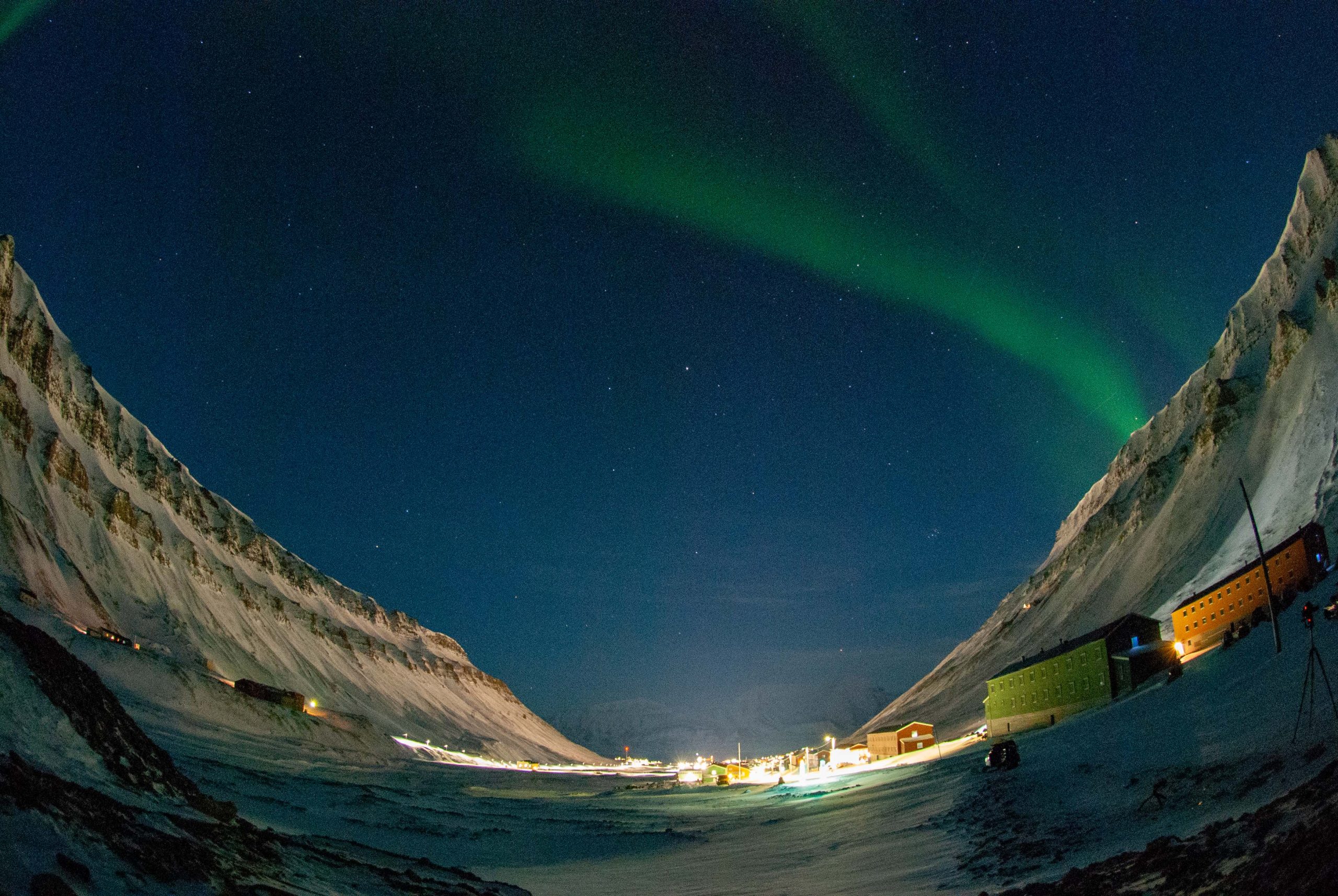
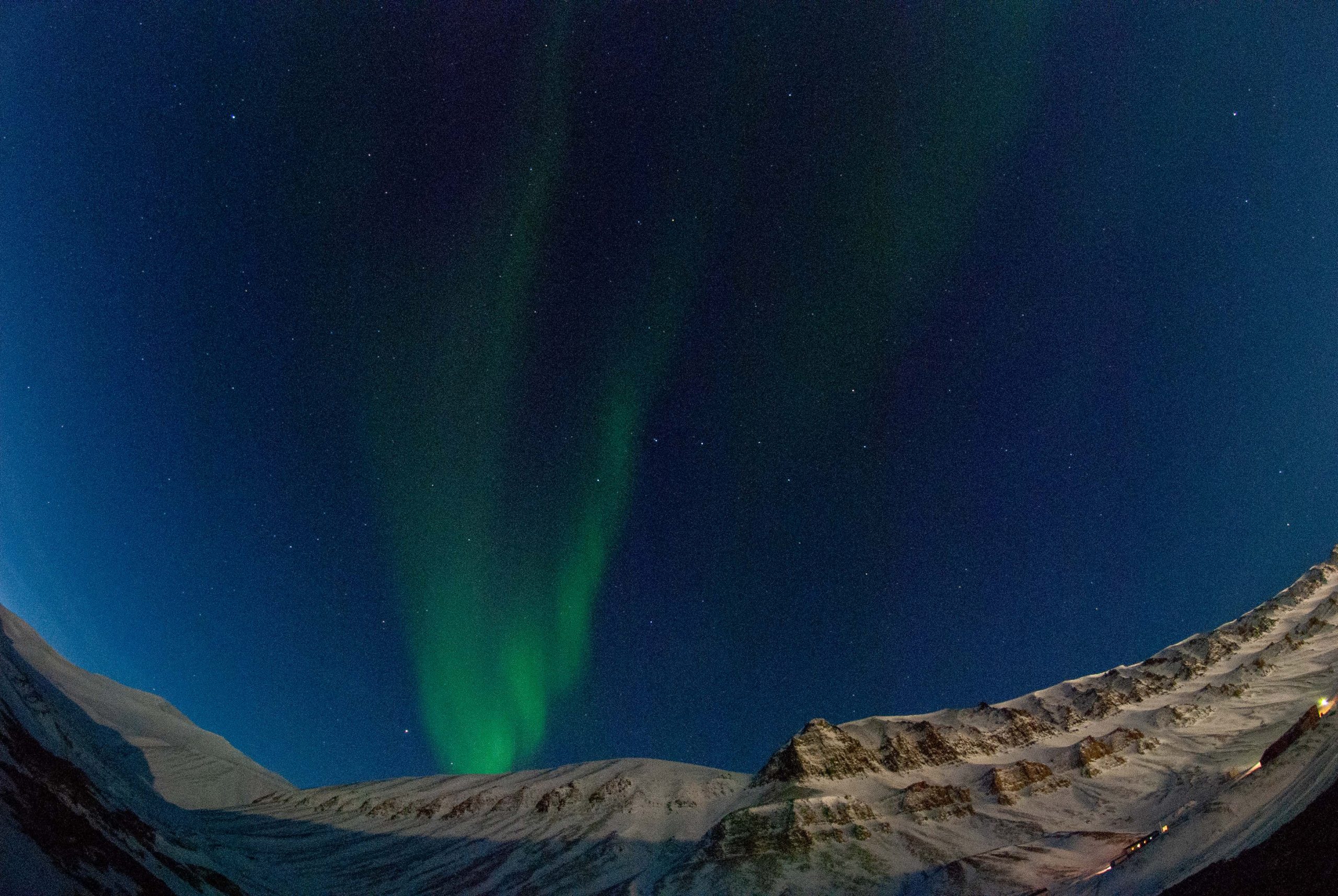
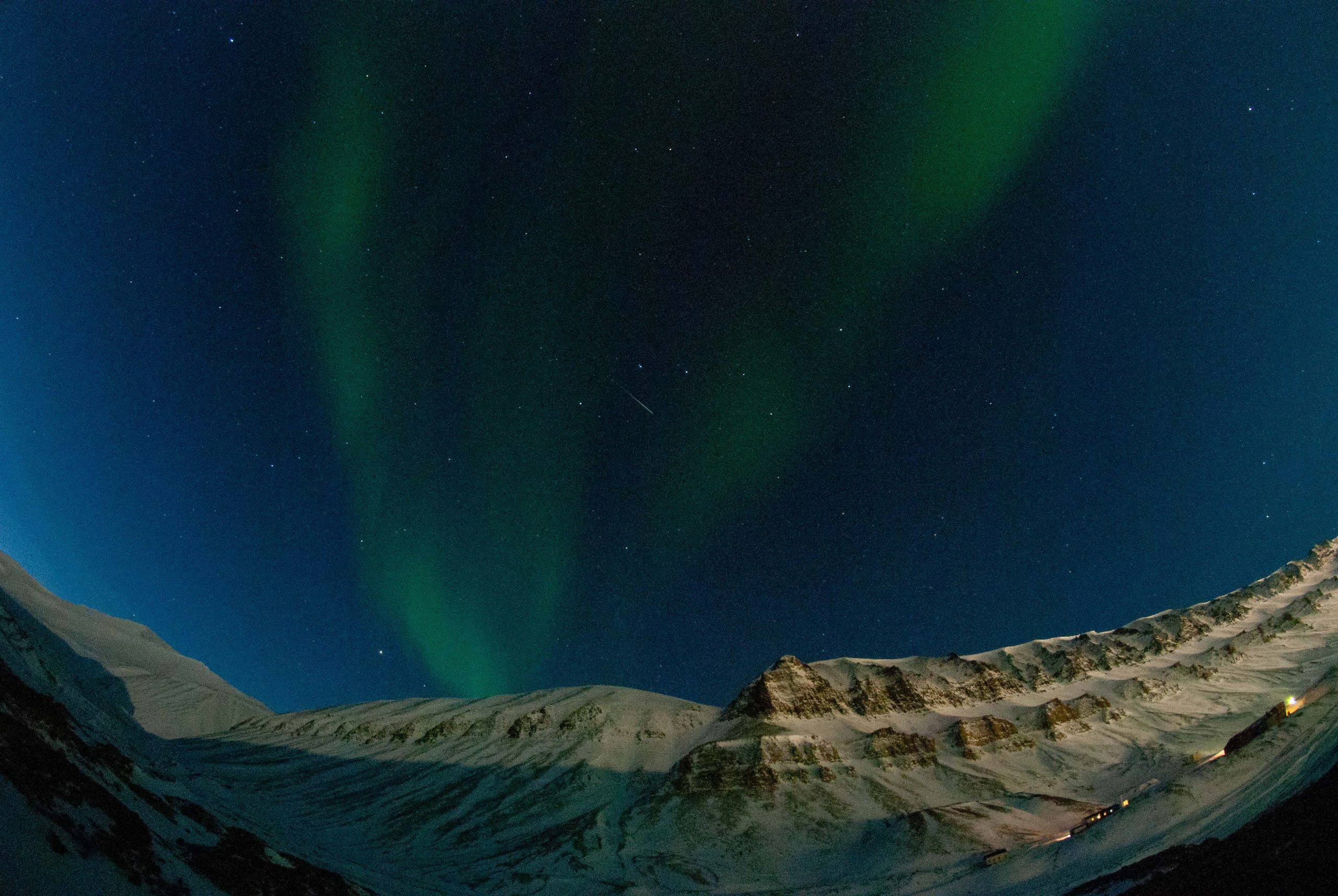

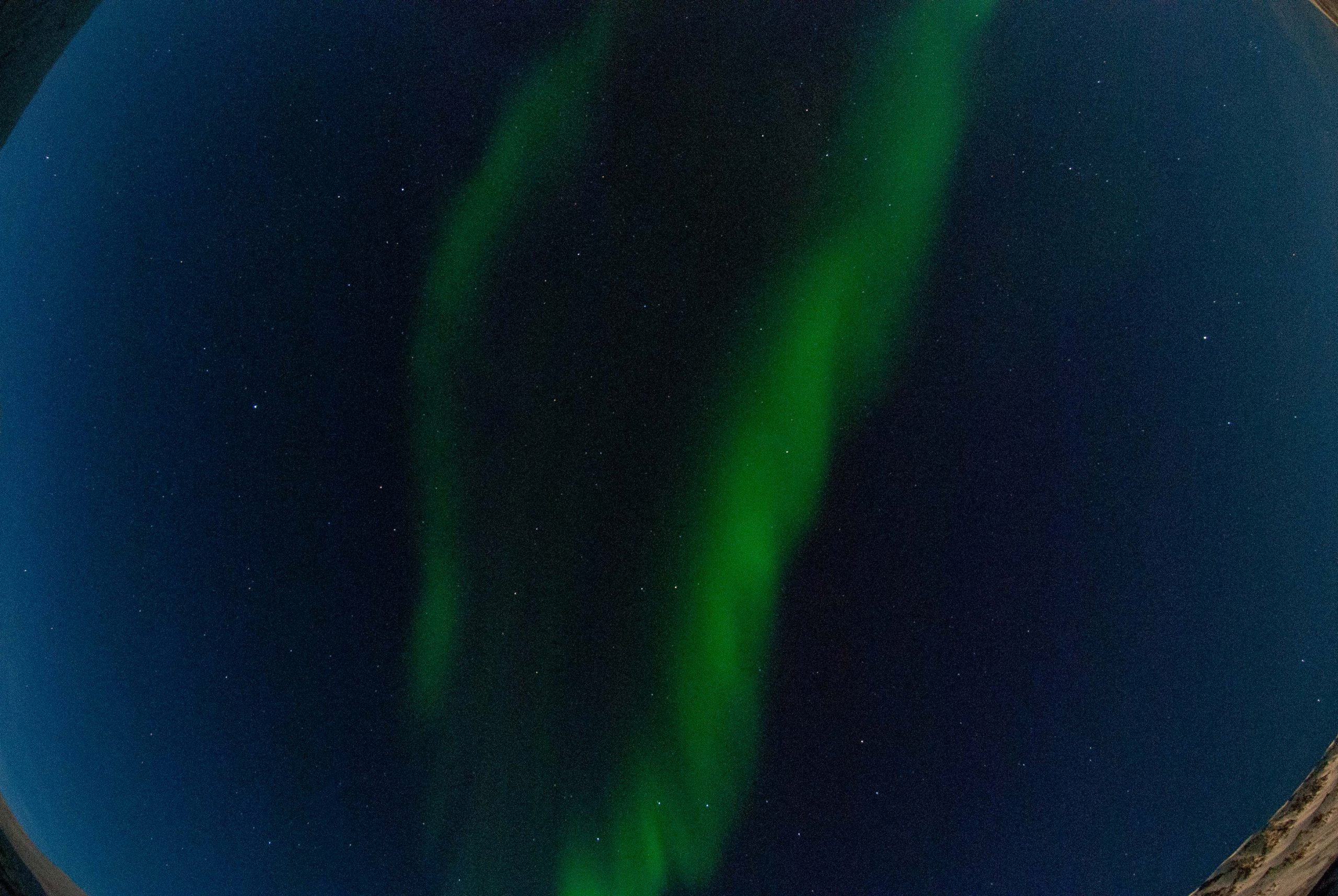
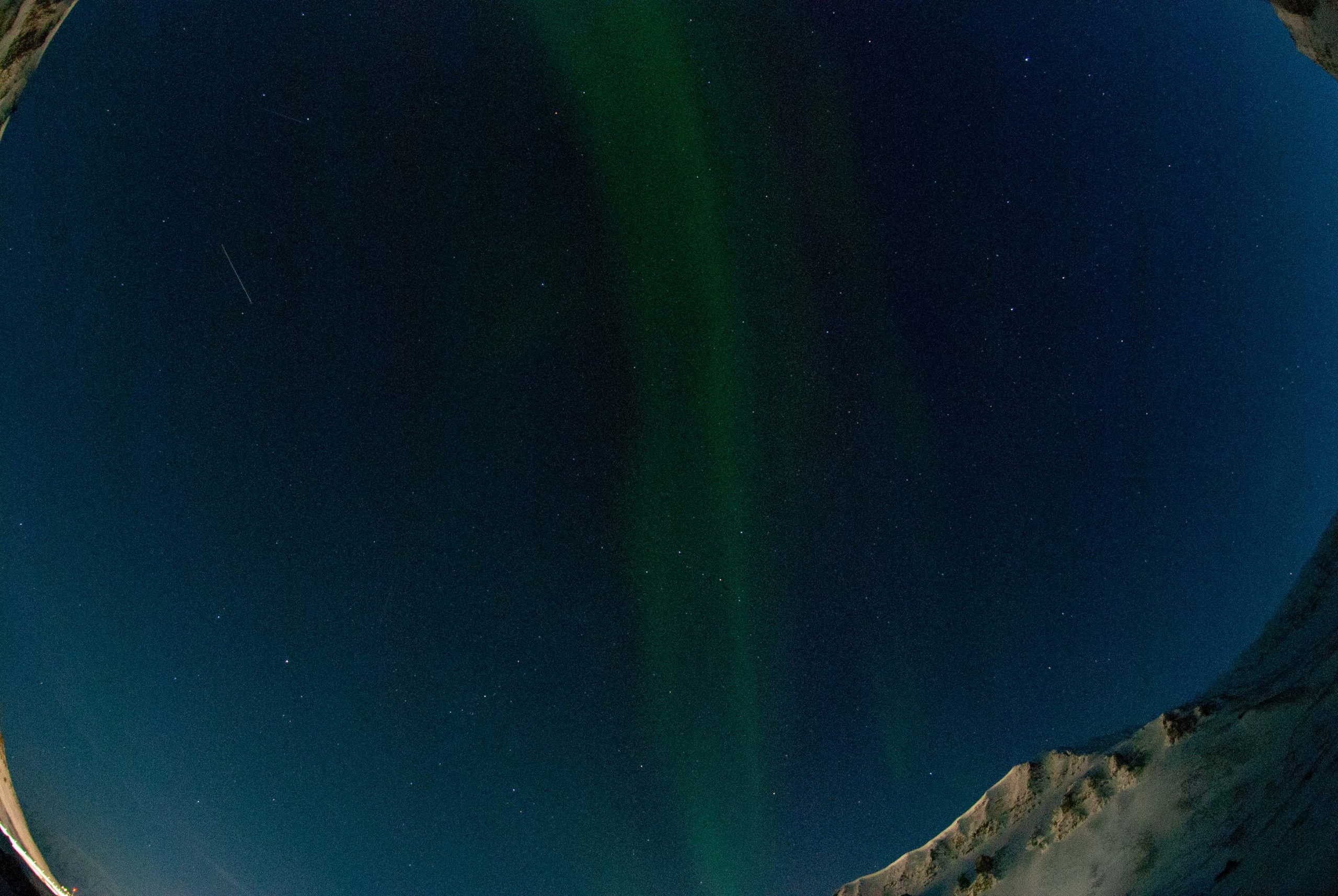


Monday 18th – Sunday 24th December 2023, Christmas Eve
Monday 18th December:
Have a great chat over breakfast with a research scientist who is flying this morning up to Ny Alesund, the original take off point for Arctic exploration, literally for balloons and aeroplanes, and now the main research base for Polar science, with lots of visiting students and researchers. She lives in a cabin around which Ptarmigan and Arctic Foxes play (perhaps not at the same time?). Commenting on the excess of cruise ships now coming to Svalbard and the ignorance of many of the cruisers she says some get off the boat and ask genuinely ‘where are the penguins?’.
Later my camera and I walk down to the water (Adventfjorden) and then east up Adventdalen, playing together as we go. When my hands get too cold, I put my camera away, glove up, and we walk on towards the lights in the distance which looks like a dog yard. The sound of excited dogs barking grows. A team of huskies is being harnessed up. Then suddenly, just as we get close, they explode across the road in a blaze of light and streak across into the valley floor and away. It looks fun. The dogs left behind are attentive but relaxed, anticipating the time it will be their turn.

I walk back to the hotel. My leg is telling me it has had enough, the cold air in my lungs gets to me, and I go back to bed for a while. Svalbard is going to take a bit of getting used to.
Tuesday 19th December:
I end up spending the whole of today in the public library. Lars, the librarian, is very helpful and gives me a temporary library card to use while I am here and allows me to borrow a book. I also have a long chat with a helicopter pilot who has been here for about 30 years. Back in the hotel, I finish ‘The Man in the High Castle’ by Philip K Dick – excellent!
Wednesday 20th December:
After a morning working, I go to the Art Centre for the afternoon where I chat to the gallery manager, see exhibition by Kare Tveter, and read ‘Persistent Memories’, a book of fascinating photos and informative, often amusing writing by Elin Andreassen, Hein B Bjerck, Bjornar Olsen about Pyramiden, one of the two Russian coal mining towns and the story of what was left after the Russians closed it down and withdrew. In many ways it sounds to have been a socialist utopia, growing much of its own food with a small farm and greenhouses, food waste fed to farm animals, farm manure used in the greenhouses, and everything else reused, repurposed or returned to Russia for recycling. All of this supported by coal energy. Obviously it wasn’t perfect, and still required a two-tier organisational structure, party apparatchiks and workers (Ukrainian and south Russian miners from the Donbas region), but it did show what can be done in a more contained social and economic system. [Apparently a few Russians have now returned to Pyramiden, opening a hotel and maintaining a presence.]
Early evening I go on my first official excursion – ’17:00-19.00 Longyearbyen in a nutshell: sightseeing with the local expert’ – and it is good, taking me to the Global Seed Vault (seeds stored down in permafrost so less prone to accidental defrosting at least while there is permafrost) and the last remaining working mine, which are away from the town lights and outside the safe walking zone. We also visit Santa’s post box and look up at his mine.
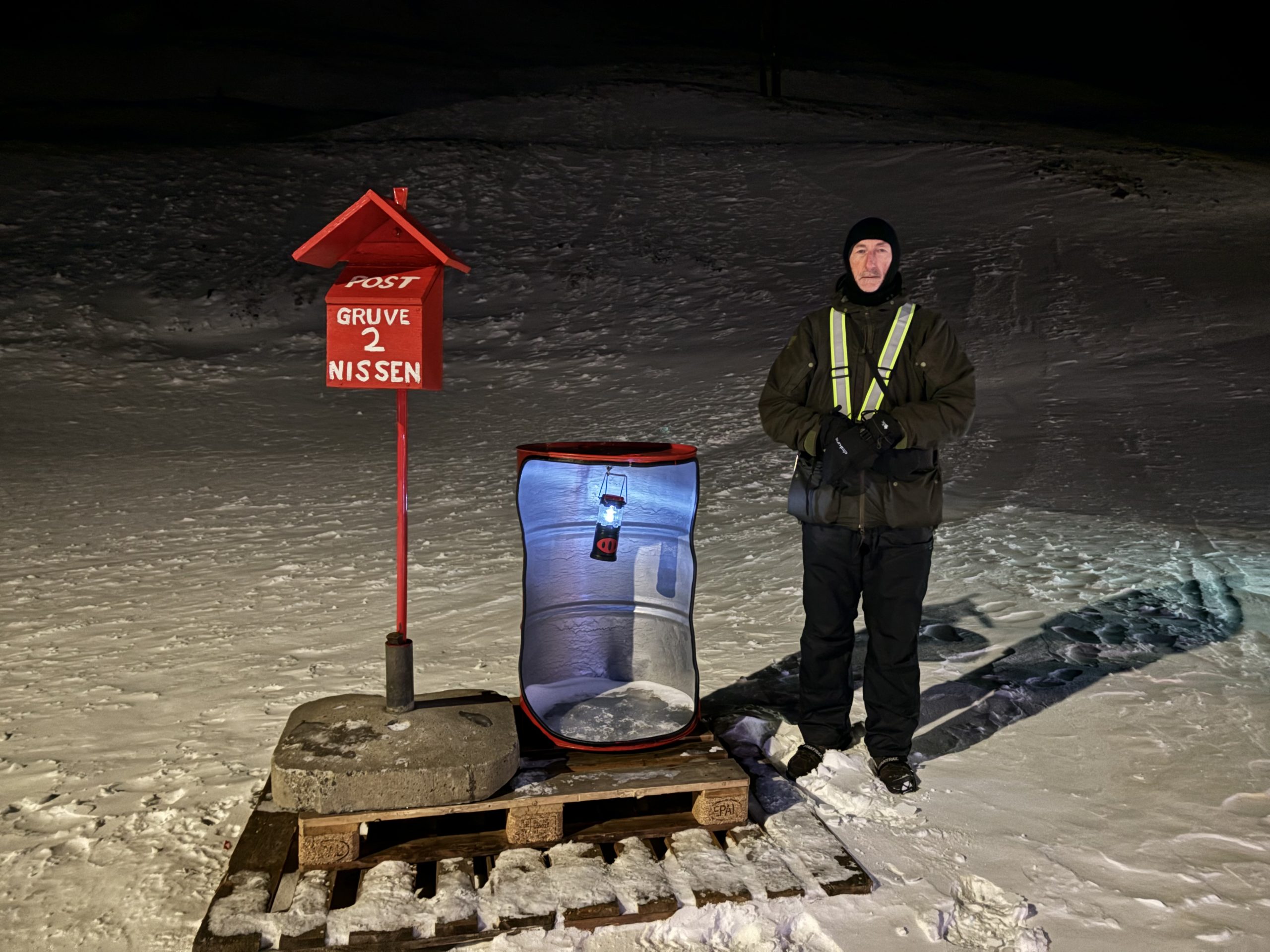

We also see more Aurora, and I see the moon for the first time since I got here, creeping above the hills on the east side of the valley, though I learn later it has been peeping from behind hills for a couple of days. Back in Longyearbyen I treat myself to dinner out – unexpectedly excellent veggie pasta and beer in a nearby gastropub.
Thursday 21st December:
Walk up valley, partly to check out Haugen Guest House (in Haugen, half way up the valley) and Gjestehauset 102 (in Nybyen at the top of the valley) as needing to plan where to move to after this booking runs out. Decide on Haugen Guest House because Nybyen is just too far to walk up and down every time I want to go anywhere, though it seems to be a quirky crowd that stay there. Go out into the dark sky area just beyond Nybyen and find Vicky, a British wildlife photographer, taking photos of a fine Aurora, so I stay and enjoy the spectacle, soon joined by her partner and various others from Gjestehauset 102. The series of my photos above this section are from today. And here are a couple of me enjoying the spectacle, taken by Vicky:


I carry on back down the West side of the valley, past the church, to the port, and back to the hotel. A good day.

Late afternoon a notice goes out about a Polar Bear sighted near Tommy’s dog yards. In the evening a police helicopter flies across bottom of town trying to track it. The polar bear seems to have approached the town, then swum round and out across the fjord: https://www.sysselmesteren.no/en/news/2023/12/polar-bear-in-adventdalen/
Friday 22nd December, Winter Solstice:
Plan to go dog sleighing today scuppered. I’ve chosen to go with a smaller company and they’ve had a family crisis. Instead walk up to Haugen again to confirm my booking from 27th December-5th January.

Then loop round to explore connecting paths across valley and play with cameras again. Go into church and bump into man just arrived from Oslo to play piano on Christmas Day. Round via port area and up to the water tank I visited my first night. A good walk, out for about 5hrs. Finish with delicious sweet potato soup at Fruene. Longyearbyen needs more thick veggie soups!


With barely time to turn around, I am off out again to the Art Gallery cinema for ‘Past Lives’ (Guardian 5 star review, good, well-acted – a masterclass in facial experessionism – so reasonably understandable though most is in Korean and only a bit in English, with all subtitles in Norwegian).

Saturday 23rd December:
At 06:00, look out of my window and a waxing half moon is for the first time on the west side of the valley, over the cableway exchange! Realise I need to engage with and track the waxing moon this coming week. As no time like the present, I get dressed and head out across the valley and up the hill to the old coal cableway exchange and take photos …

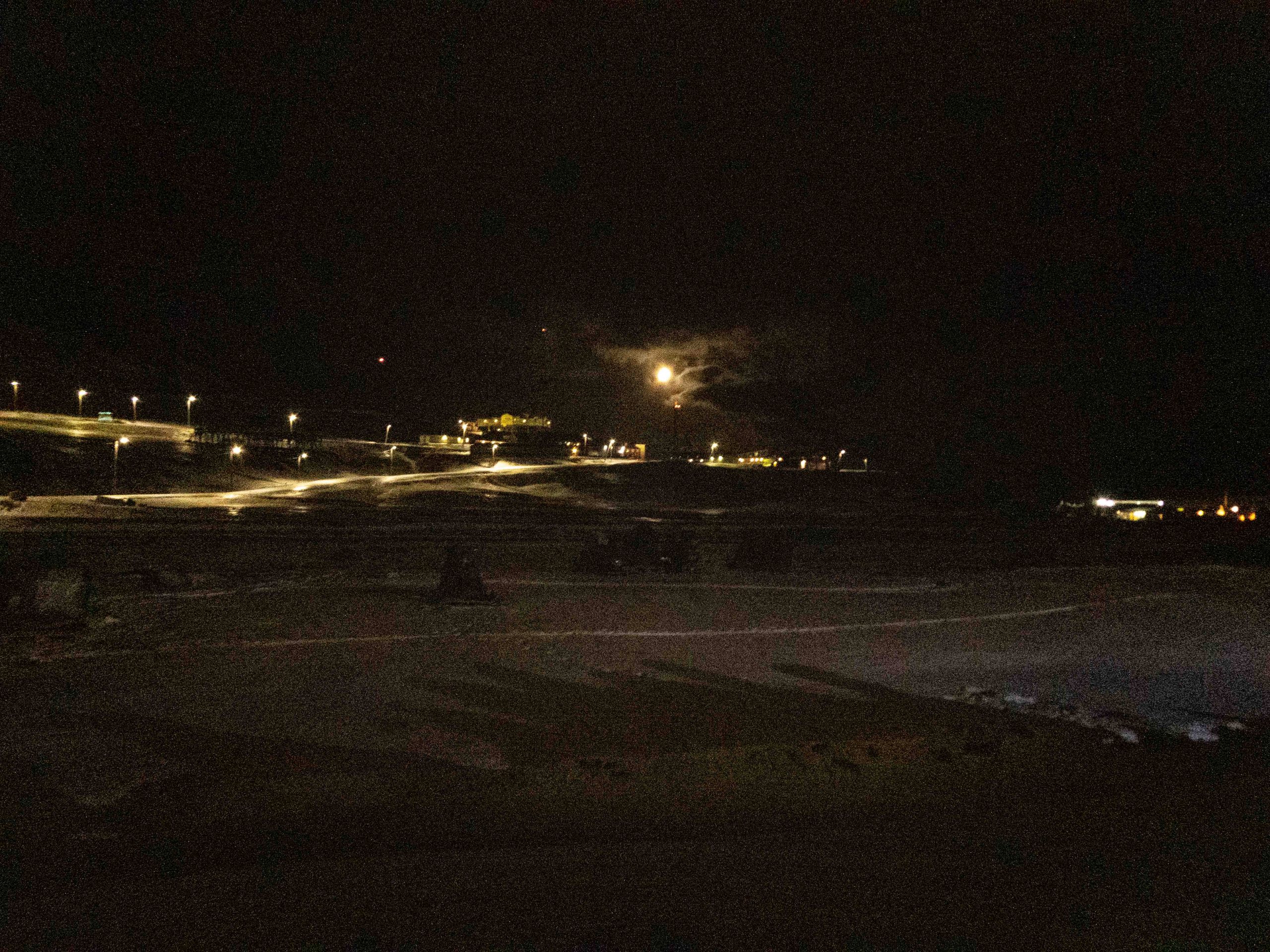


… then continue down to port and fjord shore by Governor’s ship. See two diving birds – don’t have binoculars but probably black guillemots in winter plumage?


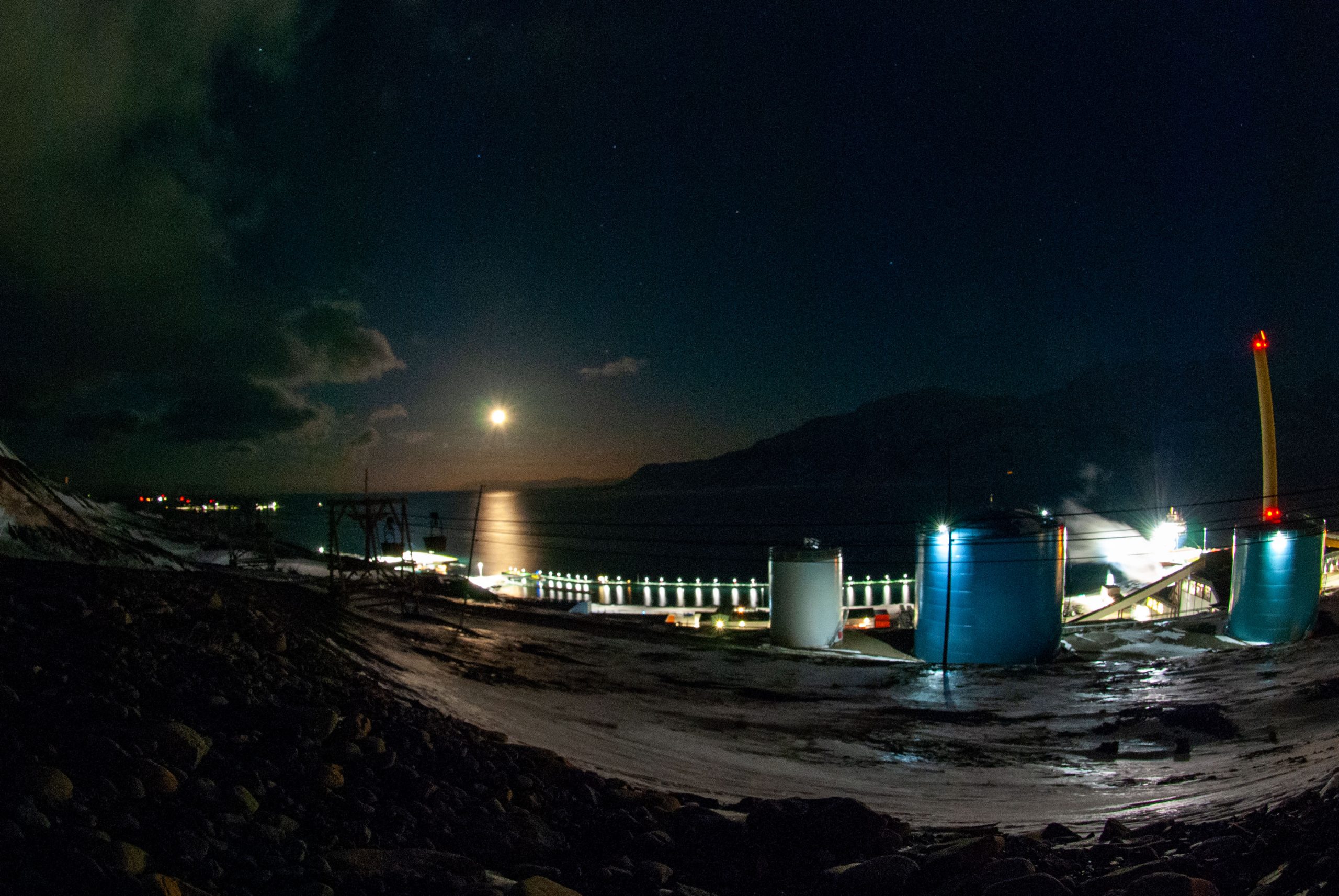
Back to hotel after an excellent walk by 09.00, and to breakfast! And then a visual disturbance! Towards end of breakfast, I bite slightly awkwardly on my toast and suddenly my eyes go out of synch. Each has normal focus and field of view when I close the other, but open together I see a complete muddle. I wonder if it is some form of visual migraine but if so it is unlike any I have had before. I worry that if I stand I’ll fall over so I keep slowly eating and things gradually settle and return to normal leaving just a vague patch of almost imperceptible cloudiness that persists a bit longer.
Back in my room I work on photos. These two are of a ski run they are building here in Longyearbyen. And now they are trying to make snow for it to work! Bonkers!


Out again in afternoon with binoculars to the port to look for the birds. The sheltered area in front of Governor’s ship is now thinly covered in sea ice. Explore further the shoreline and discover a gorgeous view up Adventdalen with moon perfect. However I haven’t brought my camera this time. Explore the port area more thoroughly. It seems completely empty of people until I come across a sauna and someone emerges to plunge into a seawater pool. With polar bears potentially about, this is reassuring. Find four Black Guillemots around the back of the Governor’s ship. I return to town catching Huskies just in time for a hot chocolate.
In the evening I engage with my diary as I’m losing track of days.
Sunday 24th December, Christmas Eve
I check out the moon. It is getting fuller. It is also falling behind, about an hour behind where it was yesterday. I need to do more moon research. I’d assumed (I’m not sure why) that the moon has a circular orbit around the earth’s equator. But things are not as simple as that. Presumably because the sun and moon have their own relationship, the moon’s orbit around us is slightly angled to our equator, presumably at an angle somewhere between the Earth’s axis spin and plane of our orbit around the Sun orbit. It also has a slightly elliptical orbit around us so is sometimes a bit nearer, sometimes a bit further away. And it takes 27+ days to go round us. Hence its variability in the sky.
This website https://www.timeanddate.com/moon/norway/longyearbyen , shows two things: how clever some people are, and when the moon is visible in Longyearbyen (and possibly everywhere else in the world).
After breakfast, my morning is focussed on trying to replace my YakTrax crampons which finally broke last night. Without them my wanderings will be curtailed over Christmas until the shops re-open. I walk down to the Co-op with two brothers from Guernsey who have explored ‘the north’ – USA, Canada, Iceland, here three times – over the last 40 years so are a mine of information. The Coop doesn’t sell YakTrax so I get some apples and cookies instead. But to my surprise and joy, an ‘expedition’ shop next to the hotel has opened for a few hours, and they have two types of non-professional crampons and an extremely patient and helpful young man serving (and the shop is practically empty). He tells me his French mother favoured crampons but his Norwegian father said learn to walk on ice without them, which he has done, though he admits that as he is getting older and is more aware of the consequences of slipping, falling over, or falling off, he feels slightly more cautious. I eventually plump for the cheaper ones and hope they don’t fall to bits. I also buy a pair of thin wool under gloves as it is getting down to around -20C and the wind is picking up. We also talk about the recent Polar Bear sightings. He says that whenever they lose the tracks, they say the bear has swum back across the fjord and gone up one of the far valleys!
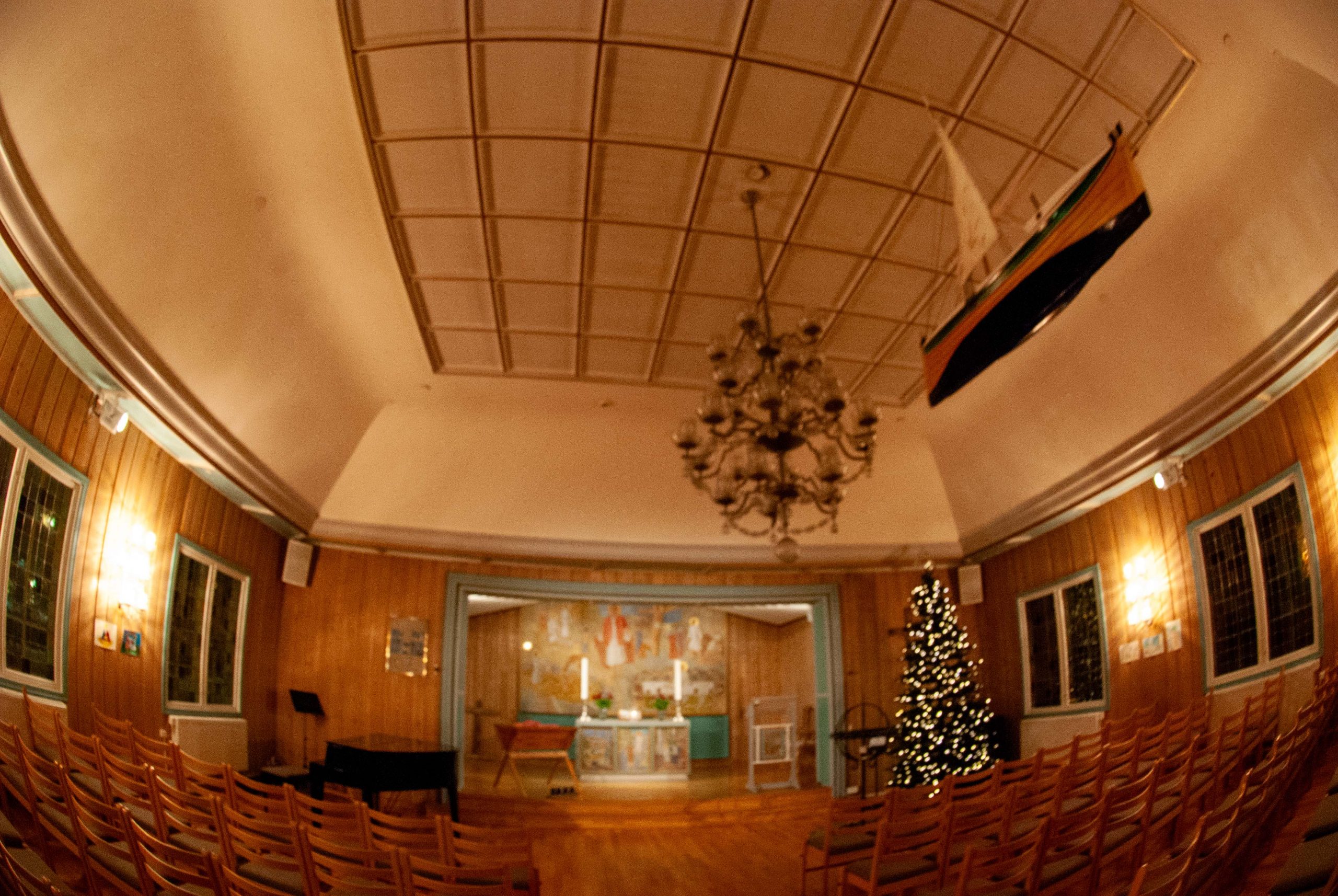
In the afternoon I cross the valley for the 14:00 church carol service. The church is packed and oddly, the only seat I can find is in the front row, luckily at one end behind the Christmas tree, as I feel a bit of a pillock with my rucksac and layers of removed clothing as most people have driven and are wearing their Christmas best – this is a service primarily for the Norwegian demographic. But I try to remember that Jesus was notably unjudgemental about these sorts of things, particularly when he was a baby . The vicar and helpers are women, and the choir of little children are, apart from a bigger boy and a tiny boy, all little girls. What an interesting society Norway has! The men here seem almost all involved in manly things like engineering, maintenance and construction – and the Navy from the small group of men I see walking later in the afternoon through the harbour area looking from a distance suspiciously like a group of Russians about to mount a coup. Anyway, I’ve digressed. I enjoy the service and sing along to one of the carols which is the same as one of ours but with different words.
The church has the best map I’ve seen of the Arctic Ocean and surrounding land – Canadian. The topography and comparative depths of the ocean floor are fascinating. The Barents Sea, which lies north of Russia and drains all Russia’s northern rivers, and apparently discharges into the world’s oceans 20x the volume of water of the Amazon (which itself is stonkingly far ahead of every other single river system in the world), is very shallow; and the Canadian Basin very deep. No wonder the Russians are so big on offshore mining and extraction. As the church is open all the time, I’ll go back and have another look at that map after the Christmas rush.
After the service I return to fjord shore again. Not long ago, Adventfjorden would have been solid with pack ice by Christmas. Now there is none. I check for Black Guillemots and this time I only see one, but I don’t hang around as it has got colder and windier.


I walk up to the end of the fjord where it turns into Adventdalen. I am on a mission to get some photos of the moon up Adventdalen before my hands freeze. I have cut through the edges of the port area and go down a track onto the open ground clear of the town lights. Because of moon lag, the moon is still sailing along above the mountains on the far side, so I get photos of that …

… and call it a day. Although still on the edge of town, I am alone in the area where the Polar Bear tracks were seen just a few days ago. I find myself getting a bit edgy and don’t want to hang around too long.
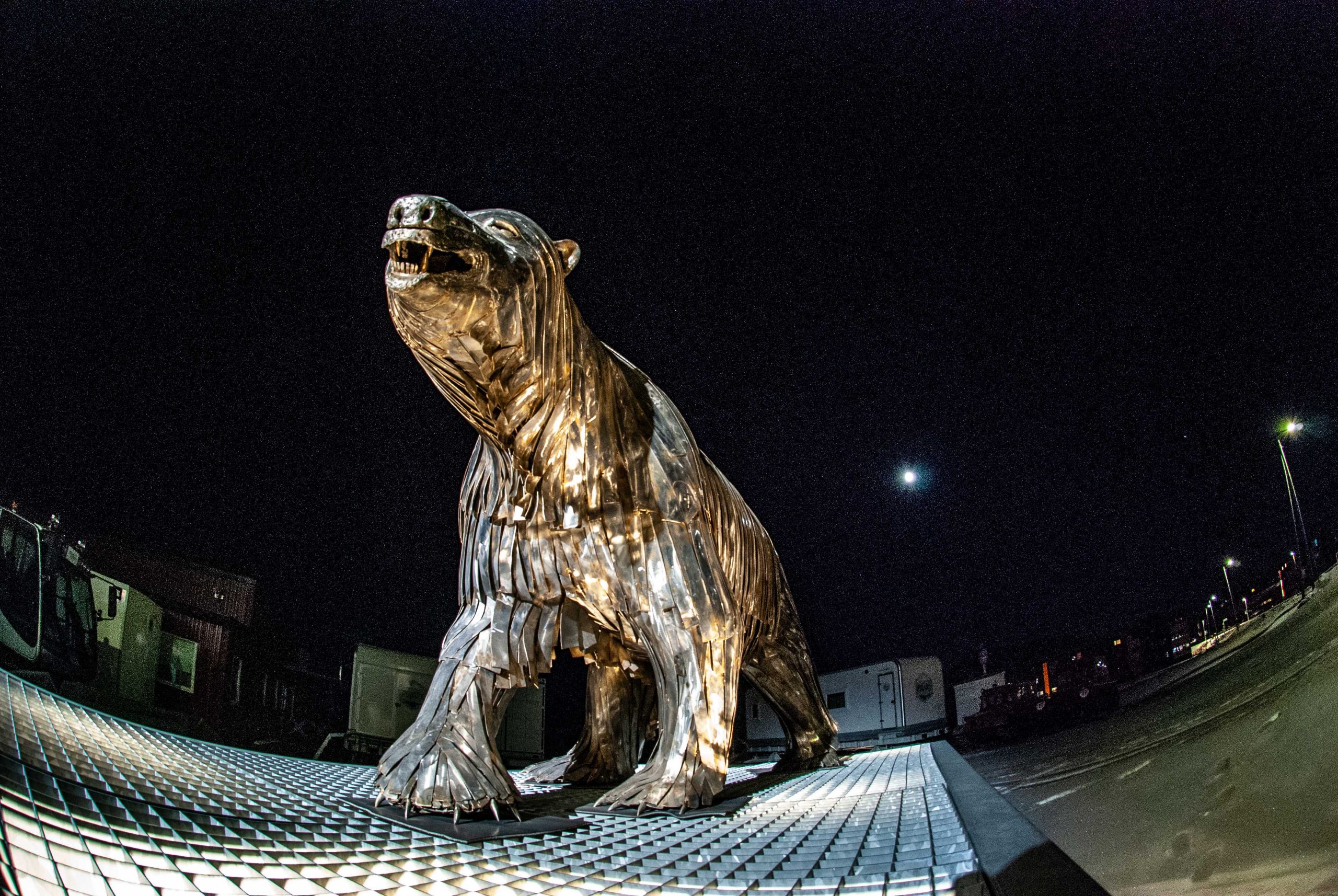
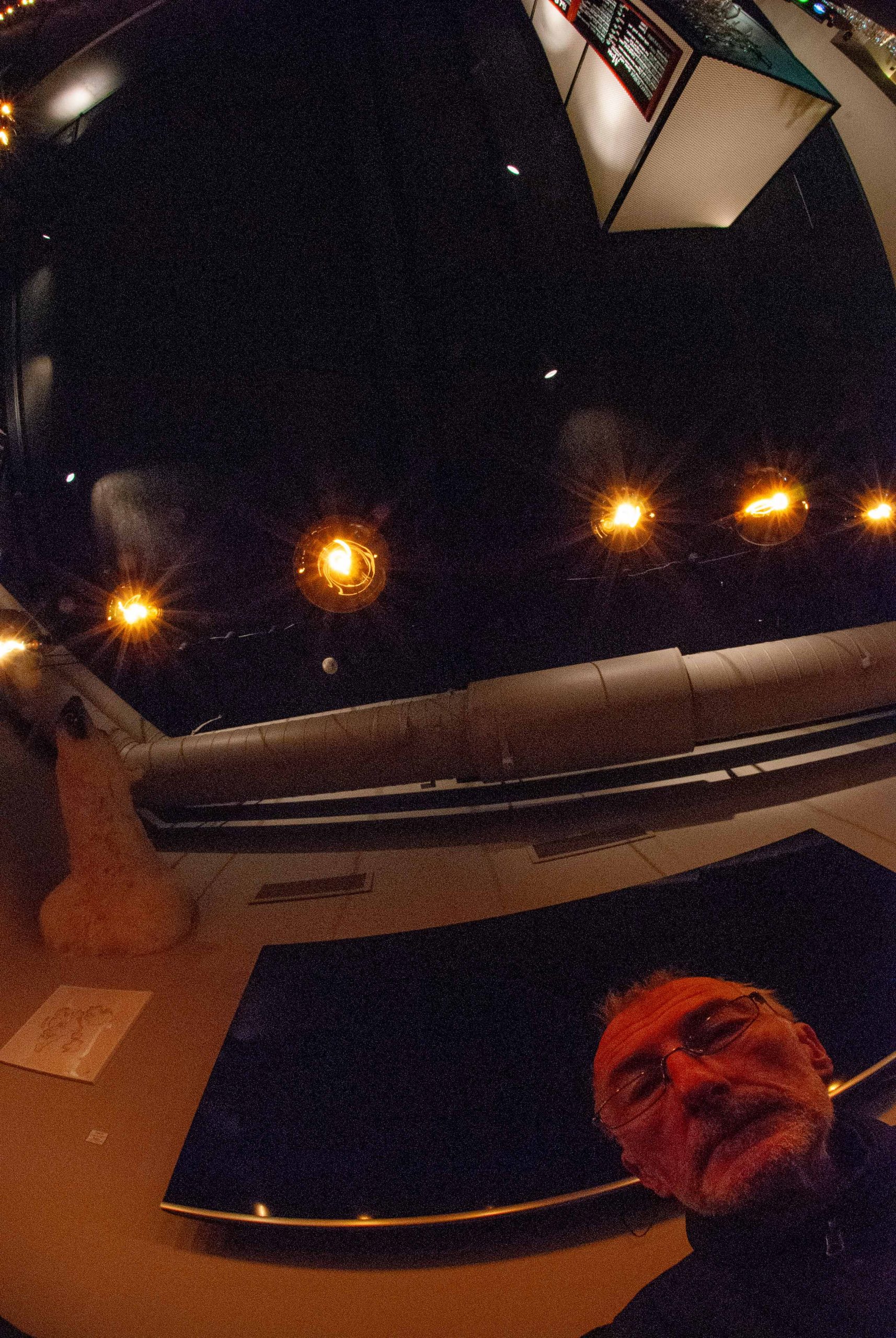
I retire to the Radisson, the nearest hotel to the port to warm up, get a hot chocolate, and play with my camera:

Monday 25th December, Christmas Day – Sunday 31st December 2023, New Year’s Eve
Monday 25th December (Christmas Day)
Have finished ‘My World is Melting: living with Climate Change in Svalbard’ by Line Nagell Ylvisaker and now reading Artica Writings magazine borrowed from Art Centre manager.
Cold and windy. Post blog. Don’t do much else. Lazy day.
In evening for a Christmas bar meal at the Radisson, a good vegan pizza, miso and carrot cake (?), and a beer!
Start ‘Last Comes the Raven’ (short stories) by Italo Calvino.
Tuesday 26th December (Boxing Day)
Supposed to be dog sleighing today with Svalbard Villmarkssenter but cold and extremely windy so they postpone till tomorrow and agree to help with my transfer to Haugen Lodge.
Great conversation over breakfast with extraordinary German family. Mother has been engaging with me throughout, but today talk equally with son (plays harp, developing a board game about bees – has read ‘A Sting in the Tail’, and as the basis of the game has chosen four different bees, including arctic bee, and researched their life cycles etc – and when I give him Dave Goulson’s university email and encourage him to make contact, he has the idea of asking a couple of questions, a bit like an interview) and father who has always been more reserved, turns out to be brain and spinal cord surgeon who took family to Abu Dhabi to set up neuro unit from scratch at a new hospital and is insightful but also humble regarding what we know and don’t know about sentience and consciousness. Apparently, MIT and Swiss equivalent, which are the top institutes in the world for this sort of thing, play a remote annual chess tournament using only brain waves to communicate moves. Mother, who has been persuading me to use sports centre, gives me a 500 Norwegian krone note to spend there. I thought she was giving me an unused ticket in a gift envelope until I looked later. They leave today.
Finish reading ‘Arctica: Writings 2021’ magazine ( https://www.articasvalbard.no/artica-writings ) leant to me by the Art Centre worker (when I ask her if she is the manager, she explains she has a whole network of managers within the Svalbard administration).
The magazine has four short articles:
one a reflection on whales, a sort of (generally depressing) extension of a musing on Moby Dick;
one, insightful on an aspect of James Joyce’s Finegan’s Wake, helps explain why the book is so highly regarded;
one on sea ice and climate change ( https://www.articasvalbard.no/artica-writings-2021/when-sea-ice-melted-despite-bitter-cold ), which contains this excellent summary paragraph:
‘Three main factors determine Earth’s surface temperatures and how the average temperature varies over time (climate).
(1) The sun is the boss, as my colleague the astrophysicist likes to say. Without it, no energy, no heat, no basic conditions for life. The sun is relatively stable as source of energy, but the way the Earth takes up this energy had led to substantial variations in climate throughout Earth’s history.
(2) How much of the sun’s energy is reflected rather than being absorbed depends on how much of the earth is covered with snow and ice. Our blue planet will take up the energy from the sun, but if Earth’s surface is whiter, much of the energy will bounce back.
The decisive factor is (3) how tenaciously the atmosphere that surrounds us holds on to heat radiating from Earth’s surface – what we call the greenhouse effect. The levels of heat-absorbing gases in our atmosphere play a key role – and this is where humans become active participants in how the world’s climate develops. We must distinguish between natural climate variations and human-induced climate change. The equation is simple: if the amount of CO2 in the atmosphere increases, Earth’s temperature goes up. But what role does the ocean play in all this?’.
[Point two reminds me of how I struggled as we developed CLiVe with the word ‘albedo’, a term for the reflectivity of the Earth’s surface, which just would not stick in my brain. I’ve just looked up its etymology and see it comes from the Latin for white, same root as albumen.]
but the one I enjoy most is ‘Less, less, less, less, less: on listening to shells’ by Holly Corfield Carr ( https://www.articasvalbard.no/artica-writings-2021/less-less-less-less-less-on-listening-to-shells )
In the evening I return to Radisson for a hot chocolate, and am then tempted – a big mistake – to have another pizza (mushroom and cheese) which is too big and I have to force it down, then wash it down with a beer. Chat to American, works remotely (so has lived in a variety of places from Philippines to Europe to California and now Oregon east of the coastal range – wherever he pleases it seems) in a senior sales role with a software/storage (?) company with huge clients eg Amazon. Has flown here from Oregon for a two day visit mainly to gain some more air-miles (not sure why, and he is also interested to see the place), don’t fully understand and don’t probe, but shows how strange the world has become.
Wednesday 27th December
A good day. I’m leaving the Polfareren and moving to Haugen Guesthouse. I pack up and have a final chat with the brothers from Guernsey who are waiting to go to the airport.
I am waiting for Berit from Villmarkssenter to go dog sleighing. She picks me up with another couple already in the back.
It turns Villmarkssenter is the dog yard I walked to the Monday after I arrived. Berit, the owner, is a woman about my age. She moved to Svalbard for a catering job at the mines over 30 years ago, and has married, set up the dog sleigh business, and had children here. She and her husband are from rural Norway farms. She is good company. When I ask about the recent polar bear whose tracks were seen first near her dog yard, she says they are a spirit animal and come and go where they please and do not unduly worry her.
People I talk to who have been out with the bigger dog yards (100-300 dogs, owned by or serving the big tourist companies) describe a visit that starts with handling a husky puppy and being told a warming husky life story. It seems some old dogs are kept in the yard, perhaps for breeding, others are re-homed (sold) to people who want an old husky either in Longyearbyen or on the Norway mainland. I imagine some of those dogs might settle down to a life of luxury and contentment, but I suspect some struggle when they leave a pack they have been with their whole lives. It would be interesting to know if there are follow up studies. After puppy-cuddling, they get into thick polar boots and onesies, (in pairs) harness their own huskies, hook them up to the sleigh, are told how to drive the sleigh, follow the leader around a circuit in Adventdalen, before returning, de-harnessing etc, and all sit round getting warm again if it’s been cold like it was yesterday, and enthuse about their experience. [I have since been on a sleigh ride at a larger dog yard and enjoyed it. Sometime I will try to get my thoughts in order about dog sleighing and tourism.]
Ours is a bit different. Berit’s assistant has done much of the harnessing and hitching before we arrive and while we are geting togged up. Berit is down to earth about her huskies. She knows each one personally and likes that they live their whole lives in her dog yard. I was thinking I might do a trip with another dog yard to compare, but I think now I won’t. Essentially, they are tourist businesses with slick comms, though probably better than snow-scootering which I know the little boy in me would find fun, but are much heavier on the environment.
Berit on her website ( http://svalbardvillmarkssenter.com/about-us ) describes the complexities and conundrums well, and this is the reason I have chosen them. I do not know where her husband is and do not ask but wonder if he is no longer so well. I also wonder if this is a dying family business as her children are not taking over. However, her assistant is good and seems to enjoy the work.
Our trip is fun. Today is much warmer and the wind has died right down. In a video taken by someone out yesterday, the dogs did not look enthused. Today at no point do I feel cold and the dogs are clearly loving it. I share a sleigh with Berit and we lead. I start off sitting on the front, but once we are over the road, I join her standing on the back and she shows me how to drive. First lesson: hold the handrail with at least one hand and never let go. If you do and the dogs run, you topple off and bye-bye dogs. Second lesson, let the brakes off and the dogs run! There are three types of brake: a pad that you keep one foot on lightly and use as the accelerator/decelerator, and to control any slack in the harness line; the actual brake, which you push down hard when you want to stop; and a snow anchor, the ‘hand break’, that you use when you want to stop and get off. After my instruction, I do most of the driving. But I do not steer. The dogs mostly know where to go, a 90–120-minute circuit in Adventdalen, and where there might be a choice, Berit shouts left or right (in Norwegian) and the lead dog veers off in that direction like a train at a track junction. Lead dogs are important, and a good lead dog is valuable, particularly on a proper expedition. It is an enjoyable way to travel. I keep a watch on the other sledge behind us which, carrying the other couple and Berit’s helper, is a bit slower, and ask from time to time that they are ok. Berit (impressed!) relaxes and takes some photographs. Half way we stop for a short break.


Back at the yard, the dogs are unharnessed and gradually put back in their kennels, with most sharing in twos and threes. A couple of dogs live inside with Berit or her son who lives at the yard too. One dog finds a ball and discovers I’m a ball thrower.
We chat over a hot drink and some biscuits. I learn about the other couple on this trip. He is French and his partner Latvian. He served in the French army in West Africa which he didn’t enjoy but earned him the money to set up a business. Visiting on a short break, he realised Latvia was where he wanted to be, and returned to settle in a nearly dead village three hours east of Riga where everyone speaks Russian. Starting with just one assistant, he makes flat packed soft wood terraces. People said ‘where will you find the necessary skilled labour to grow?’ But when he needed a third employee, his assistant asked his brother, and so it went on. Now ten years later, he employs around 100 people, all from the village, selling terraces to around seven countries across Europe. They control the whole process to avoid the hassle of sub-contractors. Each carpenter makes, delivers, and erects the terrace on site. That way they learn to be exact in the manufacturing. In his second year he met his partner and she also now works in the company. We exchange contacts and I will consider visiting them when I pass through Latvia if it is practical.
I’m dropped off at the Haugen Guesthouse and Elena, the manager, shows me round. She has a Russian father and a Ukrainian mother (neither of whom spoke the others’ language when they met!) and has lived her life between Ukraine and Russia. Trained as a meteorologist, life happened, she has done a wide range of jobs, and has a daughter who also lives in Svalbard. She has a flat in Ukraine but has ended up with a Russian passport so can’t visit it. She is so cheerful, competent and hard-working – a thriver. The guesthouse is homely and spotless, and she has made Christmas biscuits and cake for the guests. There is also food left behind by guests here over Christmas.
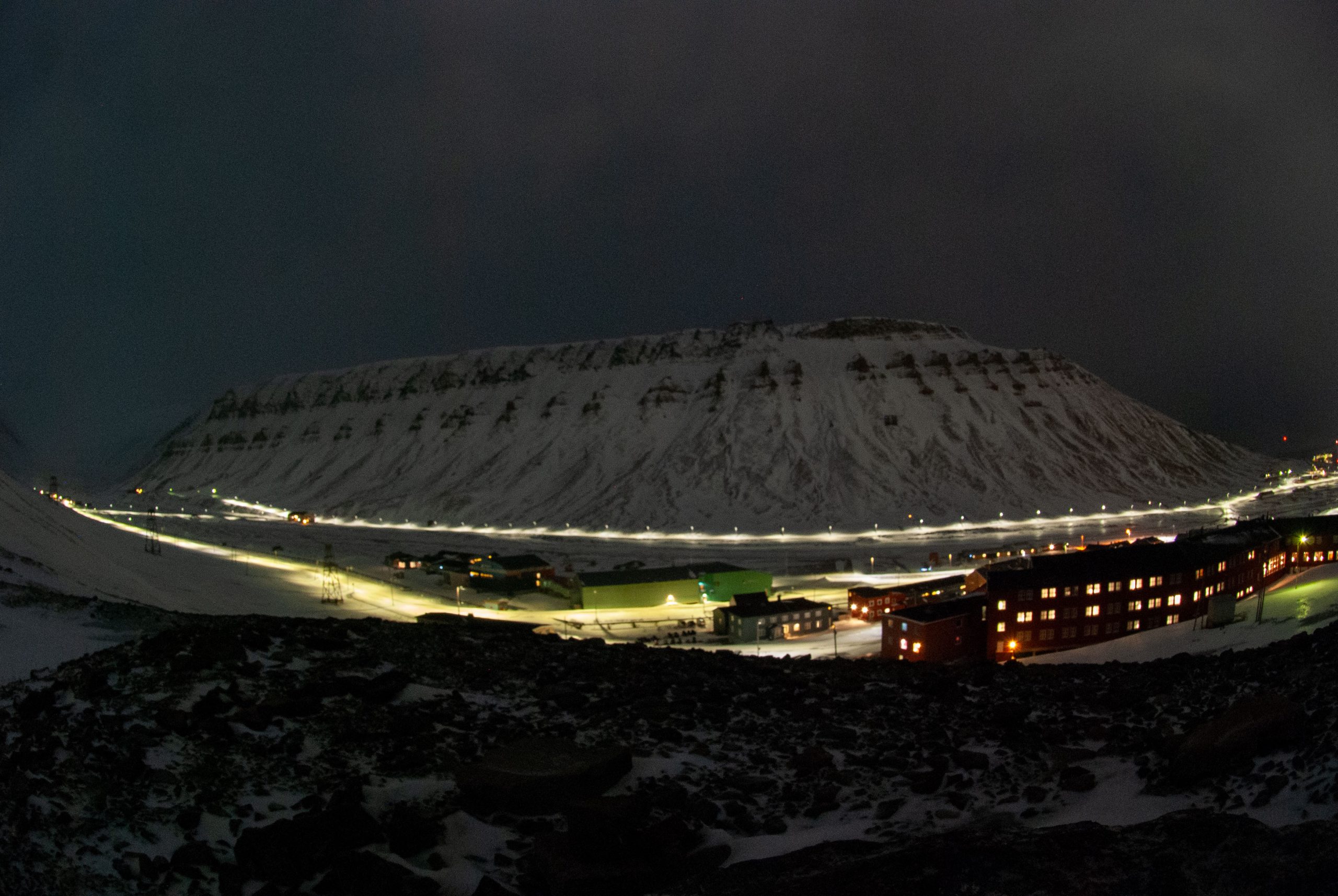
I settle in and crash for three hours of deep sleep. I wake at about eight, raid the left overs store, and saute four small carrots with garlic, adding coriander leaves and a boiled egg! Then as the moon if full and popping in and out of the clouds, I go exploring, first up a small side valley behind and above the guesthouse, scrambling around in the snow and ice for photos, then a circuit round the upper part of the valley, returning around midnight.


Thursday 28th December
Despite the three hours sleep earlier, I sleep like a log till about 09:00, drag myself out of bed and to the next door Funken Lodge for their buffet breakfast, which if I stuff myself as my main meal, is good value.
In the afternoon I walk down into town, return Artica to the Art Centre, have another good chat with the woman working there (though we touch on some darker subjects – including two recent suicides), then go to the library which is closed. More shocking, my card won’t let me in. So on to the supermarket for supplies. It is nice shopping for food I can prepare myself after so long eating out or snacking.
On the way back I call in on the sports centre/swimming pool, which is just across the road from the guesthouse. It is a new building with a beautiful pool, almost empty, and open till 19:00, so I drop my shopping and go back for a swim – my first pool swim for years. I will try to go every day it is open while I am here.
Back at the guesthouse I make supper and chat to the other three guests – young Chinese students studying Czech in Prague who have chosen to fly up here for three days over their Christmas holidays to see an Aurora. Unfortunately, their visit has coincided with cloudy weather. They don’t seem to have wandered far so I give them some tips for when the cloud breaks up.
I am in bed for around 22:00, sleep for four hours then find myself wide awake. I think the endless night plays tricks. I get up to scour the sky. The cloud is getting patchy and the moon is beautiful, but sadly no Aurora.

Friday 29th December
I spend most of the day writing this. I am worried this blog is getting rather boring for my loyal readers as I am basically just hanging out and am not thinking inspiring thoughts. Also I think my photos have peaked!
Late afternoon I go for another swim.
Saturday 30th December
During the night, whenever I wake up, I dutifully check the sky for a break in the clouds and an Aurora for my Chinese fellow guests, but though the view is always different, the moon floating peacefully across the sky half-bathed in light from the invisible sun, there is no Aurora.
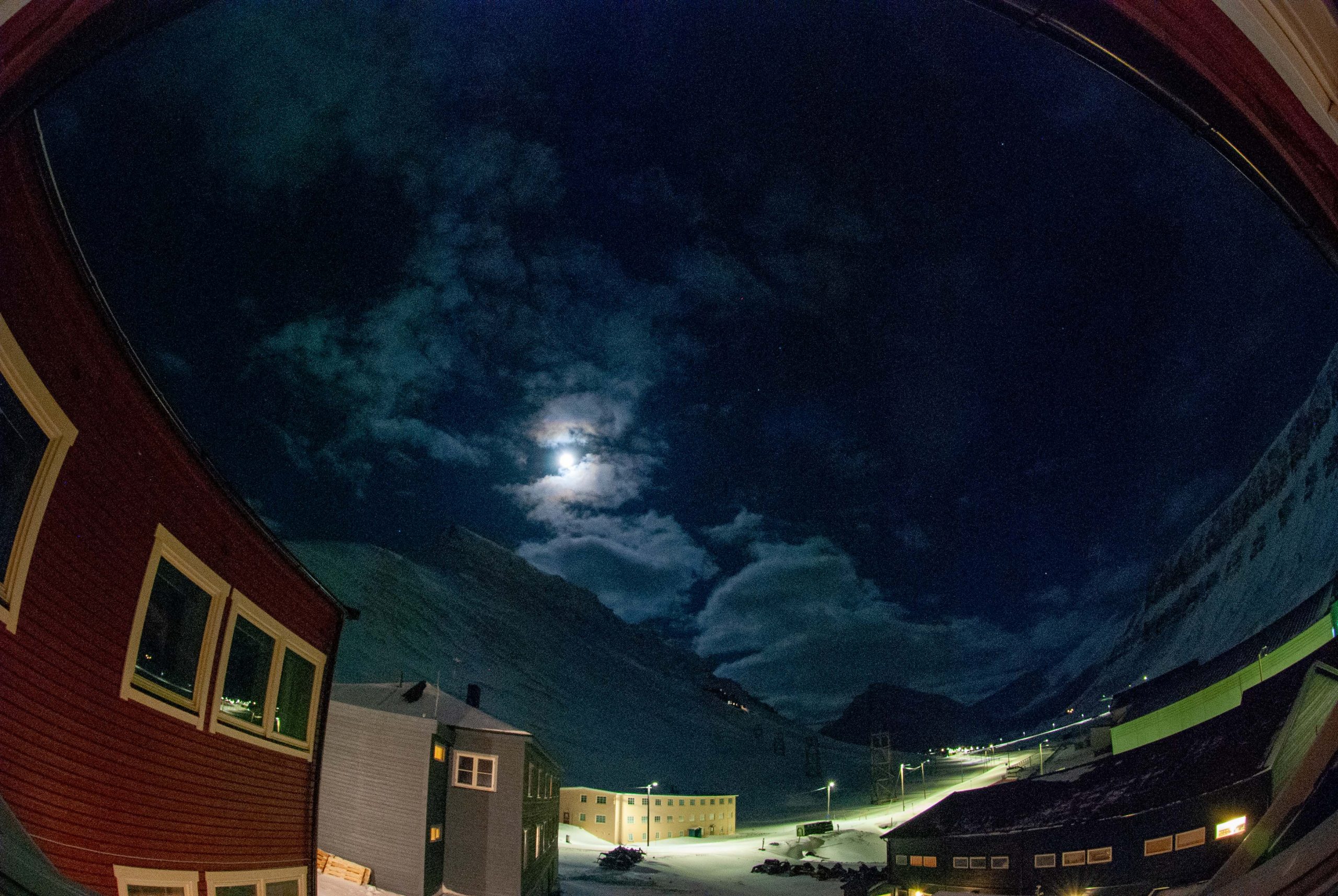


I go for a second time to the Funken for breakfast, this time earlier so that I can pace myself better and eat more. Back at the Guesthouse I am back in bed dozing when I hear big things moving down the corridor outside my room and wonder if the Chinese boys are leaving earlier than I thought. Instead, it is Elena reorganising the guesthouse during this quiet period and moving a wardrobe with the help of Rustam. Rustam is a name I’ve always loved and associate with my very limited knowledge about central Asian poetry, culture, and history. I help them move the wardrobe down the stairs. It is a tight fit but working as a team we manage. I ask Rustam where he is from, and he indicates on an imaginary map that extraordinary line of the Urals, and at the bottom where they stop just above Kazakhstan, that is where he is from. I say how much I like his name and why, and Elena says it is just a very common Russian name. Nevertheless, it makes me think how much I’d like to travel through that area and how sad it is that the world is going to pot, with Russia sold out to a capitalist oligarch dictatorship. Even something as simple as moving a wardrobe downstairs shows that by helping each other and working together, people from very different backgrounds can find a way forward (from ‘Inspiring Thoughts’ by Stephen Blakeway Vol 1).
Then it is swimming time. Endless night is not the only source of confusion in Svalbard. So too is trying to track opening times. For the last two days the pool has been open 16:00-19:00hrs. Today it is 11:00-16:00 (and after the New Year, that pattern will reverse). 11:00-12:00 is baby swim time, so I avoid that and go in around 14:00 and the pool is empty, a man and a baby leave just as I arrive, and a family arrive just as I leave. Because there will be a two-day break, I aim for 20 lengths of crawl which I just about manage, plus five others of more relaxing strokes, my favourite being oil tanker. As I have no goggles, I swim with my eyes open (which is more relaxing than goggles that slowly leak). The water here does not seem to be as chloriney as in UK, perhaps because they are more confident that customers are following hygiene guidance.

After my swim, I go into town. Passing the library, I see their clever door opener pulsing purple light. As I’d suspected it had probably just needed a re-boot. I go in and start reading ‘The Paradox of Svalbard: Climate Change and Globalisation in the Arctic’ by Zdenka Sokolickova which I am thinking of buying as there is not a copy I can borrow. It starts well, so I go to Huskies, buy a copy and continue reading it over a hot chocolate and cake. I also have a good chat with Nicola (the co-owner from Glasgow), share my blog with her when she asks, and ask her for feedback particularly when I get things wrong.
From Huskies I go down to the port area again. A bright waning half-moon emerges fleetingly from behind heavy clouds above the hills across the fjord. At the far western end or the port, just before the Polar Bear sign, near a bright red boat out of water,


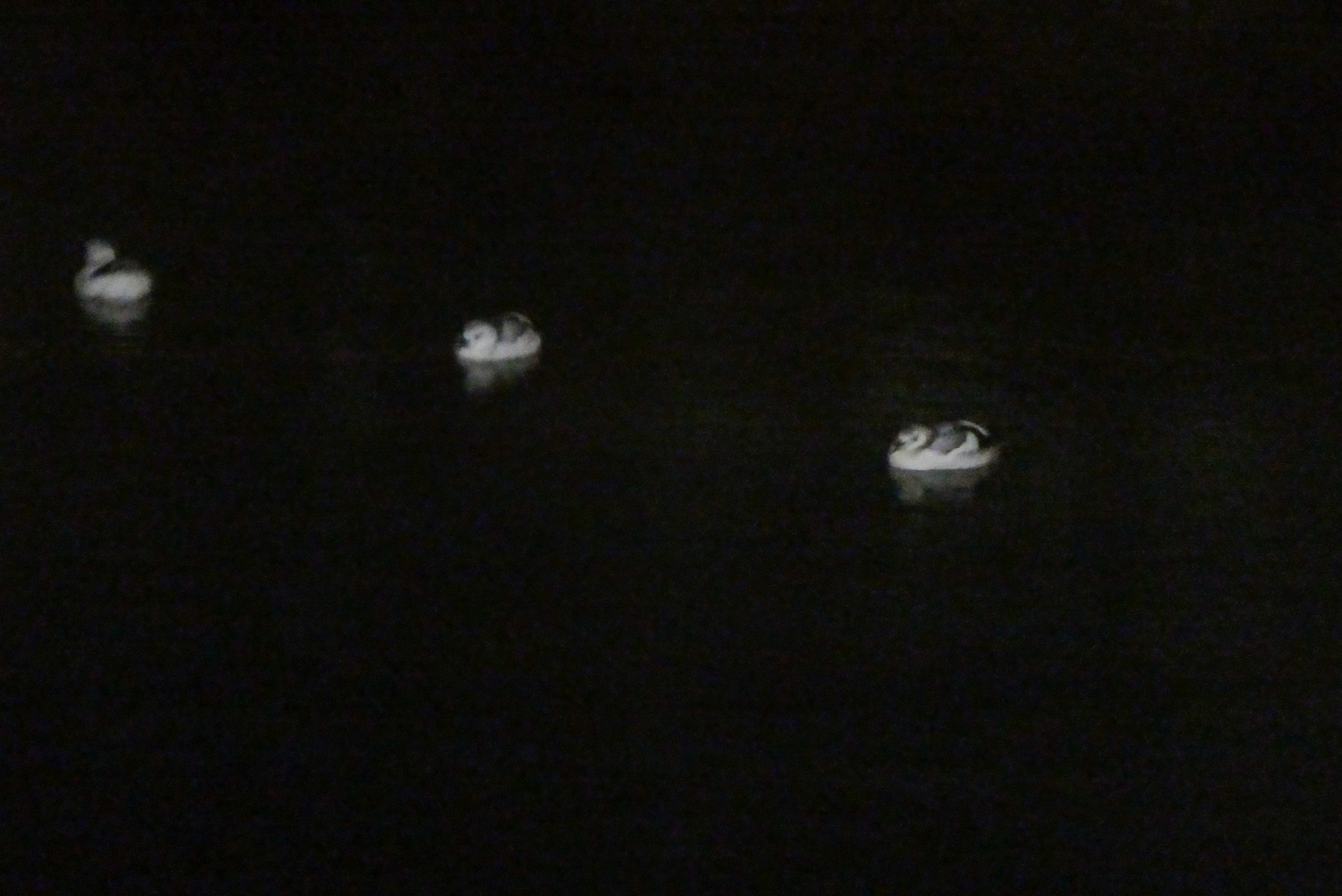
is an inviting little jetty protected by a breakwater. I’m about to clump down its metal ramp when I see three Guillemots floating peacefully in calm water. So, I stop and watch them instead, and after a lot of trial and error, finally manage to an identification photo.


Thence up to the watertank, cutting up through the upmarket housing estate on the eastern side of Longyearelva. One house in a tall modern terrace is full of plants. Someone has green fingers. It reminds me of the plants Elena grows in the guesthouse – including three small orange trees she has grown from pips.
Clear of the houses, I meet two young women and a dog coming down the hill. They study chemical engineering down south but seem to be on study breaks, one to earn money as a systems analyst (a qualification she already has) at the Longyearbyen power station, a job found for her by her sister who is living here long term, and the other to travel, including to visit her friend. After various other chat (the visitor is even chattier than me!), I tell them my throw away comment about men here doing mainly manly jobs, that the Art Centre worker refuted this saying how much more advanced the Scandinavian countries are about sex equality in the workplace, and ask how this plays out at the power station. Apparently, there are three women and twenty men. We start to explore this further, then Niks the dog tells us he’s bored and cold and wants to get moving, so we say our goodbyes.
At the water tank I look down into Adventdalen and see and hear for the first time a ‘snow-scooter adventure’ getting underway, a blaze of white headlights, a beadwork of red taillights, and the high-pitched whiney roar of engines. I can’t imagine what the reindeer think.
I continue, as Niks and his companions did, past the water tank on the old track which winds on itself towards town then on up the hill. Niks’ sudden interest in something out in the darkness had given his companions bear anxiety so they’d turned back, but there are two reindeer grazing peacefully so I decide to go a little further. Then unexpectedly I hear human voices and am surprised to see, a short distance away, two men apparently digging into a low stoney dyke high up here on the hill. Were I to have a fanciful streak, I could imagine two trolls digging for buried treasure, but instead I wander down to find out what they are doing. They are working on the new ski run. During the recent colder weather, the water froze in the buried feed pipe to the snow making sprays, and they are sorting it out. They are solid Norwegian men, and one is working without gloves. He says even at -17C his hands don’t get cold, that if he wears gloves his hands get over-hot. This is a revelation. I now understand better how people have lived, sailed, fished up here. I’ve always assumed dealing with the cold is more about mental toughness than genetic adaptation and that I am just a wimp. I mention I have been watching the snow sprays trying rather ineffectually to turn the hillside into a ski slope and the barehanded one who seems to be in charge refutes this by pointing to the big snow patch lower down, where the sprays were still working, that is apparently all synthetic snow. What I like about the people I am meeting here is that they don’t get upset by different views (ie my views), instead they calmly explain themselves . He tells me the ski slope is for both locals and tourists and should be open next winter. I ask if I can walk down the ski slope instead of retracing my steps to the water tank, and he says that is fine but to be aware of the differences between synthetic and natural snow. Synthetic snow, which is made of tiny ice crystals, is five times as dense as natural snow which is made of snowflakes. I wonder if any of the many words for snow in indigenous Arctic languages would cover synthetic snow or whether there needs to be a new one. This is another unexpected, enjoyable and informative encounter. Coming down this emerging ski slope gives another perspective on the town and takes me to one end of the big anti-avalanche wall that runs along the bottom Sukkertoppen, built after an avalanche in 2014 killed two people living in houses under the mountain.
The wall has a walkway along the top which I walk for the first time. It brings me close to Haugen, close to the gully that runs down between Sukkertoppen (the sugar peak) and Gruvefjellet (the mining mountain, the one with Santa’s mine in its side), and at the little bridge over the gully, I meet a couple walking two dogs, and we have another good conversation. One dog is a ex-sledge husky, the other is husky like but not a husky and has only ever been a pet. Their temperaments are quite different. The couple are dog sitting but the man is third generation Svalbard and works in adventure tourism and knowledgeable. He’s fairly matter of fact about huskies, moving between the language of pets and ‘puppy-cuddling’ and the language of farming and working animals. Talking about retiring huskies, he says many dogs settle well in a home, and the furthest a husky has been re-homed is to Australia. But some huskies don’t settle away from their dog yard and have to be returned. Also, some dogs are supernumerary, particularly if there has been a ‘stealth-mating’ ie a dog and a bitch get it together without permission of the humans, outside the replenishment and customer-experience plan. [I realise I’d need to do a proper study before saying anything too specific about any of this.]
Sunday 31st December
A quiet day mostly writing and pottering about until the evening.
The Chinese students are leaving today. The airport bus comes at 10:00. They surface at about 09:40, phone for a taxi, and start packing. They have been friendly company, particularly the independent one who got out more. It seems they all saw a bit of Aurora last night so leave happy.
Elena and a colleague are moving more furniture about. I tell Elena about the house with the plants, and she knows exactly which house I’m talking about. In the ensuing conversation I learn more about her story. Elena says she is a survivor, but when I type thrive into her translation App she agrees it is better. I am the only person staying here now and she has just given me this plate of cake for the new year – the little balls are made from dried fruits, nuts, honey and lemon.

Elena’s colleague is an interesting character. I’ve seen her about and interacted with her a bit but today is the first time we talk. She’s Norwegian from near Bergen, has lived here a long time, seems informed and intelligent with a degree in anthropology, and is not afraid to express strong views. She also lives right on the fjord shore (which would be amazing) in an area which no-one is supposed to live in now. In relation to the movement to make Longyearbyen a normalised Norwegian community, she is incensed, among other things, by a trend among some new arrivals to combat the darkness by covering their houses with bright Christmas lights which they keep up till the sun arrives back in early March. Some now even adorn remote cabins with Christmas lights which then shine out from the wilderness. She picks up on other touch points I’ve already become aware of such as people moving here with severely handicapped children and expecting the full range of special care they’d get on the mainland to be available here. It is refreshing to hear her address things I have been picking up less overtly in what I have read or in other conversations.
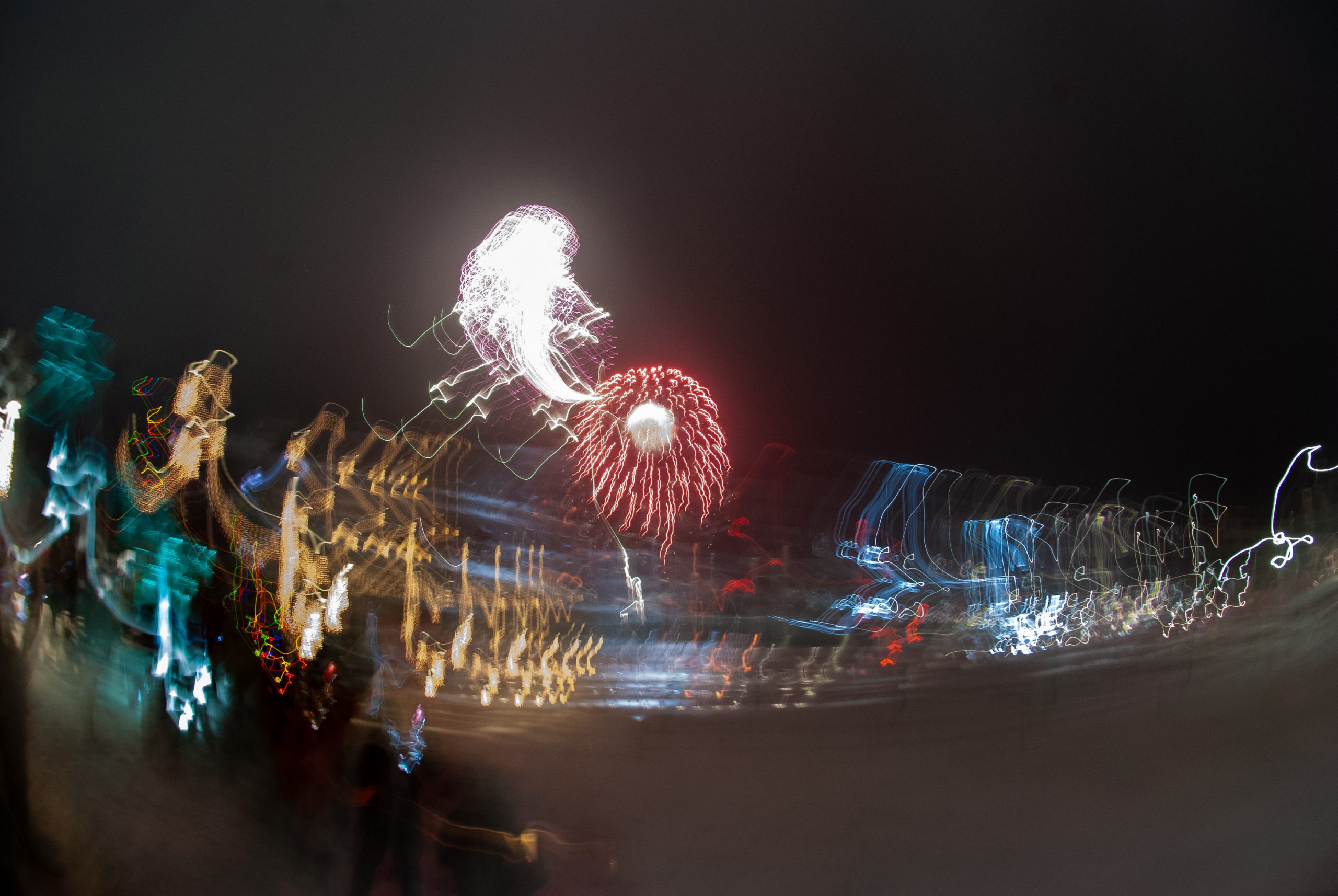
I cook supper then half-heartedly head for town aiming to see the smaller 7pm firework show aimed at children (obviously not literally). I will then consider staying for the midnight adult version. I am impressed that the Governor has reined in firework displays allowing only these two shows. It seems this is now general across Norway with fireworks only permitted at New Year. People can request special licenses to set off fireworks elsewhere, but most are denied. I do see a single rocket fired off the top of Sukkertoppen though. The fireworks start on the fjord shore while I am still walking down. I should have set off ten minutes earlier, poor timing on my part. I wonder where people in Longyearbyen go to for a drink on a night like this. There is a bar at the top of the town next to the Polfareren which I went to a couple of times, but I don’t know if it is open. I don’t think there is anywhere else so end up in the Barents Bar at the Radisson, an unattractive gloomy cave, which will be convenient for the midnight show if I stay that long and which gradually fills up as the evening progresses. I get chatting to a friendly British undertaker with an impressive range of celestial Apps on his phone (check out Aurora Forecast 3D), then to a young man working at one of the big dog yards (yet more insight) and then it is midnight and we all go outside. The firework display is actually very good, short, contained and high quality. I have learned there is a big club night 00:00 to 03:00 at Huset up near Nybyen and a bus is taking people up there after the firework display. I would like to check out what party time feels like in Longyearbyen, but decide against. I wander home, surprised when people start saying happy 2024. It dawns on me that another year has started.


New Year, Monday 1st January 2024
Happy New Year to everyone reading this!
I am leaving Longyearbyen on Friday. My days here are numbered. I need to focus a bit more on being here so will blog less this week.
Monday 1st – Sunday 7th January 2024 – Svalbard to Narvik
Monday 1st January
The afternoon: I’ve agreed to meet Luke, the undertaker, and two of his friends for a drink at Stationen restaurant. I cut up veg and get things ready to cook pasta and veggies in tomato and peanut sauce when I get back, then head out.
It is blowing quite hard down the valley with snow falling and flying, wild but exhilarating. It’s good to meet new people. Morten, one of Luke’s friends says when it blows from the south over the Longyear glaciers, the wind can get unexpectedly cold. But I need exercise and to blow the cobwebs away, so after a drink, I set off across Longyearelve (currently a frozen river), walk across past Mariannes and uphill to the church. I go in to examine the Arctic Ocean map again, and to look at the photos on the wall. Then push on up to Huset with the wind in my face, and on up to the top of Nybyen. A road clearing bulldozer is working in Nybyen, big machine, bright lights, swirling snow, darkness, visual drama, and less lonely at the top end of the valley. I return back to Haugen with the wind behind me.
Just before Haugen I see a man limping up the valley. I stop and ask if he is ok. He’s 69yrs old and from Chapel-en-le-Frith, near you, Sue and Cathy, staying at Gjestehuset 102. His limp is an old skiing injury and his physio says he shouldn’t really be limping but its become a habit. He tells me he and his wife used to love holidays based in a cottage in Sidbury. Now he seems to be a lone traveller, and this is not his first time to Svalbard. Last time he did a three-day dog trip with Green Dog. He describes it, he loved it, and he’s returning in March to do it again. Another insight.
Back at the Guesthouse, cook and eat my supper. Elena has left me a slice of delicious honey cake – layers of thin sponge (biscuit dough apparently, each layer cooked separately for about 5-7 minutes) with cream between. She made it for her daughter (who is lucky to have Elena as a mum) and has given me a generous slice which will last two meals. Elena is looking after me well.
Tuesday 2nd January
A day of hanging out, doing bits’n’bobs. A useful morning on postcards. Think I’m going swimming at 14:00 but I’ve got the times wrong. So, into town, to post office then library which is now open again. Return ‘My World is Warming’ (first I go through it quickly to remind myself what the chapters cover). The library is also happy to take my copy of ‘The Man in the High Castle’. Lars the head librarian is not there but there are two other librarians on. The young woman on the desk has never heard of Philip K Dick or ‘Blade Runner’ – a reminder than cultural way markers are eclectic and ephemeral – but a young man appears, and he’s read ‘Do Androids Dream of Electric Sheep’ and thinks the library has a copy. Huskies is shut now so I can’t ask Nicola if she’s read my blog and has feedback. I have a hot chocolate at Stationen and do a bit of shopping (at the Coop, which takes cash, my cash conveniently disappearing in chunks that seem to fit the notes and coins I have). Head back.
Just before the guesthouse, a man is plugging a household electric lead into his truck, something I’ve noticed on others. I’m wondering why – heated seats? – so I ask. It is to start the diesel engine as normal car batteries don’t function reliably in the arctic temperatures. He does however have an extra little electric fan that sits in his footwell to keep him warm! He tries to show me how it works off a clever little key fob but it isn’t cooperating. ‘Murphy’s law!’ he exclaims, having told me earlier that he doesn’t speak much English. He is a ‘one-minute responder’ so can’t afford to have problems with starting his car. He’s Chief Fire Officer for Longyearbyen. I’m grateful to him for being so patient with an inquisitive passer-by. Every building has sensors that are monitored directly by the Fire Department, hence Elena’s exhortation to cook responsibly with the extractor fan on when I arrived. He says wood here is just 2% moisture – in that respect this is still an Arctic desert – and buildings burn up in a flash. His job is to get people out alive. He goes in for his supper as he’s just back from Powerlifting, says you have to stay fit to survive through these dark winters. Perhaps that’s something I could try next time I am here.
Sup, catch up with diary. Later go to swim – 30 lengths, chat to French guy worked at Svalbar, a job with accommodation applied for from France, now at another bar, but starting to train as a snowscooter guide. Says Norwegians don’t want these jobs even though govt is trying to Norwegianise Svalbard.
Finish Elena’s honey cake before bed.
Wednesday 3rd January
Have decided with two days left to go Green Dogging, 15:00-19:00. After hearing so much, I feel I might as well experience it. As the largest and possibly the most structured dog centre, it’s pretty much the opposite end of the specrum from Svalbard Villmarkssenter. I’m particulalry intrigued by what I was told on New Year’s Eve and since about boss being ex-Sirius, Danish SBS, spent years working with dogs in northern Greenland, and that Green Dog attracts Sirius aspirants. I wasn’t going to write this on a semi-public blog but it seems a very open secret.
My breakfast is weighing on me. Without my measuring jug, I seem to be over-portioning on the guesthouse muesli I am soaking overnight. On top of last night’s pasta supper, my guts feel stolid and hypo-motile. I’m generally feeling a bit grotty so take to my bed for a couple of hours, trying unsuccessfully to sleep and intermittently massaging my abdomen.
I get up at two feeling a bit better and get ready for my Green Dog pick up.
I enjoy the afternoon. The same basic structure. We arrive, put on excellent Arctic boots, overalls, hats and mittens, and get a short talk. Green Dog has about 290 dogs in all, including puppies, working dogs and retirees, spread across three dog yard sites (all on the same hill side). Each young sleigh leader looks after their own team of thirty dogs. In this yard the sleigh leaders and Rebecca and Octavia. Rebecca has been here 5 months but has years of experience in dog sleighing (and canoeing and general outdoors expeditioning) in USA and Canada. Octavia has been here 4 months and her only prior dog experience is listening to her father’s tales of being in Danish Sirius, so I suspect she is being guided primarily by Rebecca. Sirius is a big sub-theme at Green Dog, which seems to act as an unofficial pre-school for young Sirius aspirants. Octavia picked me up from the guesthouse and on the way, she tells me there has never been a woman in Sirius but though this is now talked about, the challenges this could present in a corp where small groups go out alone for weeks at a time into the remote north of Greenland are being considered very pragmatically. Octavia is not here because she wants to join Sirius, but to learn about the dog sleighing side.

At the yard I end up in Rebecca’s group. Rebecca has organised her dogs so that each line is a team. I didn’t count but there are about seven lines of about ten kennels, a few spare presumably leaving room for re-organising. While Rebecca and Octavia start to prepare the sleighs, we meet the dogs. They are desperate for attention. They lie still, curled up tight and stoical on the snow with their feet neatly tucked up inside until it is clear that you are approaching them, then most get wildly excited, spinning around. Some also seem to pay a lot of attention to their own faeces, looking like they may be eating them – something that I’d like to know more about. They are much more excitable than at Villmarkssenter, which is a smaller yard with a more intimate feel and where at least some seem to be housed in twos and threes and seemed less addicted to random human love. At Green Dog, after they are puppies (when they are all group housed) they seem to spend their non-working time tied to their own little kennel, most unable to interact properly with the other dogs around them. I imagine they must get bored and suffer with the lack of variety in their inter-canine interactions. Because I am alone, I share Rebecca’s sleigh, as I did with Berit at Villmarkssenter. It suits me fine as we can talk, I can ask questions and learn more. The dogs obviously enjoy the actual work. One young bitch, who is just learning the job, seems to be just trotting along with her tail up like she’s going for a walk in the park. It is very sweet. We go up Bolterdalen, a narrower side valley off Adventdalen, the lower end of which could be called Dogyardbyen as it seems pretty much every dog yard apart from Villmarkssenter is here. There is no moon and as headtorches are on all the time it is difficult to make out much about the countryside around us, but we are slowly ascending, the valley seems to be narrowing, and close by are snow drifts and the topography is more varied. Again, we are out for about 60-90 minutes and, happily, I am not the slightest bit cold even around my face. Rebecca drives out, I drive back. I help detach the dogs and return them to their kennels. The harness has no clips or buckles, you peel it off from the back. It is easy enough to get the dogs’ front legs out, but getting the neck part over their heads requires technique, presumably because it cannot afford to be loose. I feel for the dogs as I squeeze their ears through and imagine one gets better at it with time. A bit more social interaction, then its good-bye to the sleigh dogs. We remove our outdoor clothing and go up to Green Dog Central, where The Man in the High Dog Yard lives. Unfortunately, I don’t get to meet him. He and his wife have four children and they all live out here in their own little world. It reminds me of expat homesteads in other remote parts of the world. He has built a big wooden adventure playground for his children, and perhaps summer visitors, with high walks etc around the various dog yards, and all lit with low intensity electric lights. It feels a bit surreal. We have been brought up here for a warm drink, biscuits and a waffle, but mostly to meet the puppies. Which are now a big pack of group housed adolescents who have recently worked out how to escape during this part of the visitor experience! I volunteer to go in first and to call them to me while the others enter. I squeeze carefully in through the door and am promptly mobbed by a tidal wave of juvenile husky all tearing at any loose thread of clothing, trying to rip my woolly hat off my head, and pull the laces out of my boots. But soon everyone is in, and the onslaught is diluted and becomes more manageable. One pup has shrunk into a kennel and sits barely showing her/his face. I am reminded of my time at the Greek Animal Welfare Funds dog yard in Crete in the early 90s and the terrible bullying that went on there, so I spend most of my time gently stroking her face and ears while surreptitiously fending off attacks on my shoe laces by the other pups. I mention her to Rebecca, and she says the pup is always like this and they all keep an eye on her. However, I recognise this won’t be Rebecca’s area of responsibility and it won’t be possible for everyone to know everything about every dog. The same goes for a lovely big bear of an old dog tied up by a hut near the entrance: is he being adopted, has he been adopted, why is he not staying to teach the youngsters? I’d like to know a lot more about some of the detail here. Rebecca returns me to town. She stays out at the yards, works five days on (five long days, with morning and afternoon tourist groups most days), three days off (during which she is often out sledging by herself, trying out different dog combinations, getting to know her dogs better), and reads a lot when she’s not looking after dogs. We swap emails so we can continue our conversation about books and life and I can send her the names of the RD Lawrence books I’ve mentioned. I’d love to have done even a tiny part of the remote wilderness canoing and camping she’s done. And of course she’s seen Musk Ox in the wild!
I go to swim, but my body is tired, my back slightly cricked, so I am down on lengths today. Then back for fried mushrooms with pasta, and a bread roll with (left behind) ‘Sjokonott’ spread. (It seems Mondelez in Scandanavia has managed to make a decent substitute for Nutella, though as Mondelez seems to have bought up most chocolate brands around the world, perhaps this is just Nutella under a different label. I need to check.)
And so to bed.
Thursday 4th January
My last full day in Svalbard, boo-hoo! Another night of broken sleep, the endless dark and the strange timing of the various activities confusing my body. I wake just after 09:00. I’ve decided my guts, my whole body, need more variety and hurry to the Funken for its buffet breakfast with its fruits, fruit drinks, omelettes, and other varied bits and bobs etc. It’s my main meal for the day. They are draconian on timing and everything gets whipped away at 10:00 with guests left feeling in the way if they don’t leave immediately.
Into town, check on airport stuff for tomorrow, have a last look round, and have an unexpectedly good cauliflower soup at Fruene at the end of the afternoon.
I also complete a quest – to get some information to someone I met on my first swim. He said he’d like to get remote coaching by sending a video of himself swimming but one obstacle is that the pool does not allow filming. Norwegians seem pretty pragmatic about rules so out of interest I checked with the friendly attendant, and filming would be possible when it is quiet. I’d assumed I’d bump into the swimmer again but haven’t. I’m also interested to know if it is possible to find someone in Svalbard with only a few scraps of information: is this a small friendly town where everyone knows everyone else, or tribal with no two sub-groups mixing? I know his name and that he’s a carpenter. People are helpful and kind here, and very quickly I get the message to him!
I’ve feeling sad about leaving and generally out of sorts. I’ve havered about doing another activity this evening, my last, and decide to go for it: a See & Explore evening drive, more expensive than a similar alternative but is sounds more flexible. I don’t just want to go hunting for the Northern Lights up Adventdalen again.
We set off at 7, I am the only punter. It turns out to be the perfect last trip. Martin, my Swiss guide, offers to go first up Adventdalen and I say I’d much rather spend the time west of town beyond the airport where I’ve never before, to where Adventfjorden meets Isfjord. So that’s where we go. The temperature during my stay has oscillated between 0C and -20C, and tonight is cold. We stop from time to time and and get out into the freezing night: at the lighthouse; at the corner where the two fjords meet and where we see a fewer larger lumps of ice floating in the sea (micro-icebergs!); at the furthest point under a fine escarpment before the snow threatens to strand us; and at the giant coal crane and by the water’s edge at the old coal port on the way back. Martin is being a good guide and offering me information and observations, telling me what he’s seen on other occasions. Seeing fox tracks in the snow he tells me about the foxes he saw in the summer – an alpha pair who raised four cubs. However, things aren’t all rosy for Arctic foxes. Fox lice have recently arrived in Svalbard, no one knows where from. He dislikes that people are still trapping foxes, and says that anyway, two in three pelts are now destroyed because of the lice. And on the mainland, Arctic fox are losing ground to Red fox moving north with the warmer climate. More cheeringly he shows me a story from the Guardian of an Arctic fox geo-tagged in Svalbard in 2019 that moved across sea ice to north Greenland and into Canada, presumably following a Polar Bear. We look at the sky and at the various Apps, but there are no Aurora. I tell him I’m happy to hear his stories, that I don’t expect nature just to present itself to me, that as I get older I get almost as much vicarious pleasure hearing what people like him have experienced. We return to town and up to the top end of Longyearbyen to a look-out I haven’t visited, across from and above Nybyen. Martin gives me the regulation hot blackcurrant and biscuits, and in the warmth of the car we chat. During an earlier conversation we’d touched on coal, climate change and carbon and Martin had said he’d like to tell me his thoughts about Carbon Dioxide when we stop. So, we return to that conversation. It turns out we have similar feelings: too much focuses on CO2 with the implication that techno-fixing that will allow us to just continue as always. Nothing anywhere near radical enough. He gives examples like plastic pollution, I say what I think about biodiversity loss. His first degree is in engineering, and he was progressing successfully down that path until he realised he didn’t want to be a part of that world. He’s just finished a year retraining as an Arctic Nature Guide and is enthusiastic while recognising the contradictions in tourism. He’s from a farming background, has renovated his small old house in Switzerland himself, has all the practical skills, and has now been learning more survival skills not just for himself but to help others. He and his girlfriend will stay the coming summer Svalbard and are then thinking about travelling, they’d both like to see Peru, before possibly coming back here. He’s not sure about the future, no longer sure whether having children is a great idea in this world. He’s thirty and seems as well informed and prepared as he can be. The other tour van comes by, at the end of their tour and going home. It is a van full of people here for just a few days wanting to see the Aurora. There’ve been up Adventdalen but it’s been too cloudy tonight. The two guides chat amicably. Most guides apparently work across the various tour companies. My tour has another half hour to run. Martin’s Aurora App says there might be visible Aurora in Adventdalen now and offers to take me there just in case. But I say there’s no need, the evening has been the perfect end to my trip and I’m happy to let him get home.
Friday 5th January
Up and get myself sorted, have some final chat with Elena and Ingunn, her colleague (actually, her boss), who’ve made this stay such a pleasure. It’s an afternoon flight and I just make the airport bus which comes 30 mins earlier than I’d remembered. I really must stop relying on my memory.
This time, all goes smoothly at the airport! In departures, I bump into Luke the undertaker, who extended his trip a couple of days, and we chat while we wait. The flight eventually boards, I have chosen a seat at the far back on the left, settle in and soon we are in the air.


A short way into the flight, a couple come bustling purposefully up the aisle and into the vacant final row behind me. I realise the husband, with a camera, is peering out of the window with his jacket held tight around the window frame by his wife. I’m puzzled, they explain, and I do the same (though without the help of a wife, and without the great photos). We’re above any cloud and out to the East, the kelp-like fronds of a wonderful Aurora spread themselves across the black sky. It stays with us pretty much all the way to Tromso, slowly changing in orientation, presumably as we move away from its’ epicentre. A fine farewell from Svalbard!

In Tromso, once checked in at the hotel, I go to check where my bus will leave in the morning. It is from the same confusing new hub by the quay where the Hurtigruten boats dock. I see the bridge of a ship. And as I approach, there’s a voice from a tannoy … and it’s Egbert! To my amazement the ship is Vesteralen! I find my way to the on ramp but the crew there are new, the boat is just leaving, so I don’t get to say any hellos. But I do stay to watch her sail out under the high bridge with the Arctic Cathedral in the background. An oddly heartening coincidence!

(On the way through the terminal a homeless old couple are on a bench. The woman approaches me tentatively. She needs the bathroom but doesn’t have a credit card to get to get in. I open the door for her. It is shocking that a country as rich as Norway cannot provide free-access public toilets.)
Another man about my age has been watching Vesteralen depart. He’s a bass player apparently, seeing off a band mate who’s going to Hammerfest. We wander into town together, him telling me in his limited English and my non-existent Norwegian about life as a bass player in what sounds to have been a successful Norwegian band until the tall, bulky and larger than life lead singer dropped dead with a heart attack while in the Caribbean in front of mother and Tromso turned all the lights out the same day as a mark of respect. He also tells me he finds it hard to keep motivated to practice the bass by himself now. I am not sure I’ve understood the full story. We wander past the Amundsen statue, round the church and into the busy centre, then say our good-byes and I return to the hotel. I’m not in the mood to go further exploring or to revisit the Polar Museum, but instead make waffles, a feature of this hotel, under the tutelage of a helpful hotel employee then of a friendly German biologist who seems to have had a lot of adventurous travel with her similarly biologist husband (who every time I see him is sitting purposefully and unchattily at his computer; I think I’ve understood they have their own biological data business). Neither of my waffles is a great success (too much batter for the machine to cook properly?). I go for an early night.

Saturday 6th January
After an early start that goes like clockwork – up, breakfast, pack etc, leave – another disaster that eventually sorts itself out. It turns out I’ve bought a ticket for a tourist bus through a re-seller. Their App has told me there’ll be a bus company desk with a helper in a blue jacket. Instead, the bus terminal is empty, no sign inside or on any of the platforms of a 09:00 bus to Narvik. At 08:47 I open an App chat with their assistance service that continues till past 09:30. At some point they tell me they’ve been told the 09:00 bus was there and it left. I’ve asked for a refund and have screenshot the whole conversation, but these people exist in a nowhere world. Then a handful of friendly people start arriving for the regular local bus service 100 which seems to run all the way down the coast, and with their help I buy a ticket from the machine and join them on the 10:30 bus. I remember too late the brilliant EnTur.no website the Austrian man in Nybyen told me about to get to the place where he had his confrontation with a Musk Ox, and resolve to use it in future. Today’s trip is beautiful. There is day again, a short day, no sun yet but a wonderful light, and stunning snowy scenery.


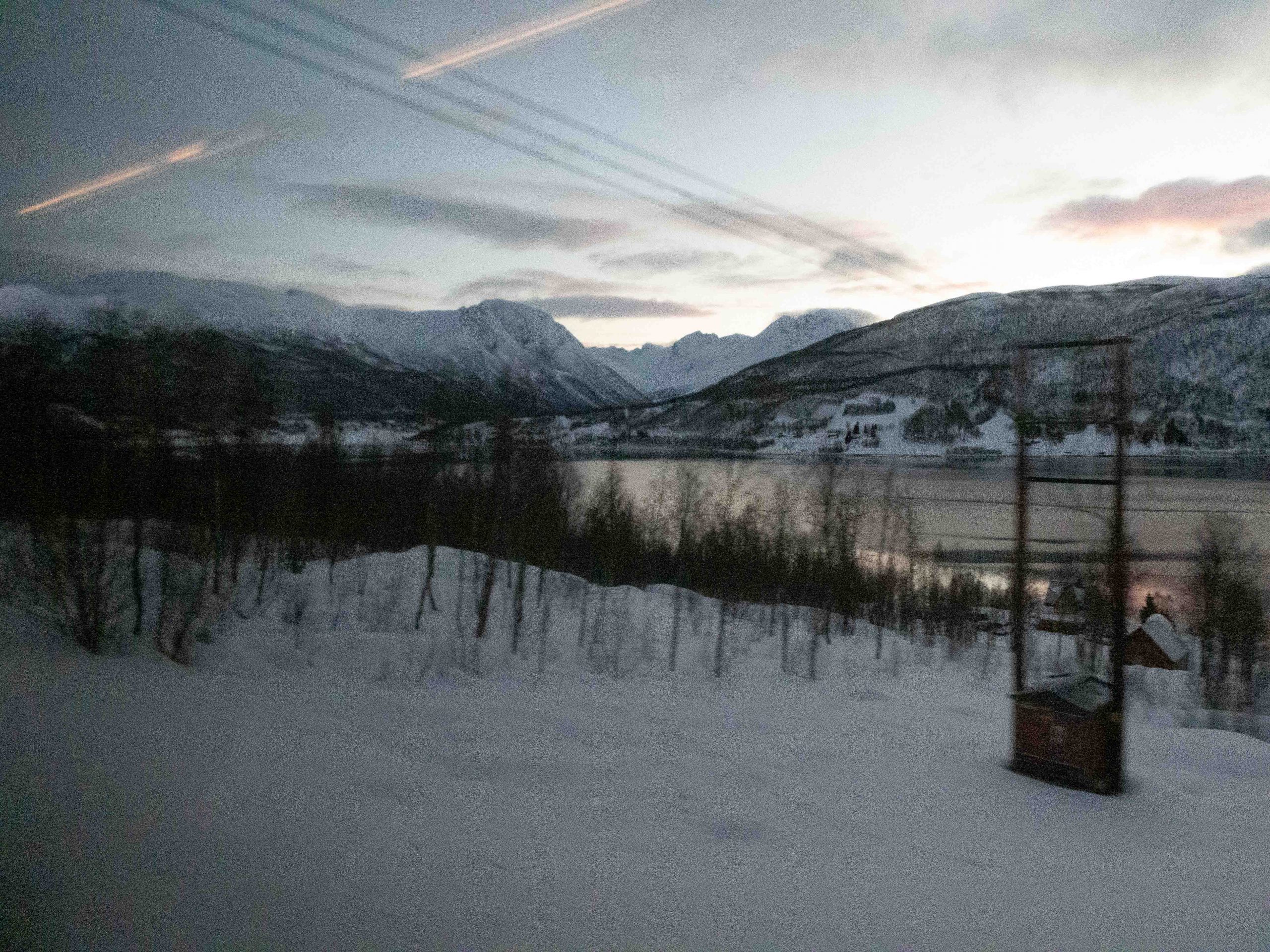


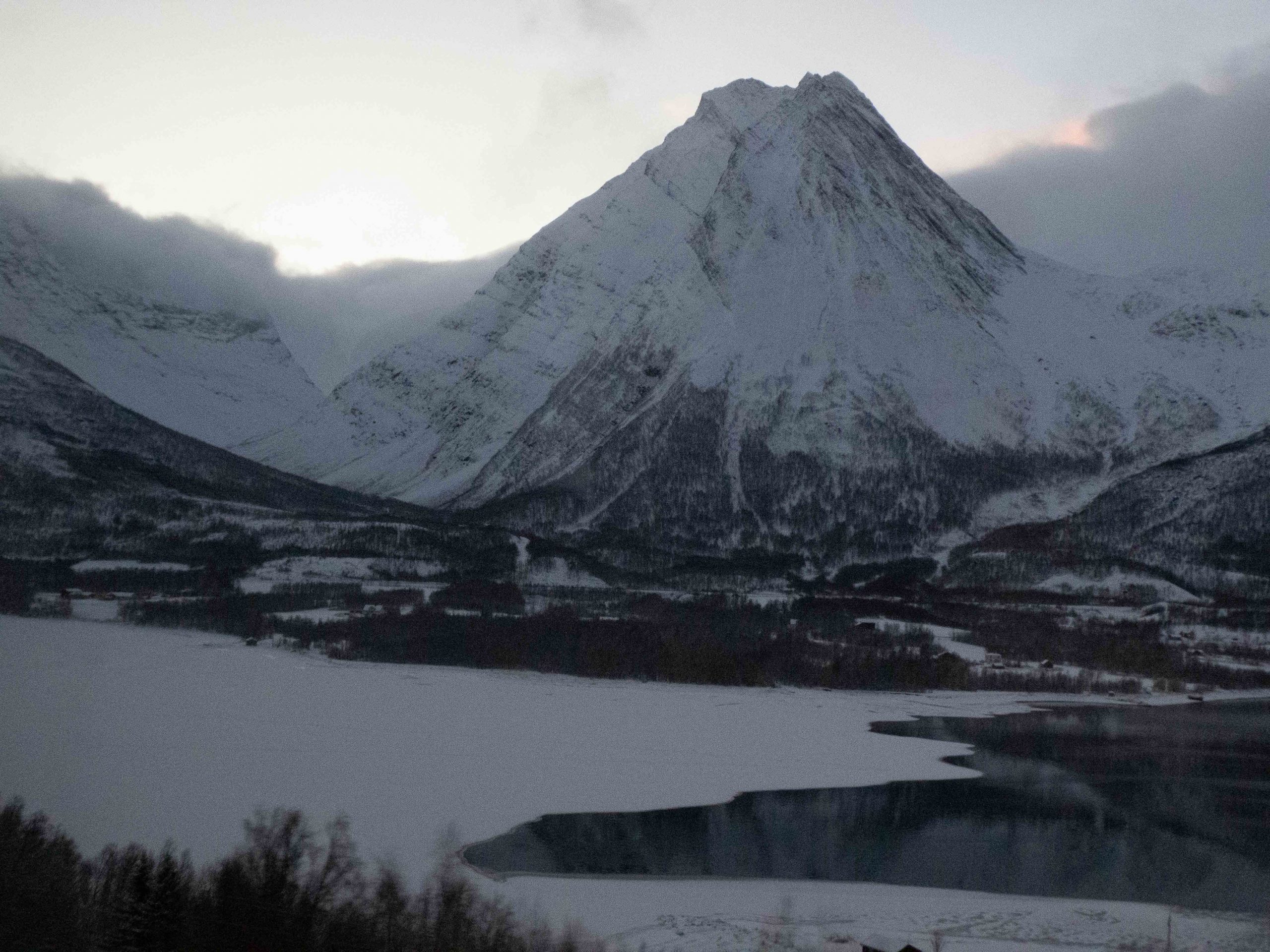
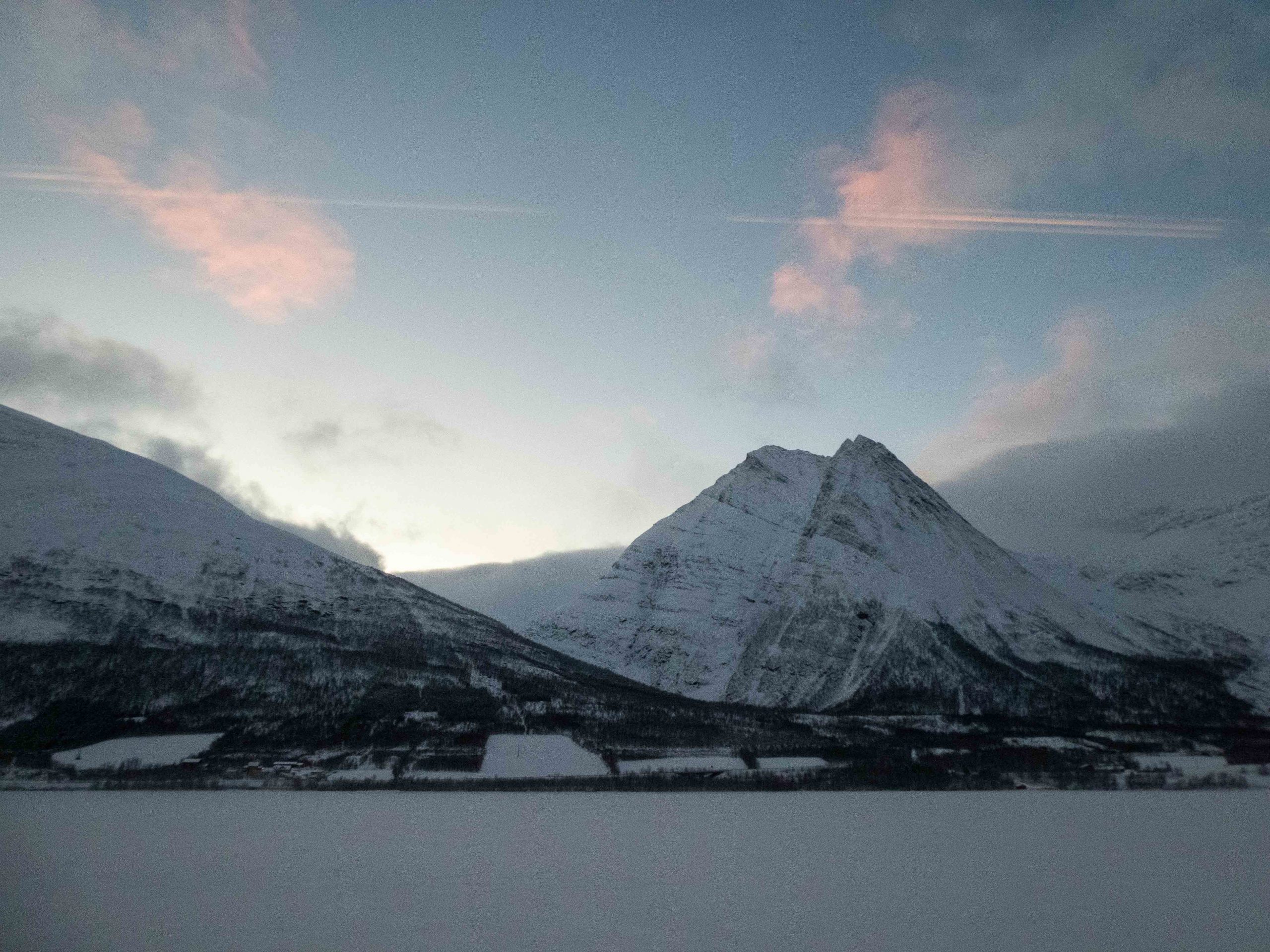
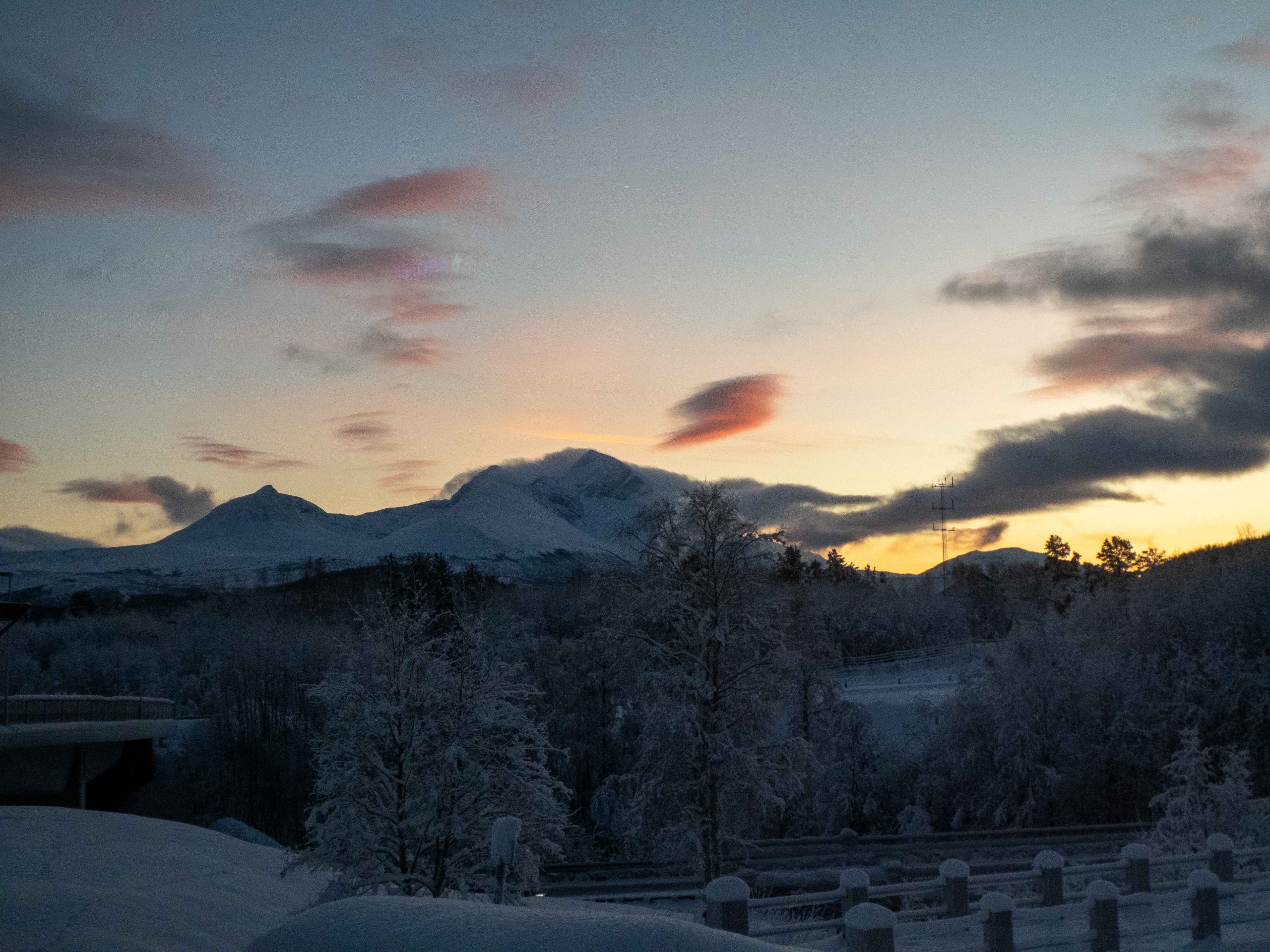
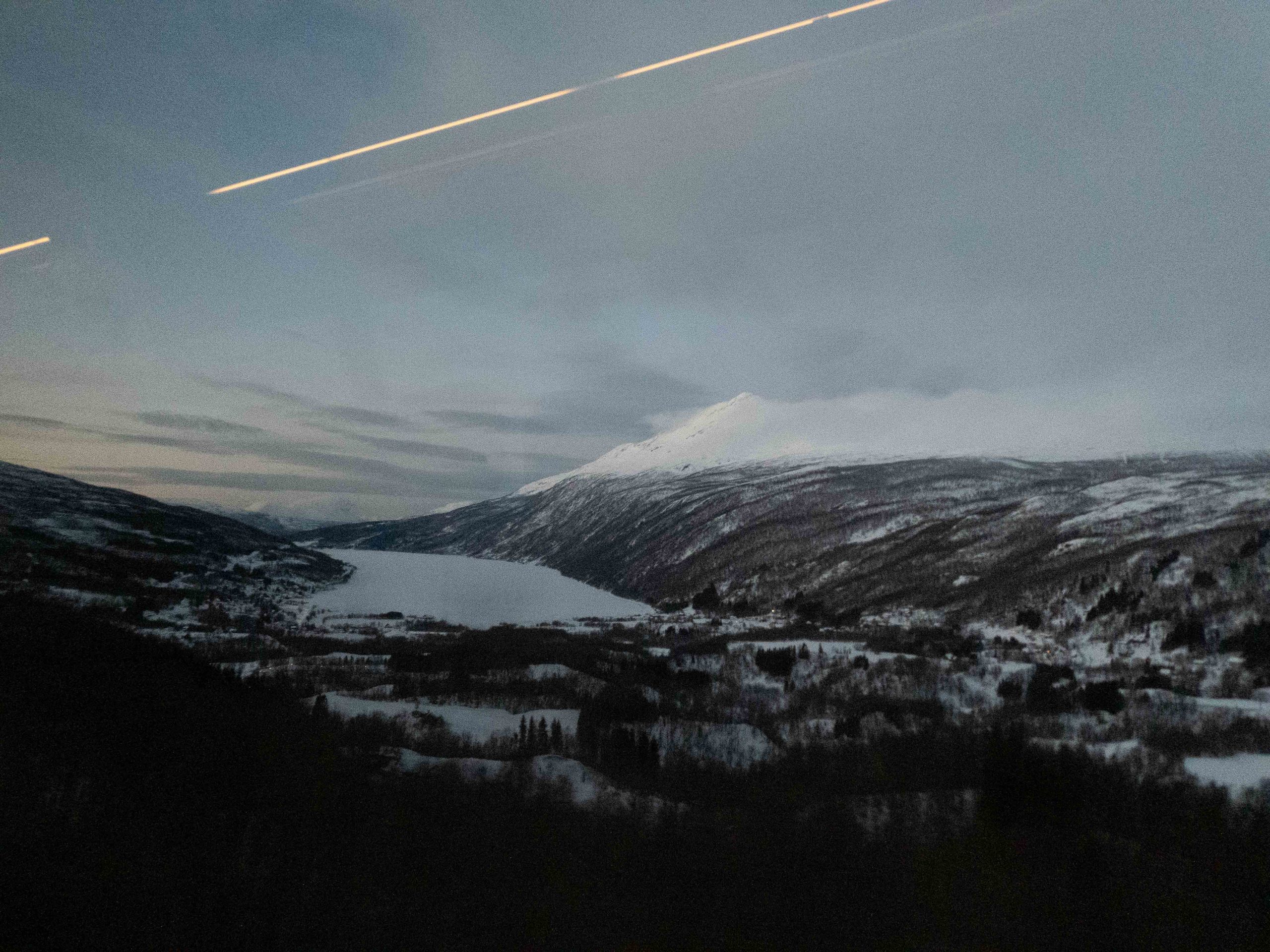

At Narvik, find hotel, settle in, eat an excellent meal in restaurant below hotel (mushroom stroganoff on a bed of mashed potato with root vegetable crisps, followed by lingenberry tart and ice-cream –the best meal I’ve eaten this trip), write diary, bed.
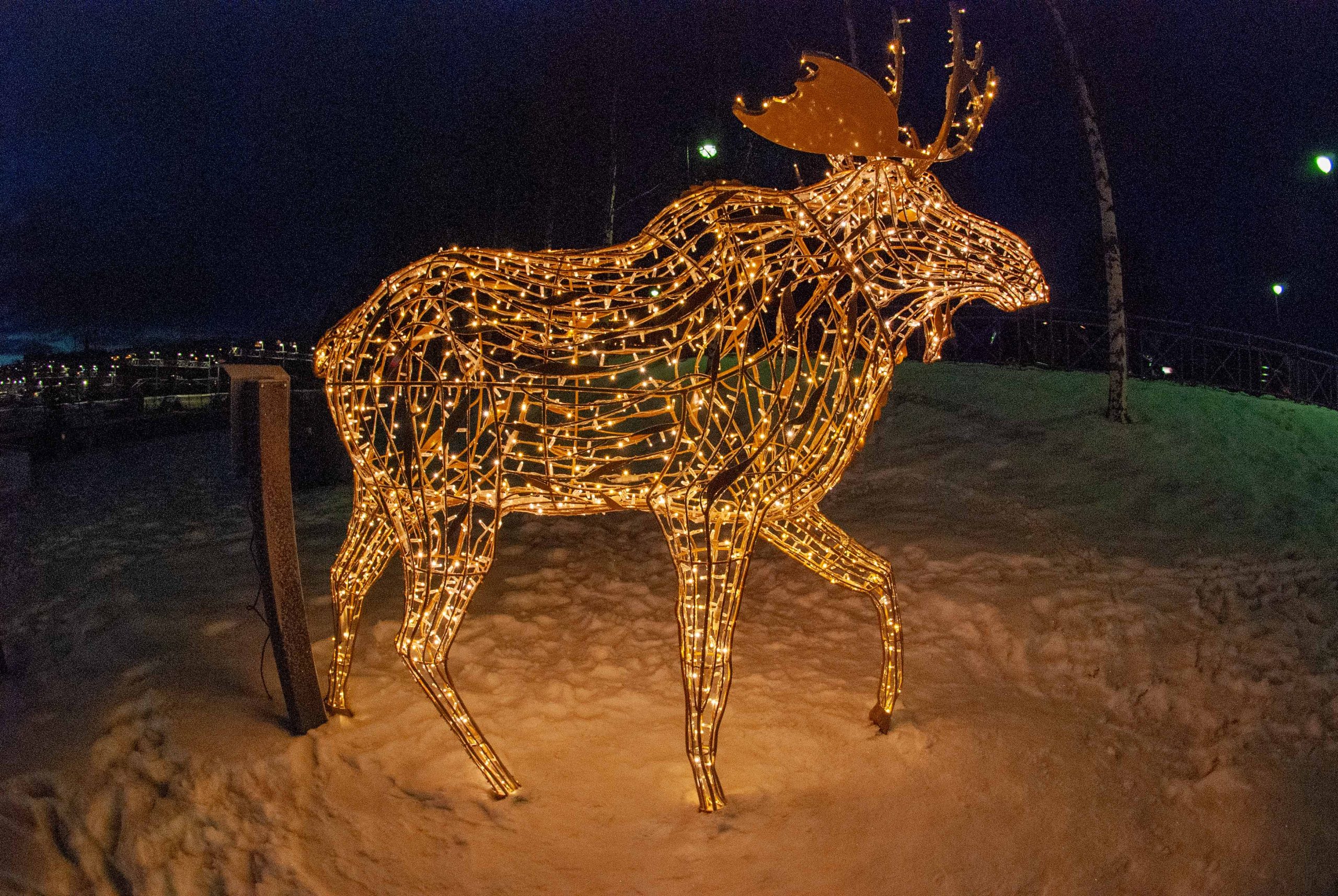
Sunday 7th-Saturday 13th January 2024: Narvik to Oslo via Dovrefjell
Sunday 7th January
To Tourist Information for information about onward transport. The train to Sweden is not currently working because one, possibly two, iron ore trains have derailed, damaging both track and rolling stock. There is supposed to be a replacement bus but that hasn’t been running because of the severe weather that has hit central Sweden. Rumour, because the transport system in Norway and Sweden has gone human free and it is impossible to get reliable information, says that the replacement buses may have re-started but not if that is for both the morning and afternoon trains. I would prefer a morning train but will take either. At least the woman in tourist information knows to look at the Vy Sweden website rather than the Vy Norway version. She tells me to ask the young woman working at the station café as she will have more up to date information. I walk to the station and do. She says the buses have been running intermittently but doesn’t know the logic behind their irregular movements. A morning bus if there’s been one today will already have left but it seems sensible to see what happens at 15:30 this afternoon and talk to a driver if there is one.
I go for walk, starting through a park near the station that goes up over a snowy hill and down to a little leisure boat harbour.

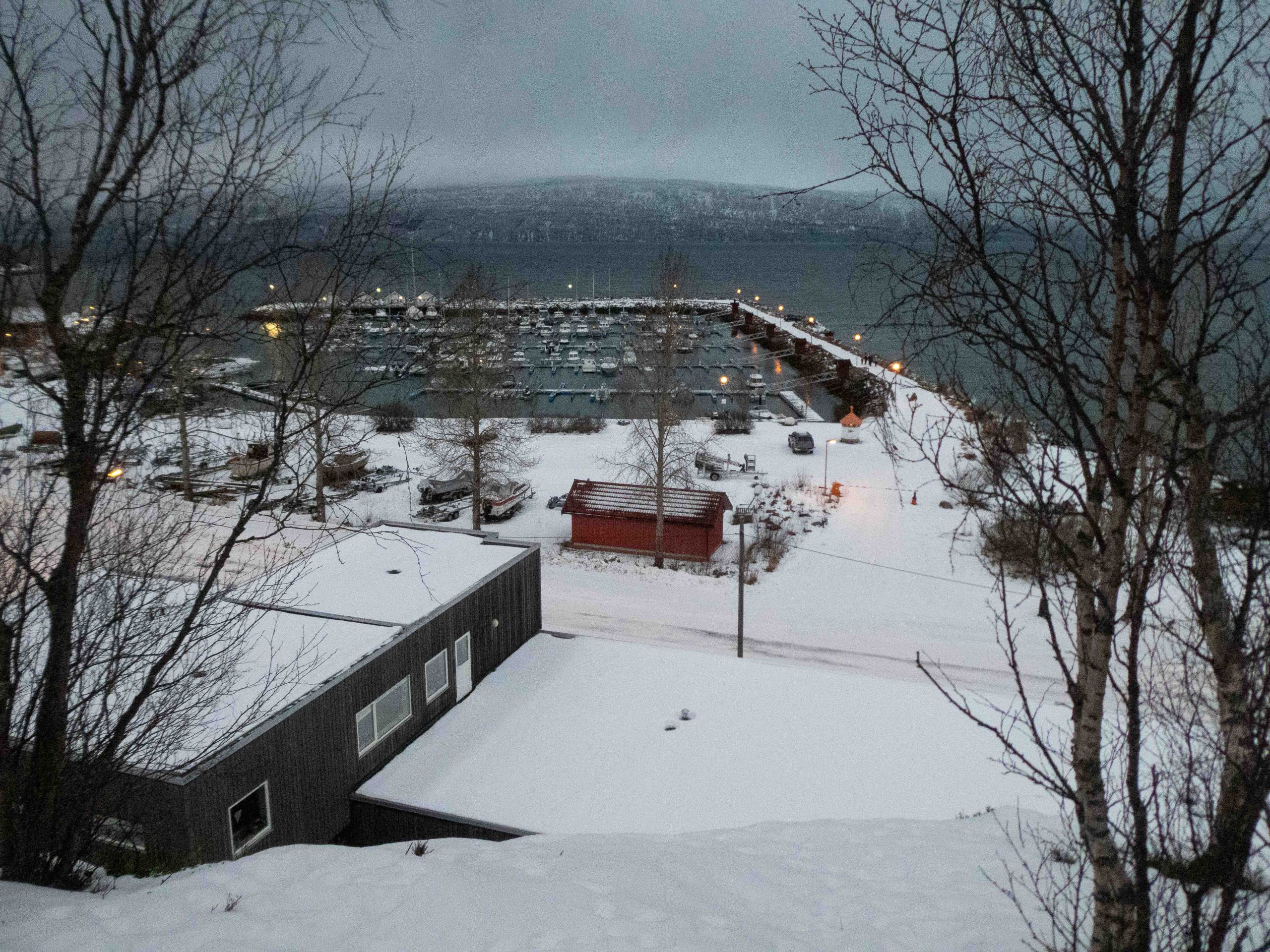
At the start of the park a pair of smaller passerines pass by before I can get my binoculars out. There have been corvids around since I got to Tromso, but no other birds that I have seen. Now at the harbour I see a Cormorant,


and reminded to look for other water birds, see a couple of distant duck. They turn out to be Mallards but a pair of Eider are near them and once I’ve seen them, my brain registers their lovely call. I walk west and follow a path through a fringe of waterfront woodland below the houses which are creeping out from the centre of Narvik. The afternoon is drawing in and I eventually loop back, by chance through what was obviously once the centre of town with a big church, the hospital and some imposing schools.

I’m back at the train station for 15:30. There is a bus waiting and the man driving it says the afternoon bus service has started again but doesn’t know about the morning service. He says on different days, depending on the weather he’s driven to Abisko, further to Kiruna, or even all the way to Lulea. At least it reassuring that some buses are running.
I return to the hotel and start getting up to date with photos and diarising the last week.
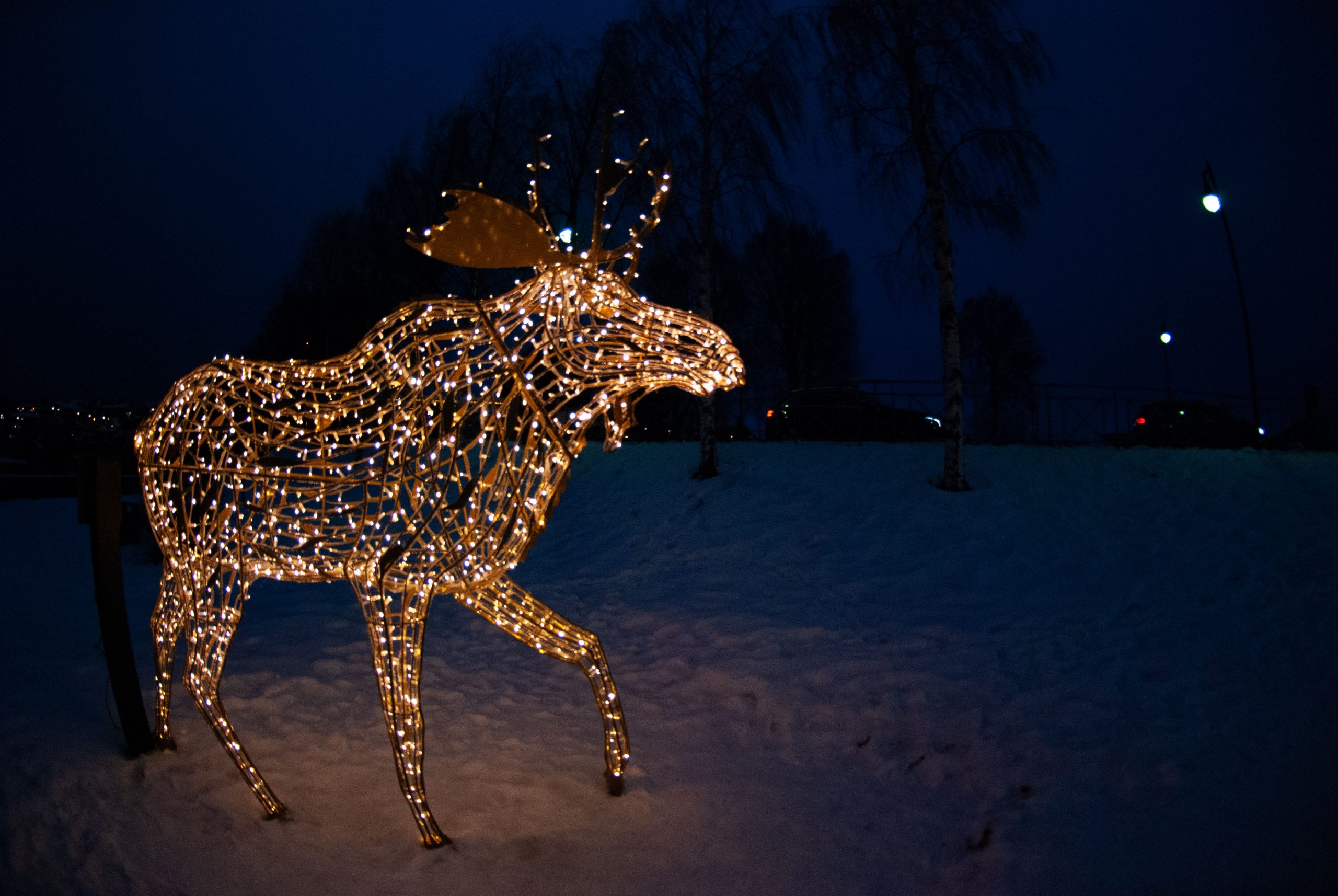
I also finish ‘The Paradox of Svalbard’. I have unused Norwegian stamps so want to send it tomorrow to Haugen Guest House for Elena and Ingunn to read. It has been a disappointing book. The Czech author learnt Norwegian to do her study and the book is written in English, so all that is impressive. There is some interesting stuff in it that go beyond what I’m picking up in my general conversations, and some sections are written in clear, jargon free English. If she’d stuck with that formula for the whole book, it could have been much shorter and much better. Instead, it is bloated and confusing, with whole sections of meaningless social science speak, hyperbole and her own opinions. Many of the more interesting bits are when she quotes her interviewees, even though she also quotes herself asking leading questions or qualifying a question by offering her own opinion first. Though she apparently spoke to over 150 people, we don’t hear 150 voices. We do hear from other social anthropologists, some of whom say very interesting things (a paragraph on the super-diversity of London for example). It is a useful primer for my further travels in north Norway where people seem to feel equally ignored by central government, though that is probably common to most people around the world.
Monday 8th January
I’ve made a commitment to a day’s work reviewing the Sustainable Fibre Alliance goat welfare standards and it’s been preying on my mind. I’ve started it and today, in this comfortable Narvik Hotel Wivel, I finish it and send it off.

It is another warm wet day. I’ve taken a break at 10.30 to re-visit the station. There is a morning bus! The driver is based in Svolvaer in the Lofoten Islands. It is a revelation to hear he’s fed almost as little information as we are. He drove it yesterday, which is a surprise to me as no one in town seems to have noticed, and says the snow was coming down so thickly up in the mountains, the visibility was barely a yard. Some trucks came off the road. He told his boss he didn’t want to drive today but has been told he has to. The paperwork supporting his trip says he is driving direct from Narvik to Abisko, but his boss has just texted him to say he’s got to stop at all the intermediate stations, many of which lie off the road. He says he’s been driving buses for 18 years and used to enjoy it, but not now. He doesn’t know what will be happening tomorrow.
When I’ve finished my work, I go for a walk. There is a runed rock marked on the town map. It is not far but I forgot to search it out yesterday. I’ve now heard it’s not only runes, but a moose, so am particularly keen. It’s dark again and raining. This is another quest. As I get close, I realise I’ve forgotten my map so I’m relying on memory. I feel if the runes want me to see them, they’ll call me to them. After my first blank, I stop to ask two women. They haven’t visited the rock since school, but know where it is, and direct me to a road barely visible in the lamp lit rain, tell me to walk up it then branch off up a path up into the wooded hill behind. I follow their direction, find a tiny path, and follow that. It looks more like a short cut to someone’s house. The runes are telling me I’m nearby, but the hillside gets steeper, and the footsteps drop down to a road. My second blank. Although primarily residential I see a warehouse office up the street still open. A helpful young man explains how to approach it from the top. I haven’t gone far up the road when he passes me in his car (on his way to collect his children from some activity) gives me a lift. Third time lucky? This time as we get closer there are signposts and at the end of the road where he drops me, the path is clearer. I drop down through the wood and find the site. I’m steeply above my first path. The rock, fenced off, is not vertical as I’d imagined, but large and sloping. And thickly covered in snow. I read the information board and take photos. The runes have been playing with me! I follow the path down. It emerges on the first road hidden behind a garage, so it is not surprising I missed it in the darkness and rain.
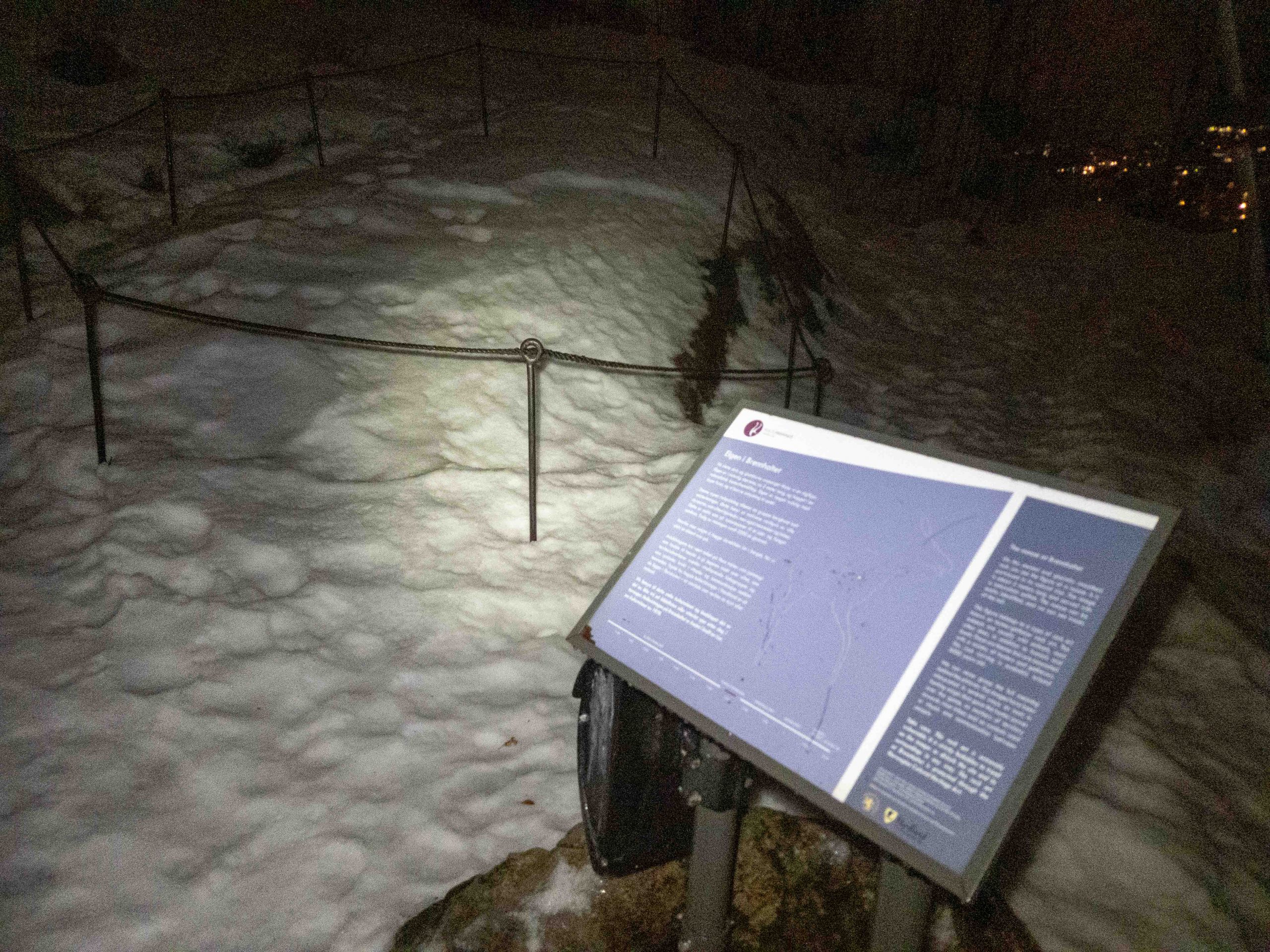

I’m back near the little leisure boat harbour and walk east. The footpath lies between road and sea but when the road turns inland, the path continues along the shoreline into eerie woodland. A man walking a husky overtakes me and I follow them to a sodden summer picnic area where the path joins the old coastal road. Husky and man turn off towards town, and I carry on through the woods towards the big bridge we crossed over on the way into Narvik. Though my Paramos remain completely waterproof, the rain, the melting snow, and the hidden puddles are finding their way into my shoes and socks, so eventually, I turn back.
Over dinner I chat with an Australian who was also at the first hotel I stayed at in Svalbard though we haven’t talked before. We’re the same age. He grew up in Newcastle, NSW, now bases himself out of a small boat moored in Darwin and travels a lot. He’s currently seeking a doctor he can trust to give him advice, and hopefully effective treatment, for a heart that is apparently failing.
I intend leaving for Sweden tomorrow so get things sorted and drying and engage with my blog.
Tuesday 9th January
Up early, get everything sorted, check out and get down to the train station. No bus, and the noticeboard seems even more emphatically negative. The weather is worse. The body of exceptionally warm Atlantic air has now risen up Norway’s coastal mountains and met the exceptionally cold air that’s been hanging over Sweden in a confusion of wet snow and thawing slush. There seems little chance of any buses todays. I chat to a Norwegian man who is also waiting. He used to work on trawlers out of Hammerfest but has moved to southern Sweden to get warmer weather. He’s trying to get home and like me he’s puzzled about what to do. A few years ago, he decided he didn’t want to be ruled by a mobile phone so got rid of his! A big step in a society like this, and now he is reliant on the young woman in the café, who has phoned his stepfather who’s going to pick him up and take him back to his mother. It seems surprising from someone about my own age.
So, next stop the bus station and try for the 100 bus going south to Bodo for an onward connection to Trondheim and an alternative route to Sweden that way. But today’s first bus went at 07.10 and the second bus has been cancelled for some reason. The next one will be at 07.10 tomorrow morning.
I’ll try the train station again this afternoon and hope I find a replacement bus there.
I write that last sentence, look at my watch, see it is 15:40, and panic. Is the afternoon bus around 15:30 or 16:30? I realise that even if there’s been one, I’ve probably missed it. In a turmoil of self-execration, I throw my things together and pretty much run (well, walk fast) from the hotel to the train station. The station café is in darkness. There’s no bus sitting outside. But inside there are three Chinese travellers who’ve been there since just before 15:00. There’s been no afternoon bus, and to my shame I feel hugely relieved. Two of the Chinese, a man and a woman from Chengdu, are keen to have my help; another woman is fixated on her phone. They’re on a three-week holiday from China taking in Sweden, Norway and Iceland, and are flying from Stockholm to Iceland in two days. They’ve tried phoning for a taxi to take them into Sweden, but their phone won’t allow them to connect to the local taxi firm. I phone the local taxi firm for them from my phone. I also suggest the local airport 90-minutes away. Just as I am finishing the taxi call, the other woman jumps up. She’s sorted something at the airport, called an Uber which arrives almost immediately, they bundle in, and leave! At some point in all this, a woman emerges from a door into what I’d thought was a museum of train railway history – there’s a picture window by the door onto a scale model of a prosperous nearby settlement that has since fallen into hard times and disappeared – but which is apparently a Norwegian train service office manned 24hrs. Amazing that they sit in their office at the station and rely on the café staff to provide information to the punters. She says the fault in the current situation is that Swedish Vy operates this line, not Norwegian, and they don’t tell the Norwegians anything! She says the Swedes say there will be buses tomorrow but the weather forecast is worse than today so she doesn’t believe them. She also says the Norwegian government is considering back-tracking on a lot of the rail changes made over the last decade to provide a better service and encourage more passengers.
I return to the hotel, check in again, and chat to the friendly staff. I learn the train line was built to ship iron ore (I’d been thinking it was coal like in Svalbard) from the Kiruna mine (the one that’s been in the news because the mining company is paying to move historical downtown Kiruna to a new location as the remaining iron ore beneath it is so valuable). She also tells me about the Battle of Kiruna, apparently the largest battle in the Second World War. The Germans moved up from Norway, which they’d already occupied, desperate to take the mine from neutral Sweden as its ore was supplying two thirds of the iron ore used in the European armaments industry. They were thwarted by Norwegian guerilla fighters, who knew the mountains, supported by the allies. Apparently there’s been a recent film made about it. I need to look all that up online.
Wednesday 10th January
All goes smoothly: 07:05 bus Narvik to Fauske (near Bodo, arr c12:15). The bus catches a ferry at Bognes, which is just south of the Lofotens (while I’m having a WhatsApp chat with James in NZ who just said he’s been thinking about a trip to the Lofotens), and then we change buses.


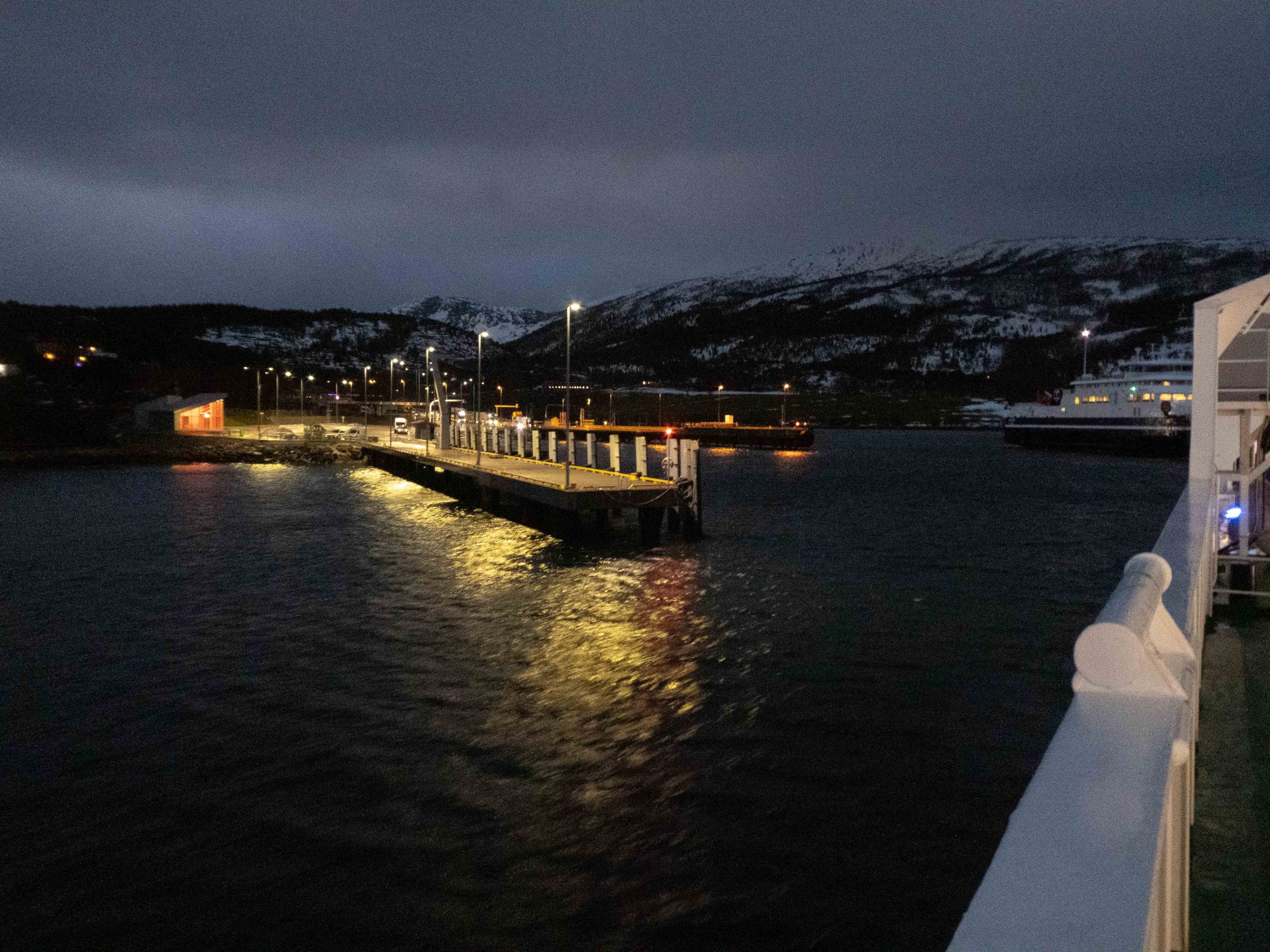

The ferry has these pictures in its canteen:
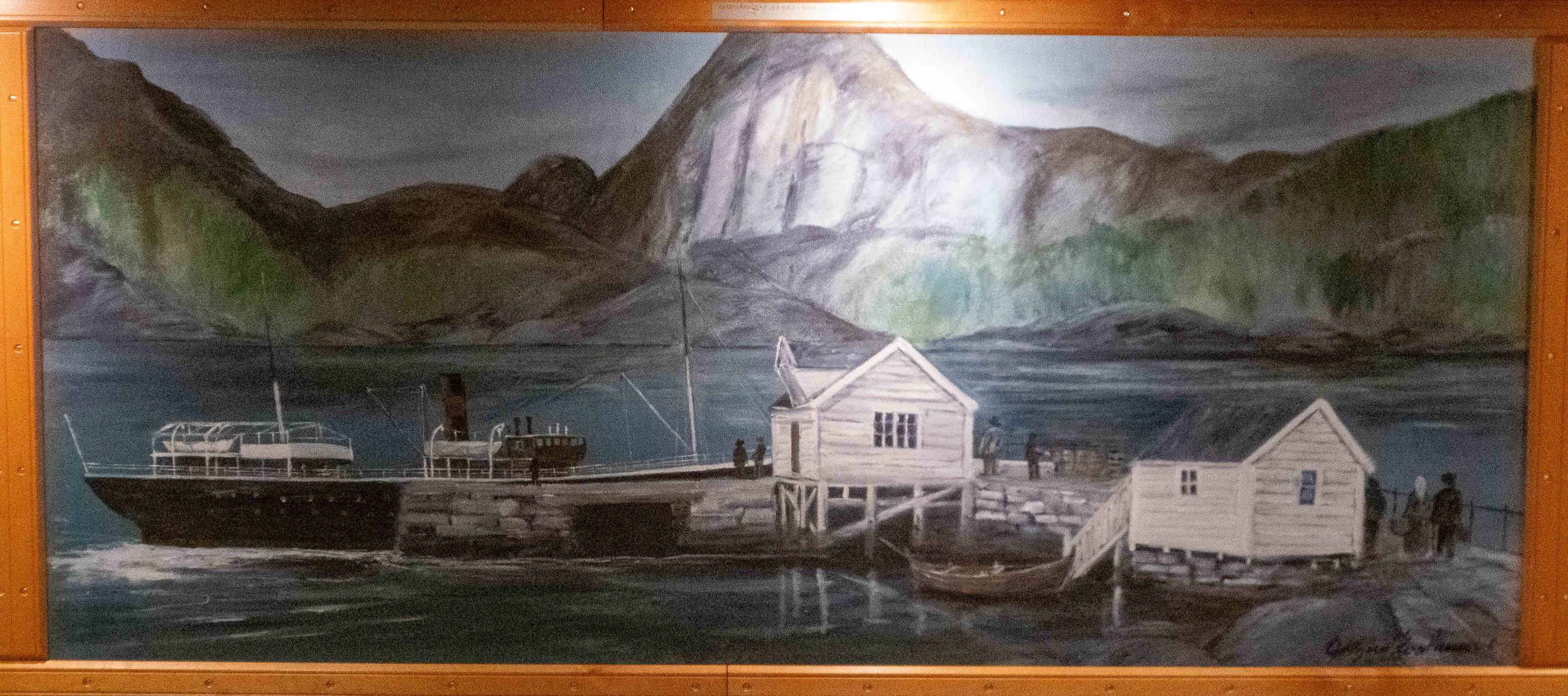
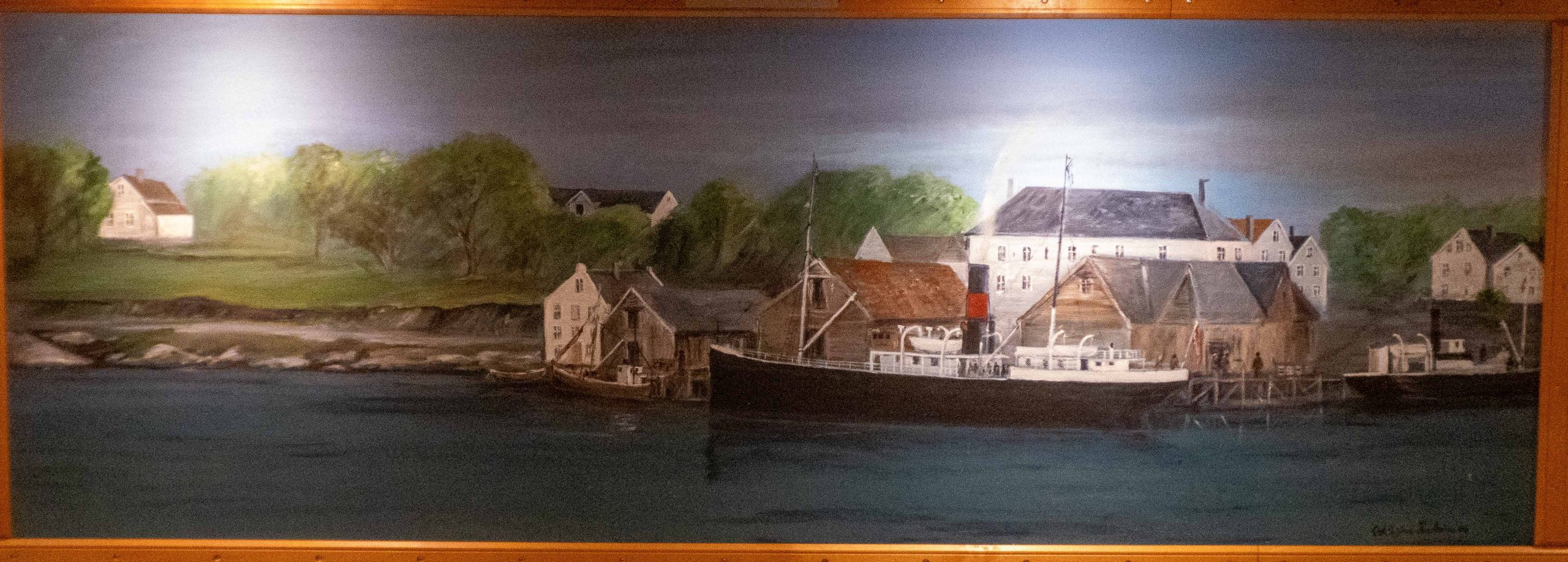


Then 13:16 train Fauske to Trondheim 21:47. It is still a treat to see daylit scenery particularly scenery so remote and rugged, though of course for some it is home.
The temperature remains above freezing and some of the way it rains. Unseasonal apparently.



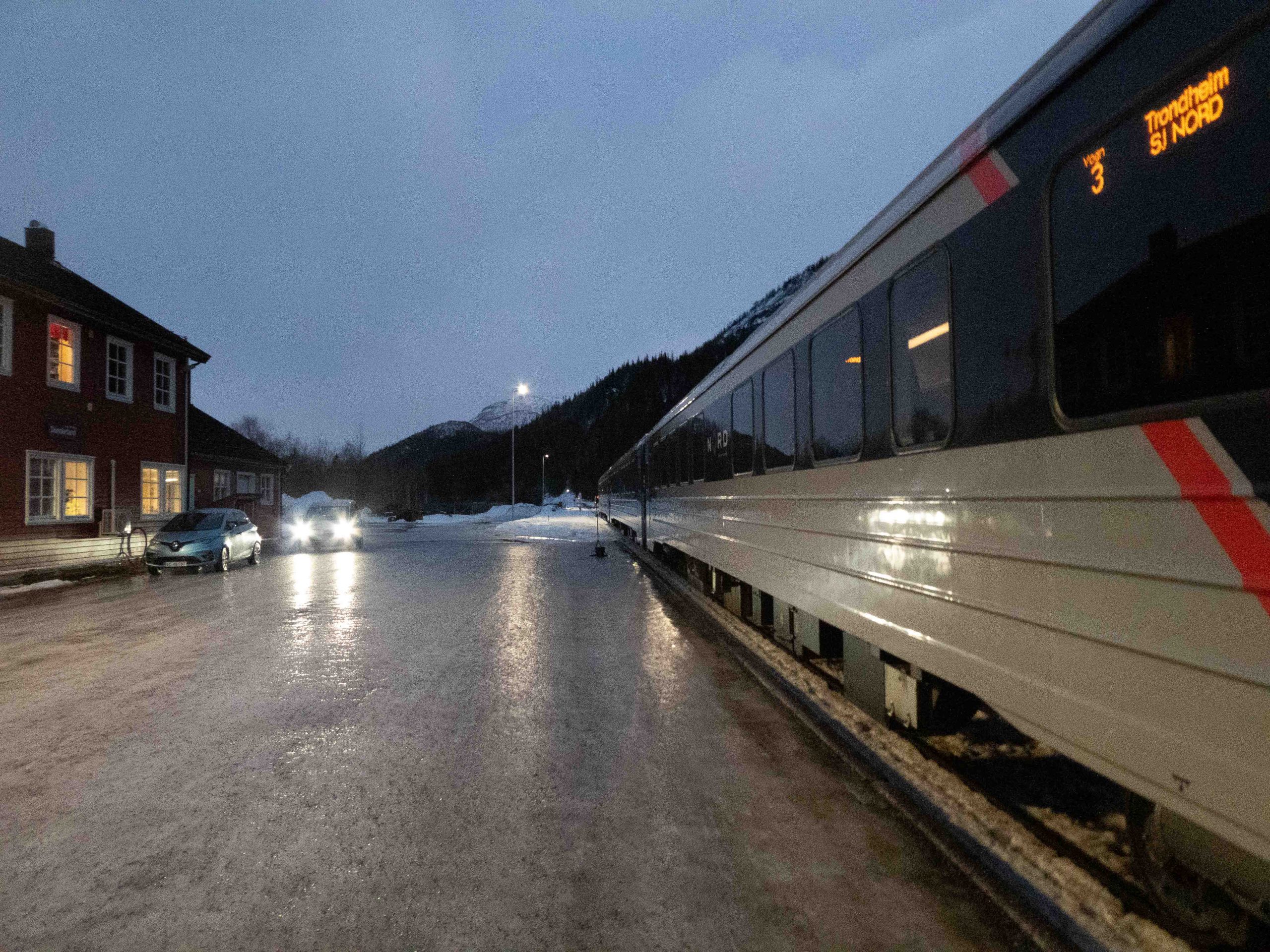

When the train stops at a station to let another pass, I chat to the train man about the rail system. People have been campaigning for years for a line further north. He says the Germans built the section from Fauske to Trondheim during the war and people say that if they’d occupied Norway a bit longer, they’d have completed the line to Tromso. Like the woman in Narvik, he says there’s talk of a new policy on the railways.
In Trondheim, walk to the Pilgrims’ Guesthouse which has a café I found on my first visit and returned to in January, so it is nice now to stay there. Here are some views of it from various places:

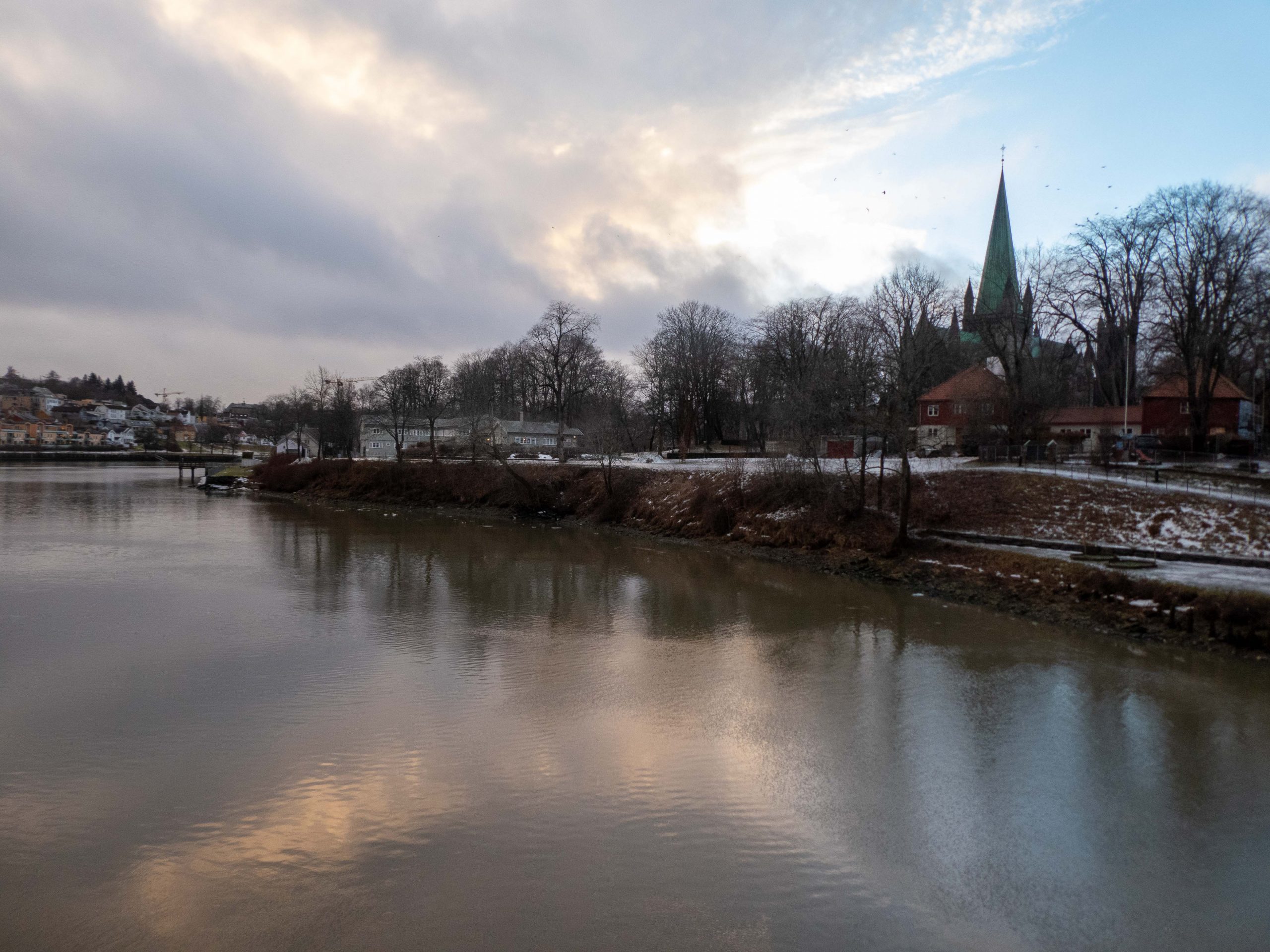

Thursday 11th January
A good Pilgrim’s breakfast then to Public Art Gallery/Muesum, which has been closed on both my previous visits. It is closed again, it opens 12-4.
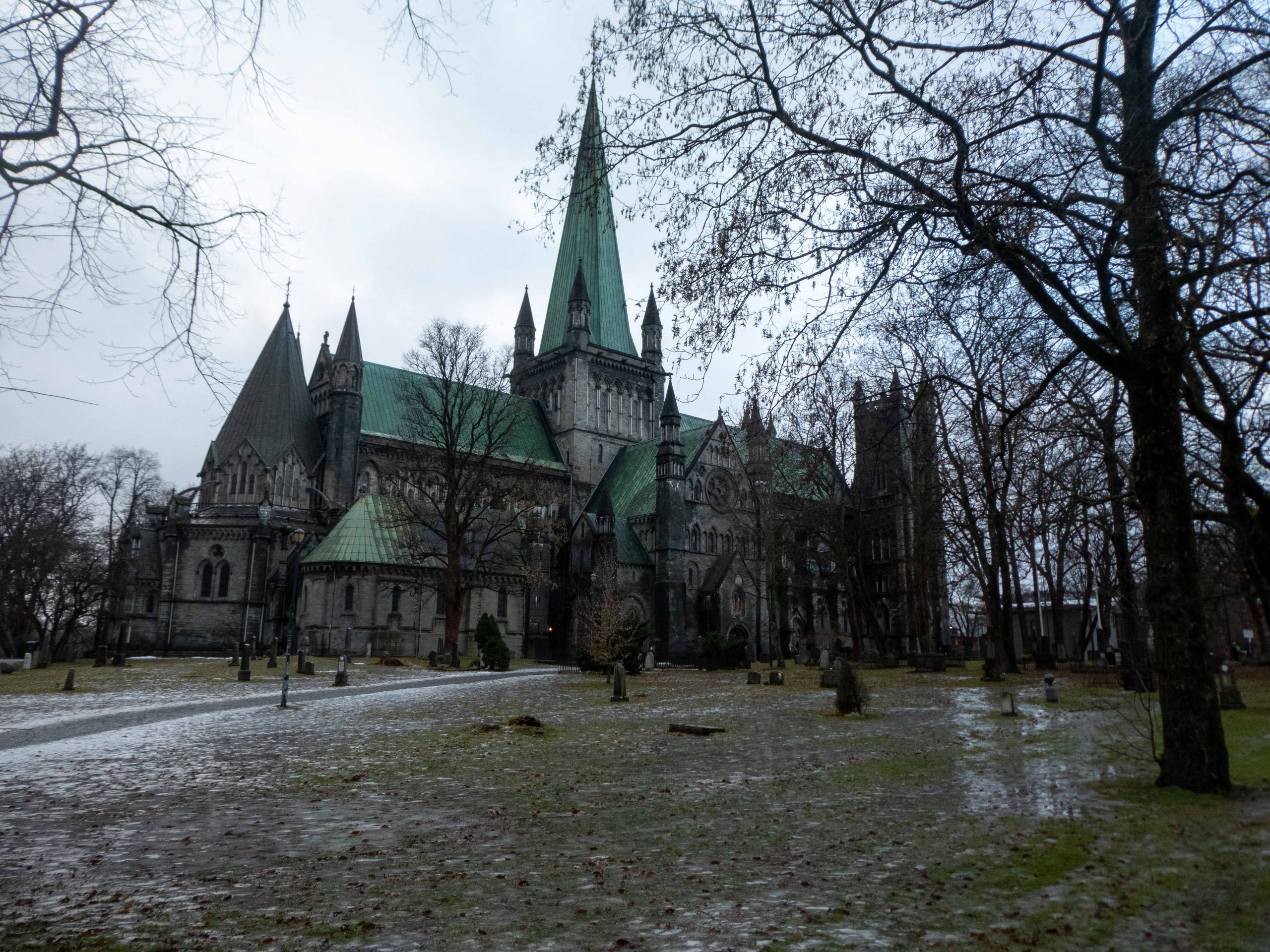

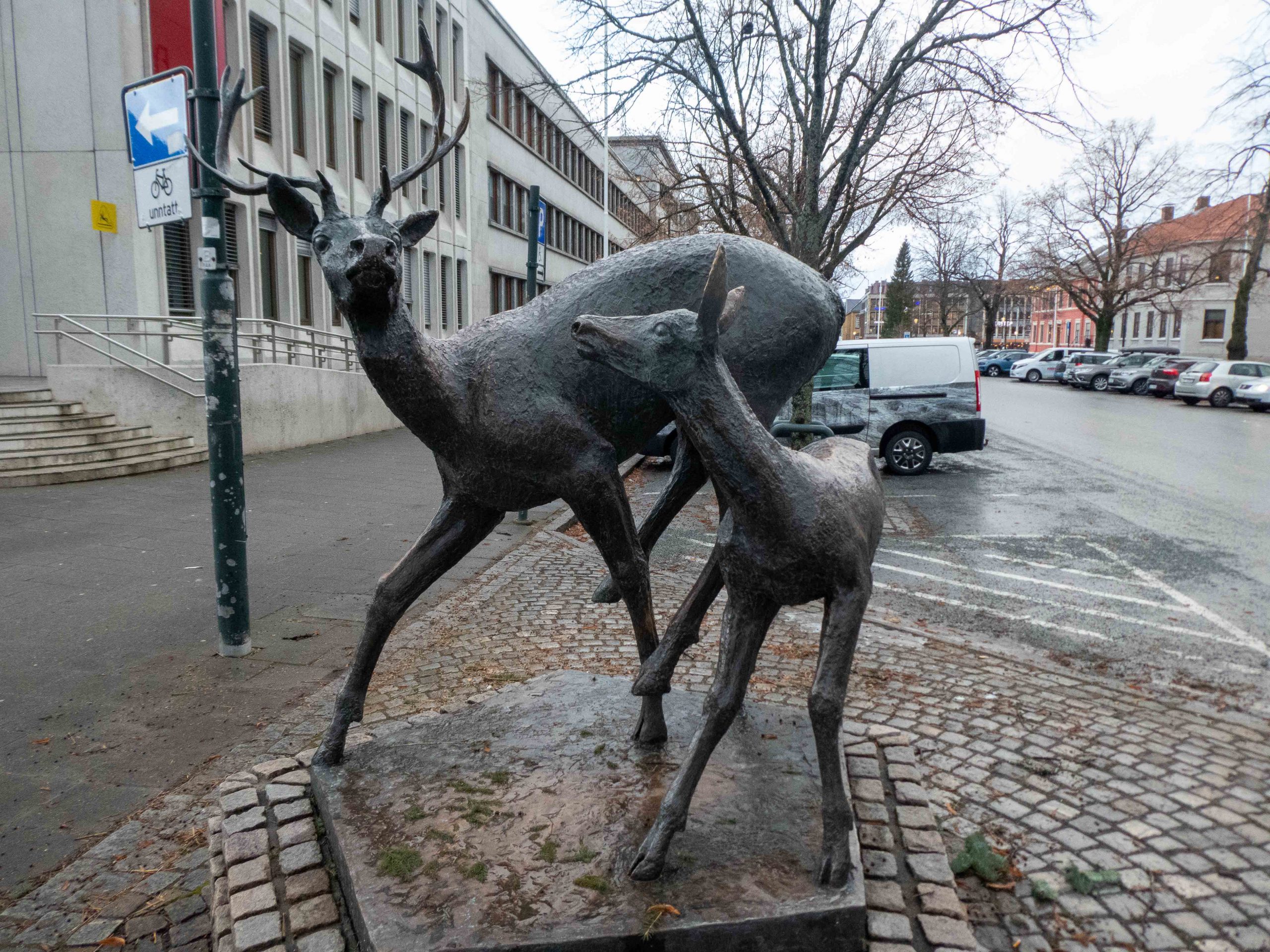
Instead, I meander to the train station. I’ve lost confidence in online information since Narvik. There seem to be two different train routes from Trondheim to Oslo. The algorithms offer me the more easterly route, but, remembering Hjerkinn, I’ve found it seems possible to go that way but want to be sure, especially as some of the options involve replacement buses. A posse of train officials outside the station seem happy to talk. Not only do they confirm the train connections should all work, one says he sees Musk Ox from the train, and possibly nearer Kongsvoll than Hjerkinn. He says you see them when they come down from the mountain in Spring with their young.
Back to the Art Museum/Gallery, small but enjoyable.

I ask the staff why none of the Norwegian painters seem to engage with the Northern Lights. They don’t know but one says there’s an art gallery in town that has more of that sort of thing. The ticket also covers an Arts and Crafts Museum on the other side of town.


Next stop is the fortress on the hill.




Then to the Arts and Crafts Museum just before it shuts at 4. It has a lot of quirky stuff:





On to find the art gallery with the more modern stuff (some of which is good), back to the Pilgrims for a short rest, and out again for supper at a vegan restaurant I’ve just found online.

In town today I find a good pair of gloves in the middle of the street, pick them up and put them on a nearby post. Lost gloves are everywhere in Norway. I ask some passers-by what happens to them. They say they get collected up and taken to the Salvation Army. It’s an optimistic story.
Friday 12th January
Today I leave Pilgrims Guesthouse where my bedroom looks out onto Nideros Cathedral:

Over another good breakfast talk to two men working in semi-conductors. I’ve never met so many people involved with computers/computer science/AI as I have during this holiday. The one from Stockholm seems to be in sales (has over fifty different semi-conductors from many different companies in his portfolio), the one from Tallinn works for one of those companies and has been providing technical backup during a sales trip. When I mention friends in Uppsala and Tartu the Estonian asks if my life has been in academia (both university towns) but the salesman is more garrulous. I’ve said I’d like to live in Svalbard for a year and he cannot understand why. He’s just returned from Thailand and would like to live there where it is hot. A short while later in a different conversation, the Thai woman who’s on breakfasts says Thailand is much better since it got more modern, but she’s chosen to live here in Trondheim.
Then to the train station in murky rain. My plan is to take the train to Kongsvoll, get off and look around, get the second train Kongsvoll to Hjerkinn, get off and look around, then take the last train from Hjerkinn to Oslo. I’m slightly unsure about all this. I ask the train person if she’s ever seen Musk Ox and she says when she joined the railways, she asked her boss the same question and he said ‘No, you never do, in 40 years of service I’ve never seen a Musk Ox’, and four minutes later she saw her first.

I check the distance between Kongsvoll and Hjerkinn on Google maps and it says 12kms. The scenery up to and around Kongsvoll is dramatic. We’ve left the rain behind, and the sun is out. Dovrefjell National Park is the second highest massif in Norway, with its highest peak, Snohetta, one of Norway’s highest mountains. We rise above the tree line and it is all long snowy contours with gentle peaks. The man in Trondheim station said he thought there was a mountain guide in Kongsvoll which suggested to me there might be a small settlement.


But we are in a bit of a valley gorge with patches of river visible through gaps in the ice, there is no settlement and no one about.

I have been wondering about trying to walk from Kongsvoll to Hjerkinn along the road. I have about 5hrs. My concerns are the tiny wheels on my bag and whether they are built for a 12km drag along the icy edges of a Norwegian mountain road in winter, the fairly regular big lorries, the possibility of road tunnels, my own physical frailty, and whether I’ll actually be able to make it in time. The upsides are the views, the freedom, the exercise, the challenge, the vicarious pleasure of knowing Musk Ox are in these mountains, and the possibility of seeing one. I decide to go for it.
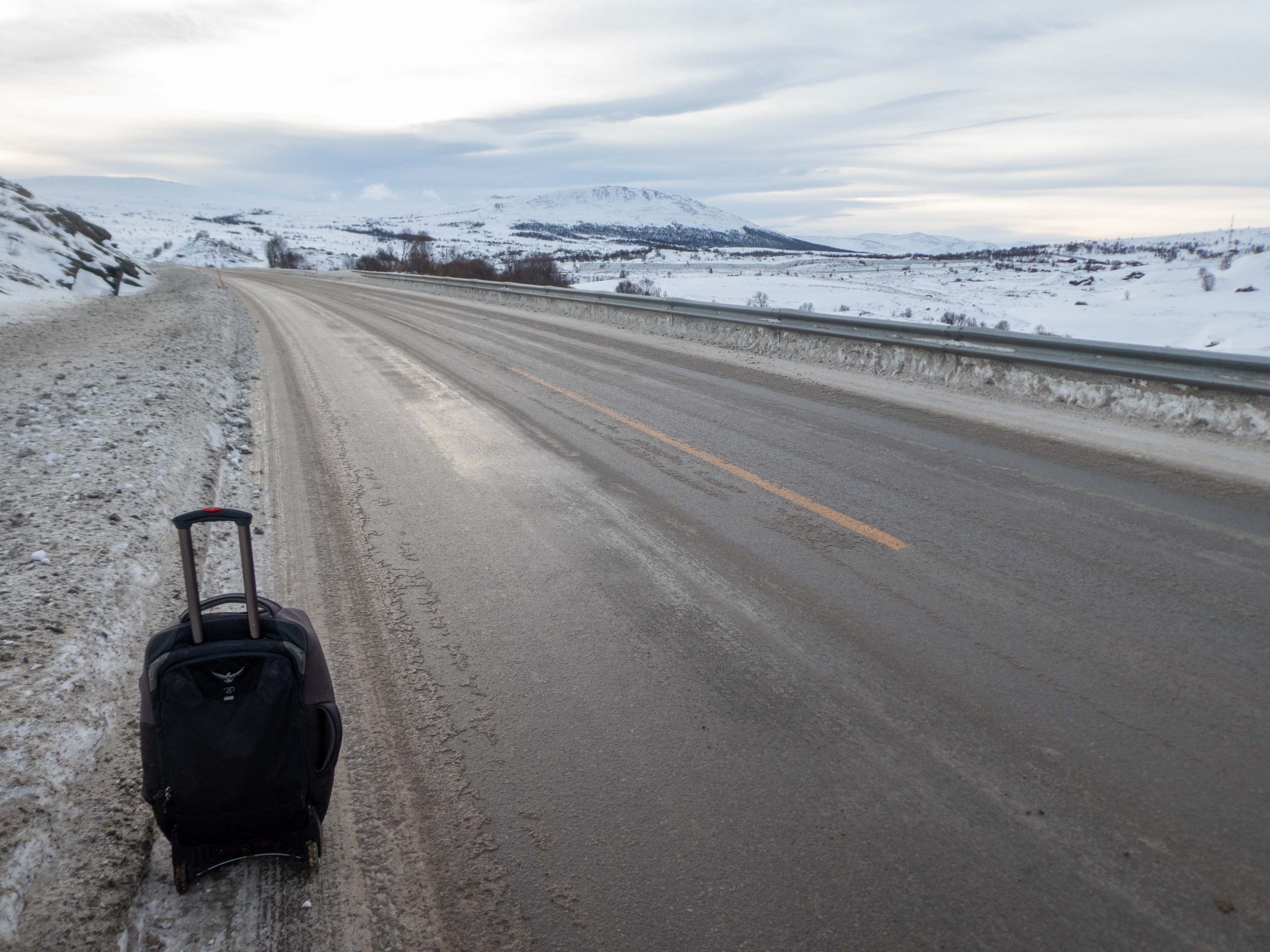
After one hour I’m doing ok, the air is fresh, the landscape clean, and google seems to have registered that I’ve moved.
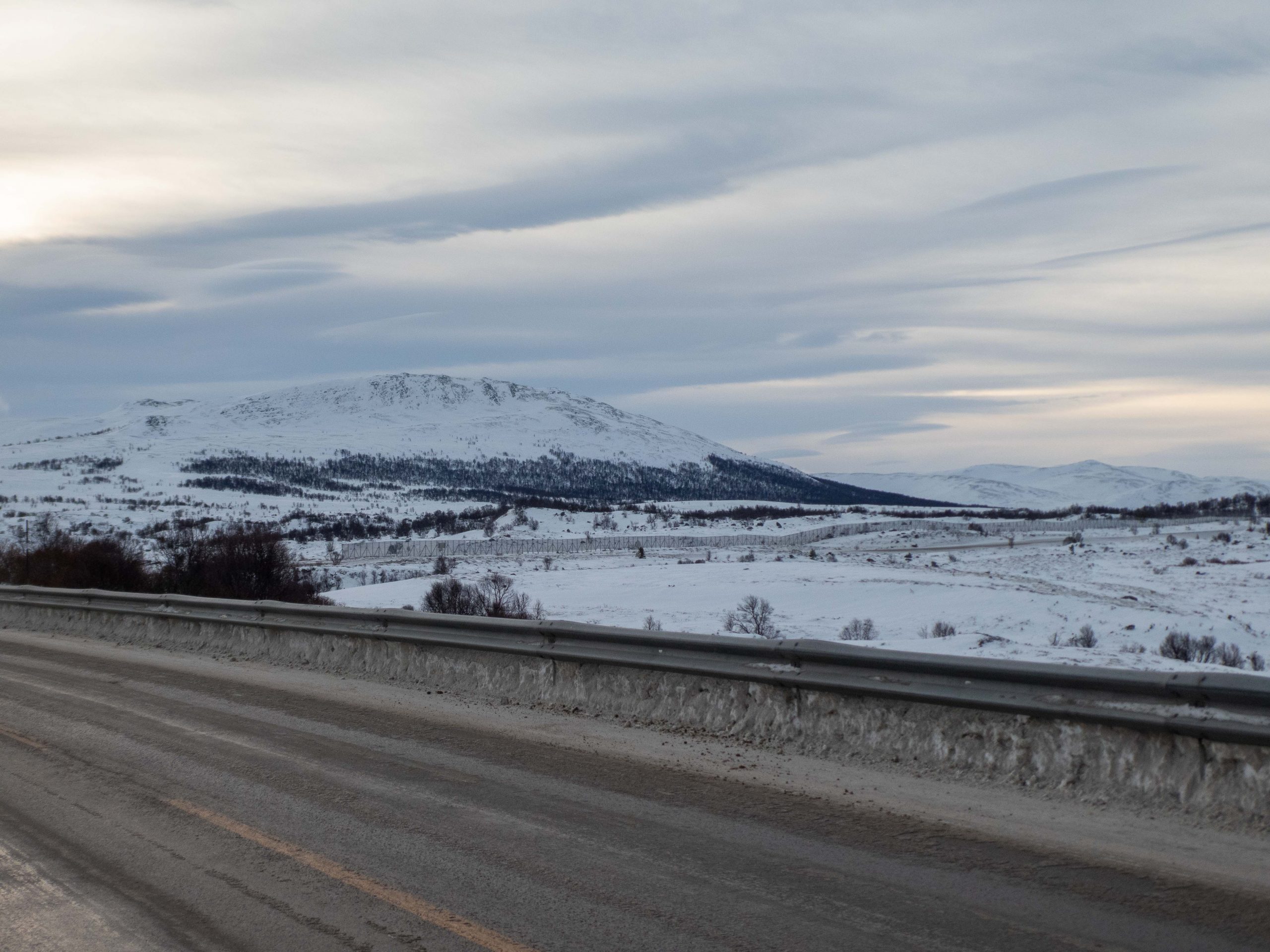
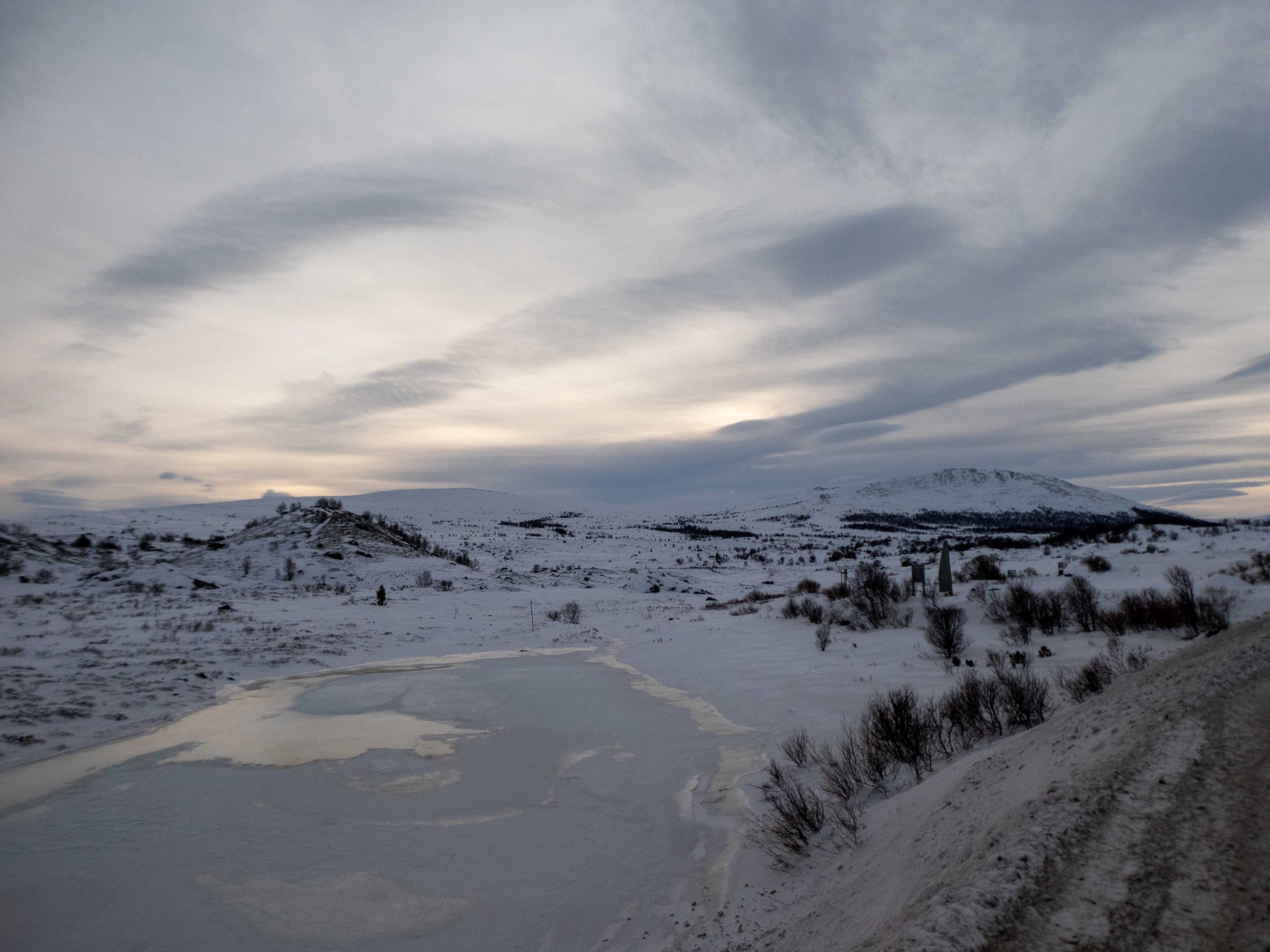

Close to two hours I pass a shallow valley with a Pilgrim route sign, and soon is a rest area, the first I’ve passed where cars can move off the road. There is a 4WD pulling a dog trailer and sledges on top and three people talking beside it. One, Erlend, is a nature guide, one is his client (an older woman, they’ve just had two nights in a tent in the snow up in the park, this is her third trip in Dobrefjell with Erlend), and one, Felix, is the ‘dog musher’ who went up to collect them this morning. Erlend says, ‘have you ever seen a Musk Ox?’ and I say, ‘No, but it’s in the hope of seeing them that I’m walking down this road’. And he points out a family of seven resting on a far distant hillside. There they are, tiny but distinctly Musk Ox.

It seems unreal that this is happening. I’m standing here watching Musk Ox living wild in Dovrefjell National Park. It has always seemed something for a possible future.
Erlend disabuses me of my misconception that Musk Ox in Norway are not thriving. When the government decided Dovrefjel should be for Musk Ox, their numbers climbed to 450, too many for the available winter food and diseases were on the rise, pneumonia and a possible Herpes virus infection that affected their muzzles, so a decision was made to manage them, to keep their numbers to around 200. This has involved culling whole family groups from time to time (☹). I get Erlend’s details for a future visit.
Felix lives near Hjerkinn and offers to drive me to the station (which as we drive seems a long way!) and we chat about dog sledging. In 2017-2018 he worked for Svalbard Husky who had about 100 dogs which he thought were well looked after, and he’s interested in my impressions. He tells me there are government regulations for dog yards with quite strict welfare requirements, and I am surprised I had not heard this before. He and his wife have 17 dogs which they use mainly for racing. His dogs spend a lot of time together free to play and generally interact. When we arrive at Hjerkinn Station, he finishes taking the harnesses off the last few dogs (my arrival had upset the process) and he introduces me to them – the male leader, the female second in command, an 11-year old who is nearing the end of his racing life, and a big friendly young dog who is just starting:

They are all friendly, though the leader is a leader. It’s good to see a group of working huskies who are not part of a big commercial set up. Felix is just starting with the ‘musher for hire’ thing but only as a side line.
Felix and his dogs depart, and I go to put my bags in Hjerkinn station’s warm wooden waiting room. It’s going to take me some time to process how lucky I have just been with all this. When I re-read this blog, the bit at the beginning about Musk Ox has always seemed a bit superfluous, but now it makes sense. I’d have been happy just being in this place, knowing this is where Musk Ox are living. I’d been feeling flat, and to come away by chance with so much seems extraordinary.

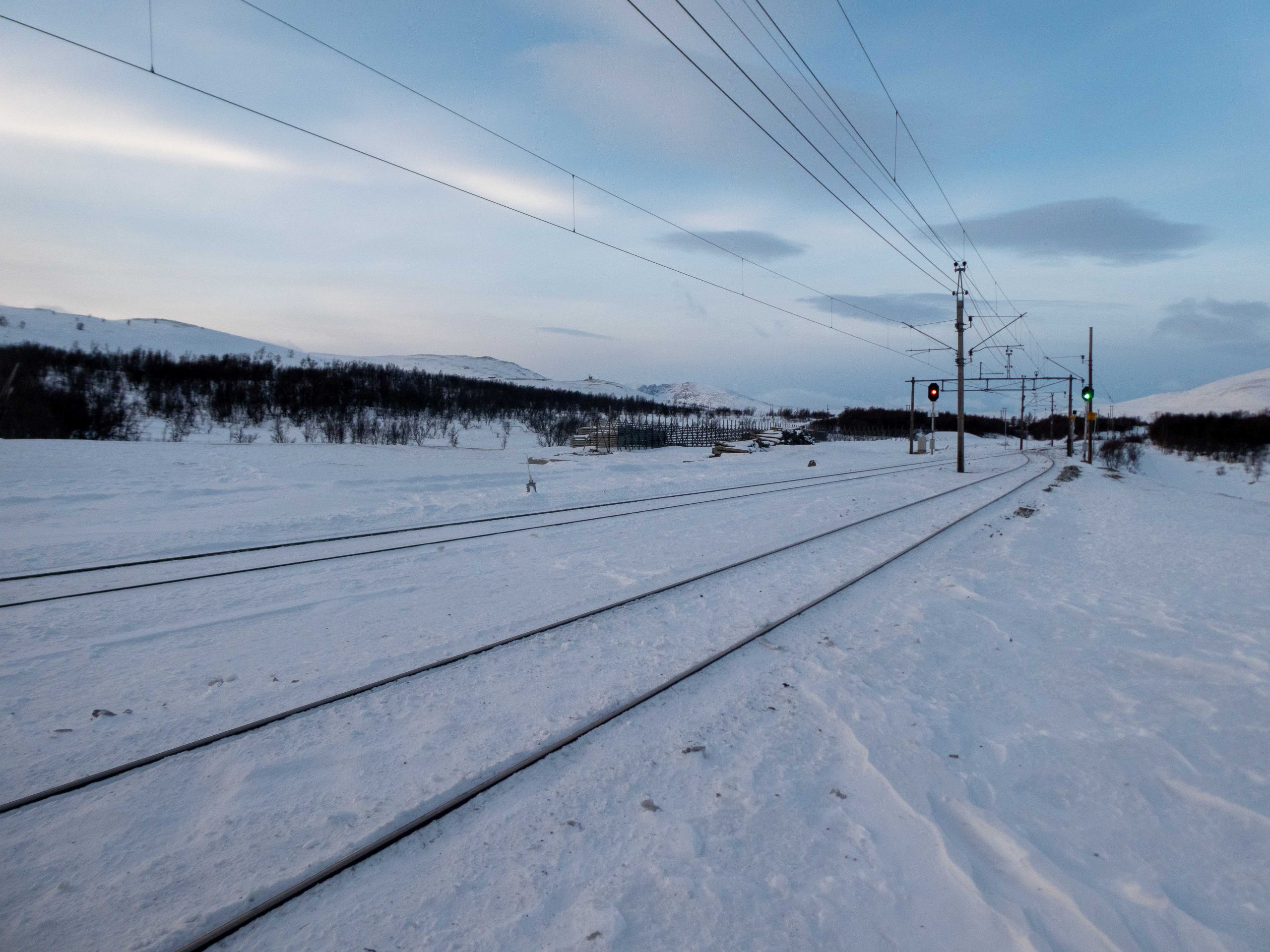

Sunset at Hjerkinn station is another surprise. I’m sat writing in the waiting room when the clouds grab my attention. I go outside. They are different in intensity either side of the valley. The deep blue sky to the south is a rich variety of indigoes. The tops of the white mountains catch the final trace of pink as the whole scene darkens into an early night.


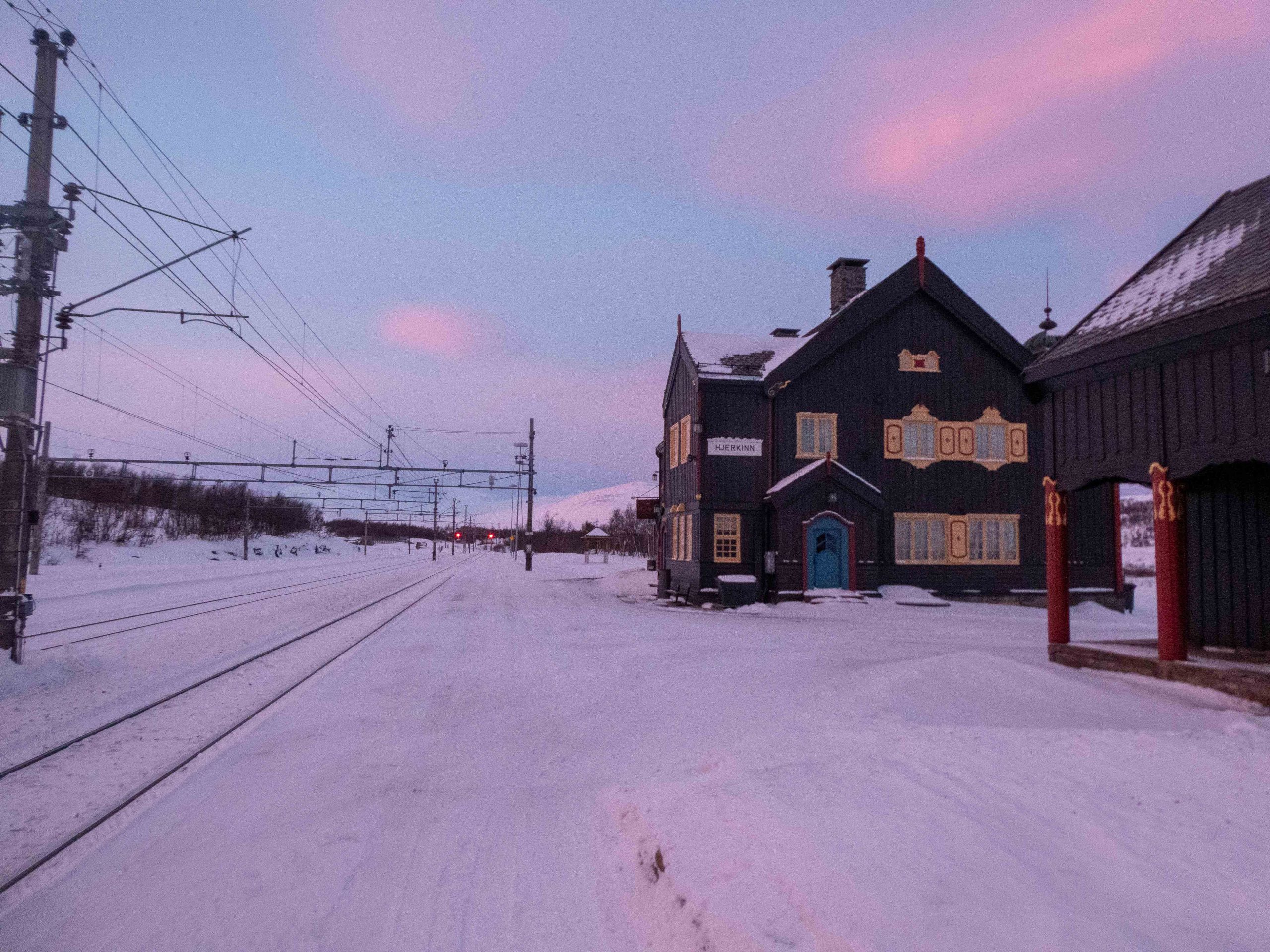
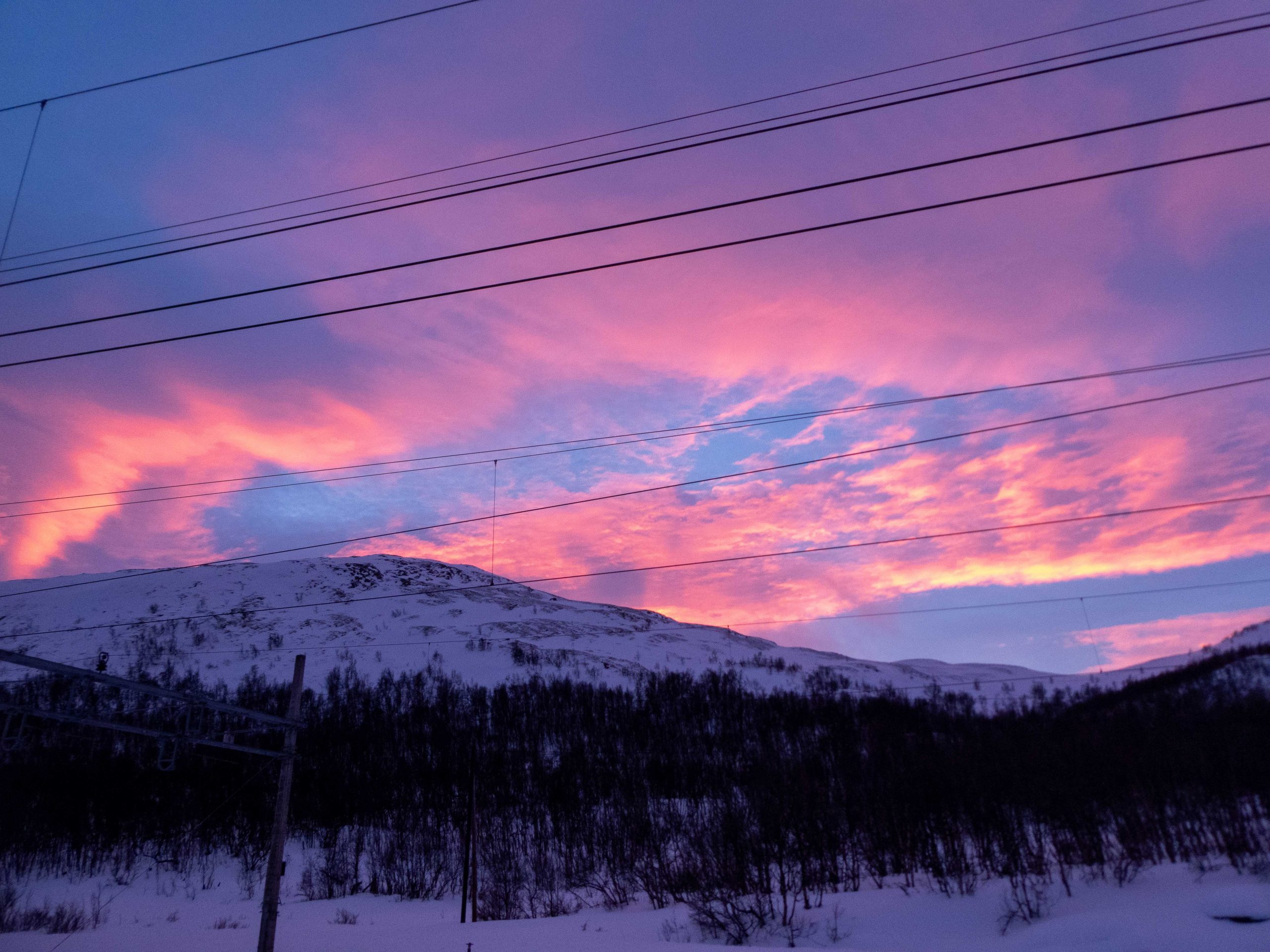
Eventually the 17:20 train rolls into the station, then onwards to Oslo.

Saturday 13th January
All day blogging and checking trains to Uppsala for tomorrow.
Sunday 14th – Wednesday 17th January 2024: Uppsala
Sunday 14th : Train Oslo 13:32-21:15 Uppsala C.
Monday 15th – Wednesday 17th : Bergsbrunna, Upsalla
Three relaxing days with John, Kirsten, Viggo, Unni and Ivar, cats Hagrid and Maeve, and dogs Siri and Taika. John was the biologist in PNG when I was in Lae, staying much longer than I did. Although we have met briefly a few times more recently (because of Malcolm and because by chance an ex-work colleague has a home in Sidmouth), it has been great to spend some real time with John and his family, and learn more about his life since PNG, all biodiversity and nature conservation work, much of it community-based, and an essential component of One Welfare, which Kirsten is also involved in, currently through work on responsible antibiotic use – something Sweden seems a long way ahead of UK on.

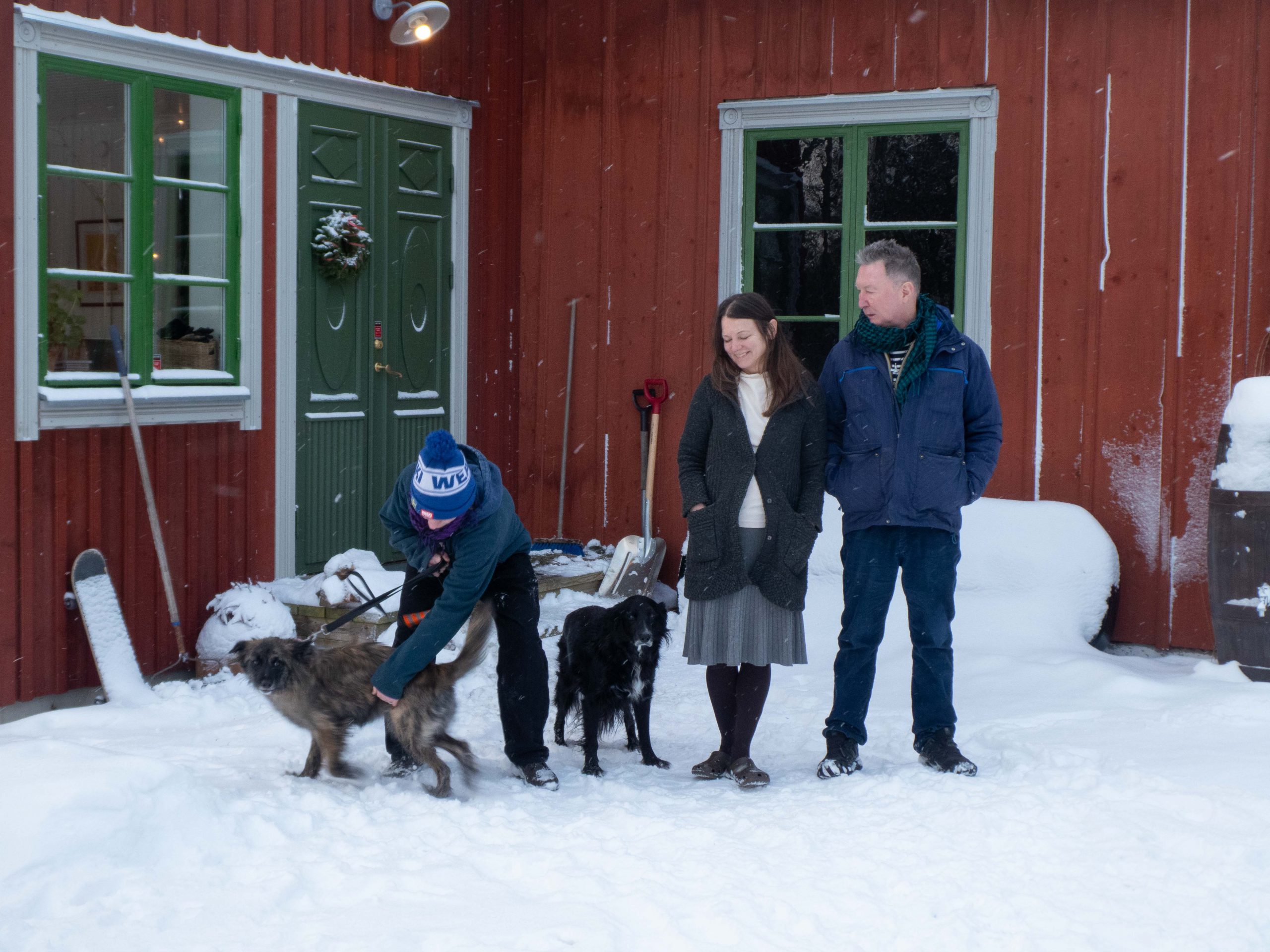
We walked with Siri and Taika in the surrounding forest:

John, Viggo and I spent a day in Upsalla, which has a castle, a cathedral, a university, and a river running through it:
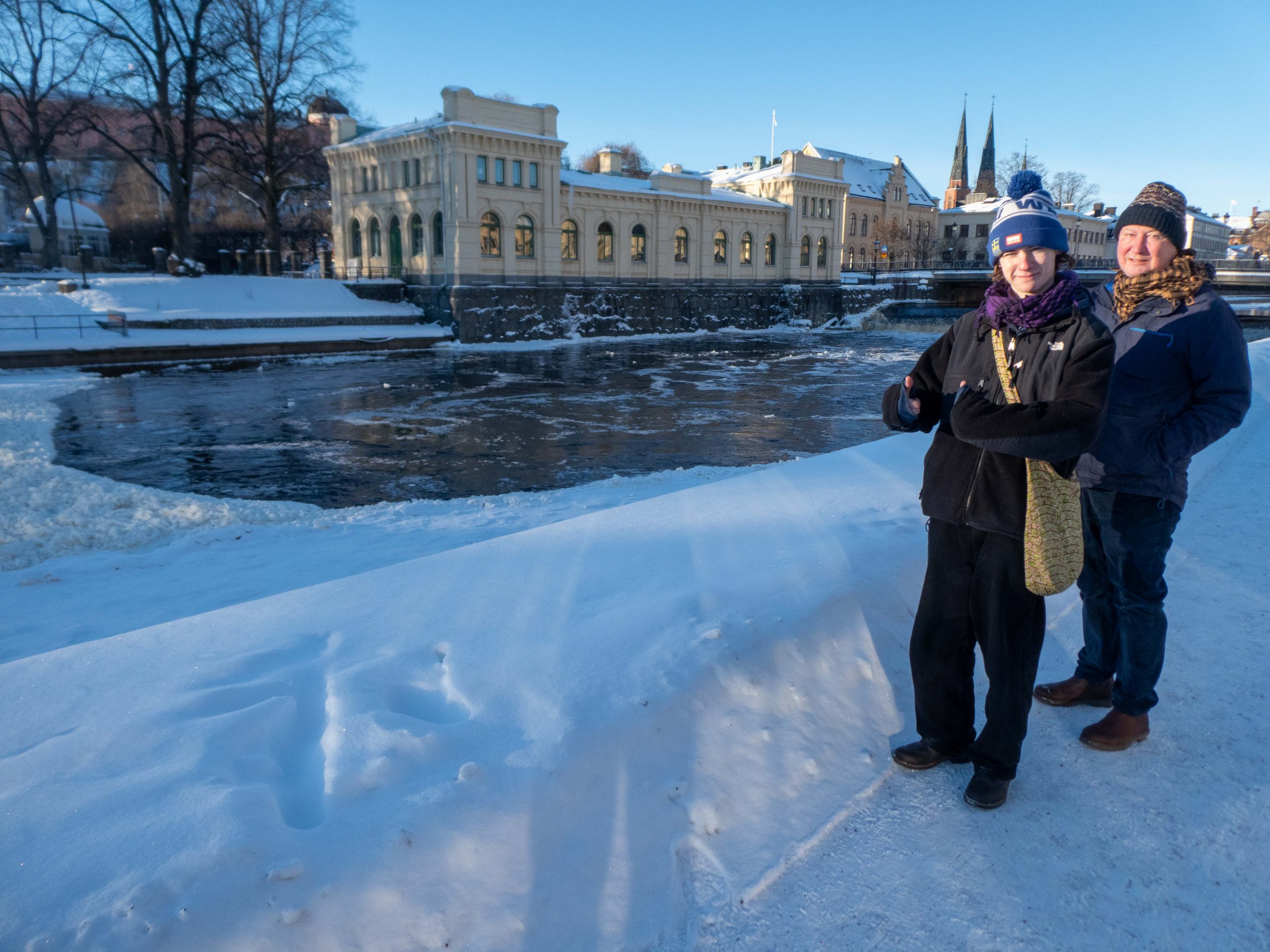




We followed in the footsteps of Linnaeus, who lived and worked in Upsalla, and whose botanic teaching trails are still marked out:


Saw a variety of birds (most in John’s garden), including Blue Tit, Marsh/Willow Tit, Coal Tit, Great Tit, Nuthatch, Bullfinch (m&f), Yellowhammer, Greater Spotted Wooodpecker, Blackbird, Fieldfare, Magpie, Jackdaw, Hooded Crow, Raven, Common Gull, Mallard Duck and Sea Eagle. We also saw a gathering of migrating ?Whooper swans in the far distance (not clearly enough for me to add them to my seen and identified list unfortunately) and John suspected the Sea Eagle may have been preying on them.


Hagrid seems to have escaped my camera’s attention, though he did spend a few hours sleeping on my tummy while I snoozed!
After three days of being made to feel part of the family and with John’s excellent catering – evening meals organised around Kirsten’s work, Viggo’s work and social life, Unni and Ivar’s school, dance, sport and friend schedules – a perfect and relaxing last episode to my trip – it is time to set off home.
Thursday 18th – Sunday 21st January 2024: Uppsala to Sidmouth
Thursday 18th January: Trains Uppsala C 11:10-11:47 Stockholm 16:20-21:20 Malmo C 22:50-23:33 Koebenhavn H
Friday 19th January: Trains: Koebenhavn H 11:26-16:03 Hamburg Hbf 17:01-18:21 Hannover Hbf 18:31-21:11 Duesseldorf Hbf
Saturday 20th January: Duessaldorf Hbf 10:40-12:05 Aachen Hbf 12:37-12:50 Welkenraedt 13:25-15:00 Bruxelles-Midi
Interlude in Welkenraedt:


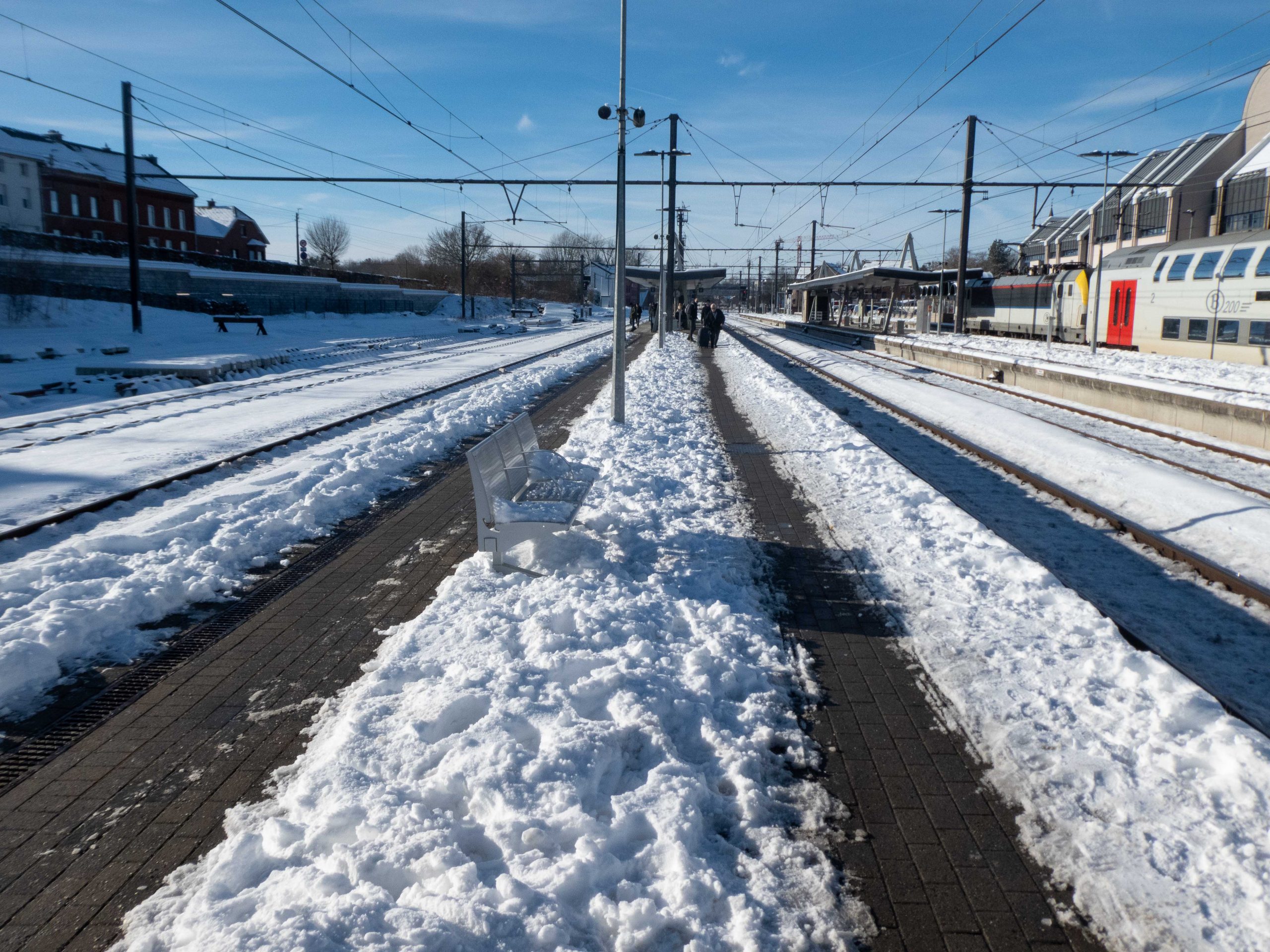

Sunday 21st January: Trains: Bruxelles-Midi 12:56-(Eurostar)-13:57 (+1hr) London St Pancras Intl, London Paddington 15:02-17:12 Exeter St Davids 17:54-18:03 Digby & Sowton. Bus: Sowton Park & Ride c18:15-19:00 Sidmouth!
Am shocked when we emerge from the Chunnel and there is no snow!
A sign from Narvik illustrating the length of Norway in relation to the rest of Europe and the North Pole:

The end of a great trip. These two screenshots from the excellent Eurail App show my recent train trips side-by-side: in January 2023 (without the Bergen-Kirkenes boat trip) and December 2023-January 2024 (without the leg up to Svalbard):


Arrive home to find a storm has ripped a panel off my sun room roof – back to life, back to reality …

… something to sort out before the next trip ….