Bindweed

In lockdown I installed solar panels on my roof and I cleared the bindweed that had spread itself across a large part of a hedge in my back garden.

My solar panels sit big and solid on my roof. The bindweed filled only a small part of my council green bin. Thinning the honeysuckle which had lain beneath the bindweed looking stifled, I found it laced with a fine dry filigree network of threads that had been the previous years’ growths of bindweed. The honeysuckle, I have been happy to see, has regained its good humour, bursting with new leaves and flowers. And the bees, which were enjoying the bindweed’s simple white trumpet flowers, have transferred their interest to the more complex floral arrangements of the honeysuckle.

While I was managing the solar panel installation, and while the bindweed was growing, climbing, spreading, at some point I read a book on global capitalism, and was reminded that while I was engaged in my domestic tasks, and while the bindweed was going about its bindweed business, other people were moving capital about between companies that make and sell clothes, or deliver letters and parcels, or consolidate the processes of marketing, processing and manufacturing the foods we eat. Only tangentially, through the light it shed on hedge funds, venture capital and other new economic instruments, did it touch on how that same capital also moves into weapons development, manufacture, and deployment, the rebuilding of whole countries afterwards, and into whole new sectors that emerge to satisfy our consumer urges and deal with our other complex needs, the management companies that buy out health providers, the vets, the dentists, the opticians, the fur and puppy farms, the chicken, pig, cattle producers, the insurance companies, the charitable, development and disaster industries.

Bindweed could enter itself into a competition for the most efficient of plants. It wastes next to no resources on building itself a skeleton. Instead, mostly water in tough but filmy tubes, it climbs up the stems of other plants until it gets to the sunshine whereupon it drapes its leaves like washing spread out to dry across the top of everything else that has grown up there, taking all the light and casting all below it into deathly shade. Its leaves then manufacture long chain carbohydrates and other complex chemicals, stored energy, building materials, and manufacturing stock, and pumps them all down, some whole, some as components, into its robust storage pipe roots which it lays down in long lines through the soil, pushing through anything in its way, happily passing through a potato as readily as through loam or building rubble. Any piece of bindweed root contains the resources to burst into new bindweed life. The judges of that competition might point out that its efficiency is entirely contingent on the work of other plants. In its defence, bindweed would point out that it spreads itself as readily across expanses of bald concrete. The judges might say that is not natural or normal, and outside the competition rules. Bindweed, or its advocates, in rejoinder will claim it is the new abnormal, so get over it.

Rather laboriously I organised the installation of solar panels which capture solar energy relatively inefficiently (but which nevertheless sets my old electric meter spinning backwards in rather a fun way) yet clear away in an afternoon the expanse of self-organising bindweed that has been capturing solar energy infinitely (or many times) more efficiently. In lockdown, focussing on the local, it all seems utterly futile.

Bindweed, like us, is the product of around 3.5 billion years of evolution: matter, energy, time, perhaps all one and the same thing, working together, following what we assume to be universal laws, though we don’t know all that they are.

The money I use to pay for the solar panels is of the same system that shifts capital around the world. My solar panels make me feel more virtuous, but they are a drop in the ocean, not much of an answer to anything. We behave as if the laws of economics are as fundamental as the laws of physics, though equally we don’t really know what they are. Yet they are just human constructs. It seems we are destroying the biosphere though life for many of us is easier, more comfortable and diverting than it used to be. We like to think we are cleverer than bindweed. But I’m not sure we have any more choice about what we do than the bindweed does.
Japan 2011 Triple Disaster 3: to the nuclear reactor

On the second day Hazuki, Kanto-san and I go down to the coast to see more of the area.

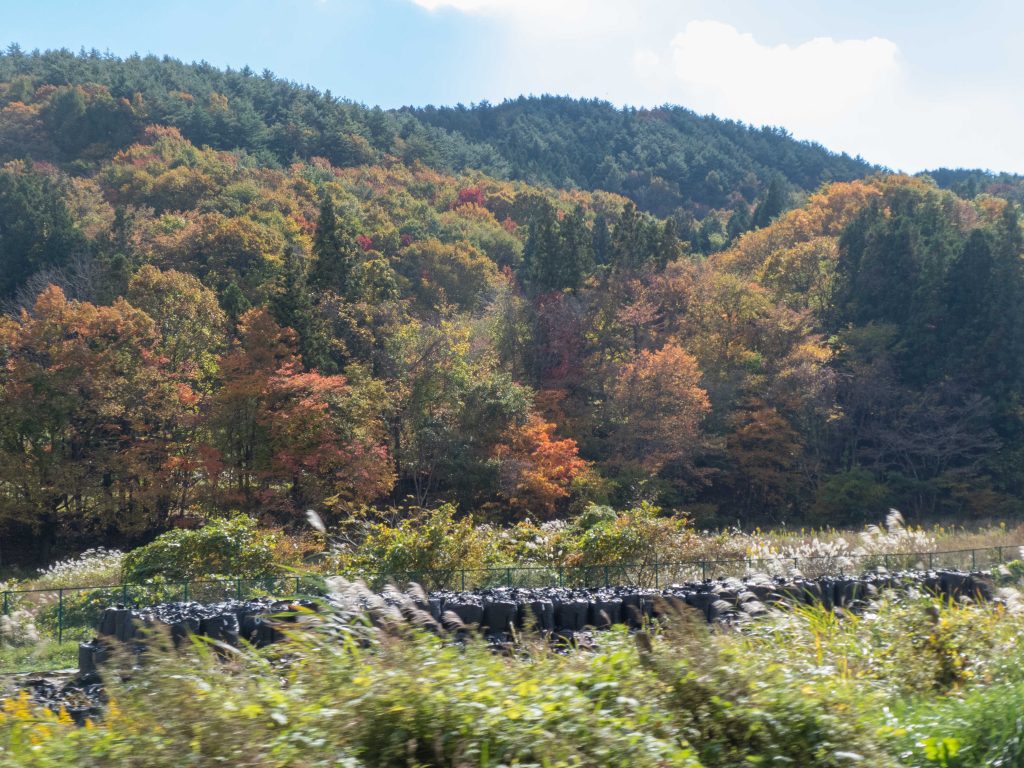
Iitate District is sparsely populated. The hills, covered with mostly deciduous forest, are turning shades of orange and brown in a mild sunny Autumn. In the valley bottoms where there was cultivated land, contaminated top soil has been scraped off and put in bags. The bags of soil sit there, apparently awaiting a decision about what to do with them.

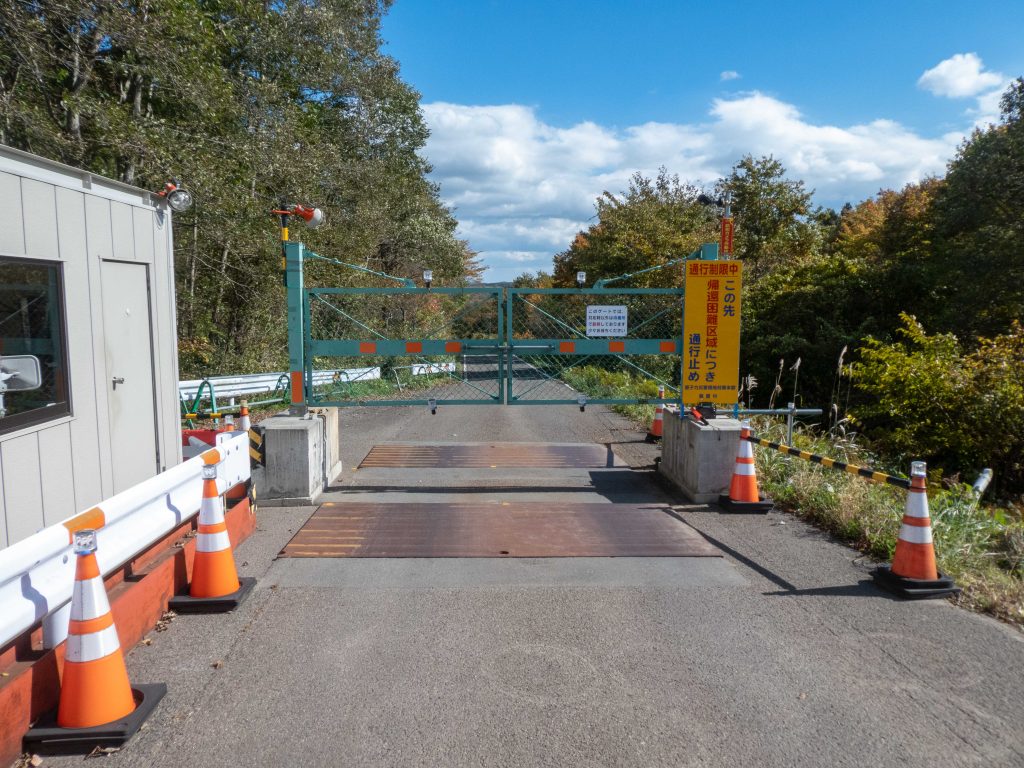
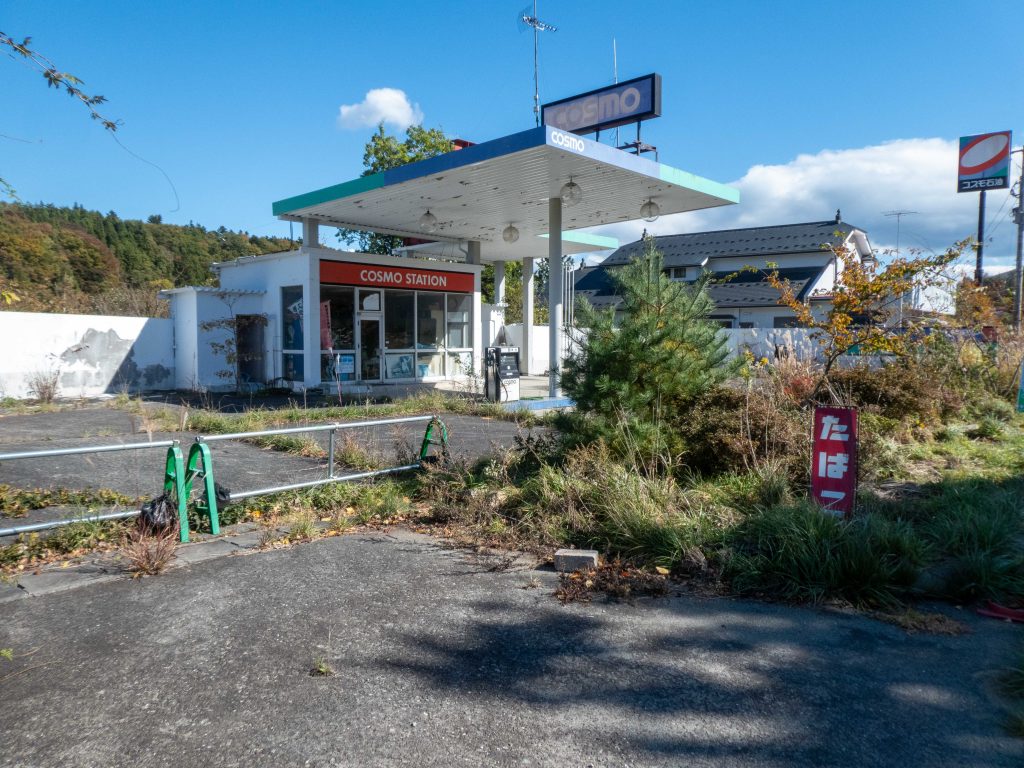
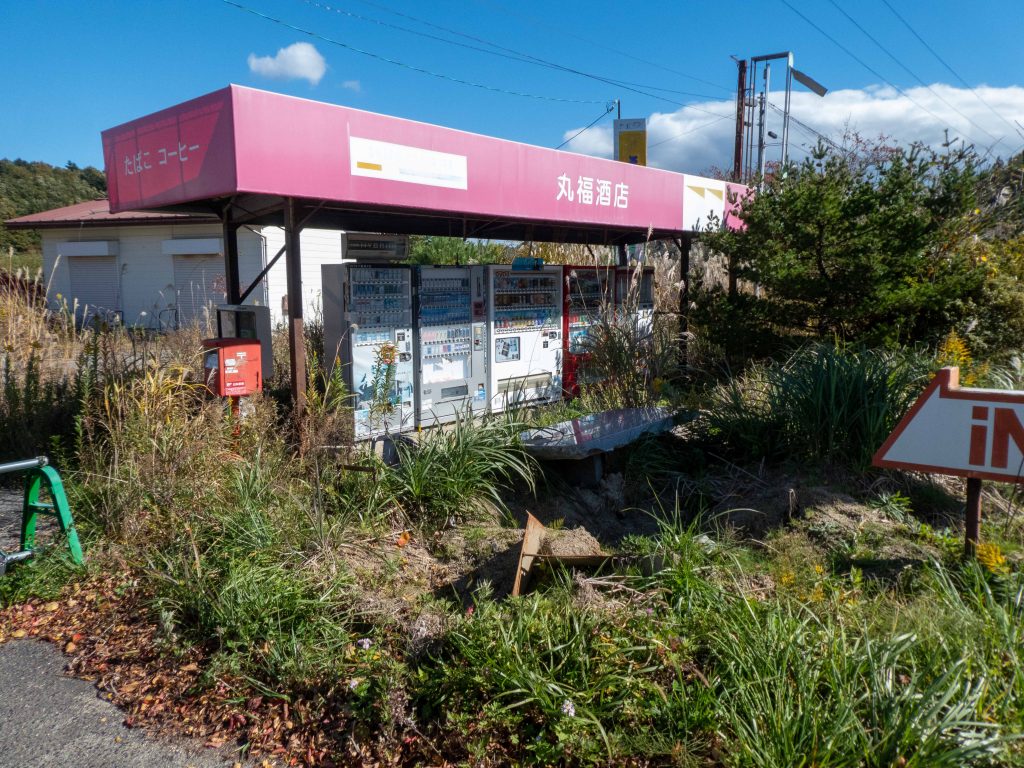
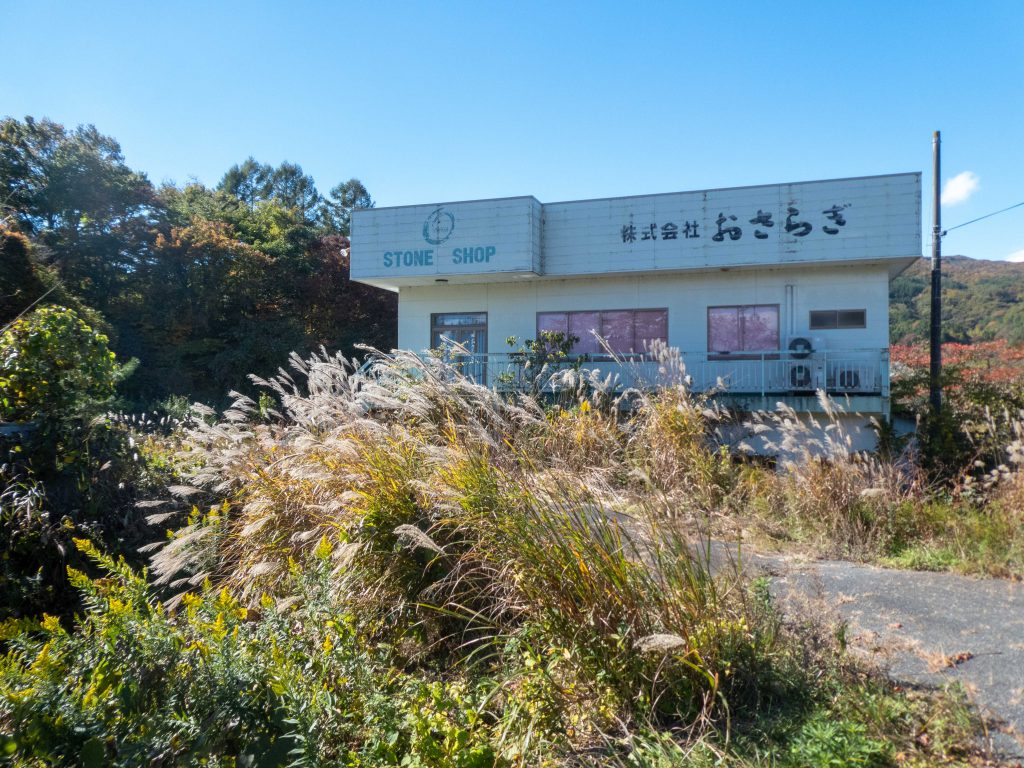
Leaving Iitate District, we drive over the watershed and down, on a road opened only for through-traffic, through a ‘red’ area that remains uninhabitable. Old service stations, vending machines still full of old snacks, shops, business and houses sit neglected. Some places look more cared for as if owners are returning from time to time. Government workers guard closed roads all day long throughout the exclusion zone; all day but not apparently all night, which simplified things in the early days of animal visiting and rescuing.

I am reminded of the wonderful ‘Chernobyl Prayer’ by Svetlana Alexievich with its descriptions and accounts of the area of Belorussia downwind of Chernobyl in the years after the Chernobyl nuclear disaster. I wonder how the Chernobyl area compares to what I am seeing here.

Geiger counters are everywhere from Iitate down to the coast showing background radiation. However, it seems difficult to make sense of the numbers or of the other aspects of this situation. We do not know enough to make sense of global data on radioactivity and its risks to life. Apparently, the company that ran the reactor is now responsible for the clean-up, despite a series of revelations that highlight how it continues to put shareholder profit above public safety. Two years before the disaster, an expert risk assessment highlighted that a massive tsunami was overdue and that tsunami protection was inadequate. The company apparently watered down the report and took no action. In the face of such evidence, there are huge pockets of public scepticism about the clean-up and advice to re-populate the affected area. Fukushima rice apparently sells for less than rice from elsewhere because of public fear. So even if farmers are safe from radiation, they are not safe from market forces.

Two things happened soon after the Fukushima disaster: the government held a ‘Deliberative Poll on Japan’s Energy and Environmental Policy Options’; and all nuclear powerplants in Japan were closed pending safety checks. It seems now, in 2018, that the government and the nuclear industry are keen to re-open those that were closed, and to build more. This nuclear power debate is happening all over the world, and radiation and its invisible effects remain a contentious issue .

as close to the reactor as we get

We arrive at the coast. The main coast road has been open for years, a pragmatic necessity in such a mountainous country with the coastal strip so vital for transportation. But the coastal villages near the reactor are closed to all except those with right of access. Nevertheless, although most old businesses remain closed, new modern convenience stores have opened to cater for the decontamination workers and guards. We get as close to the reactor as we can before being turned back.

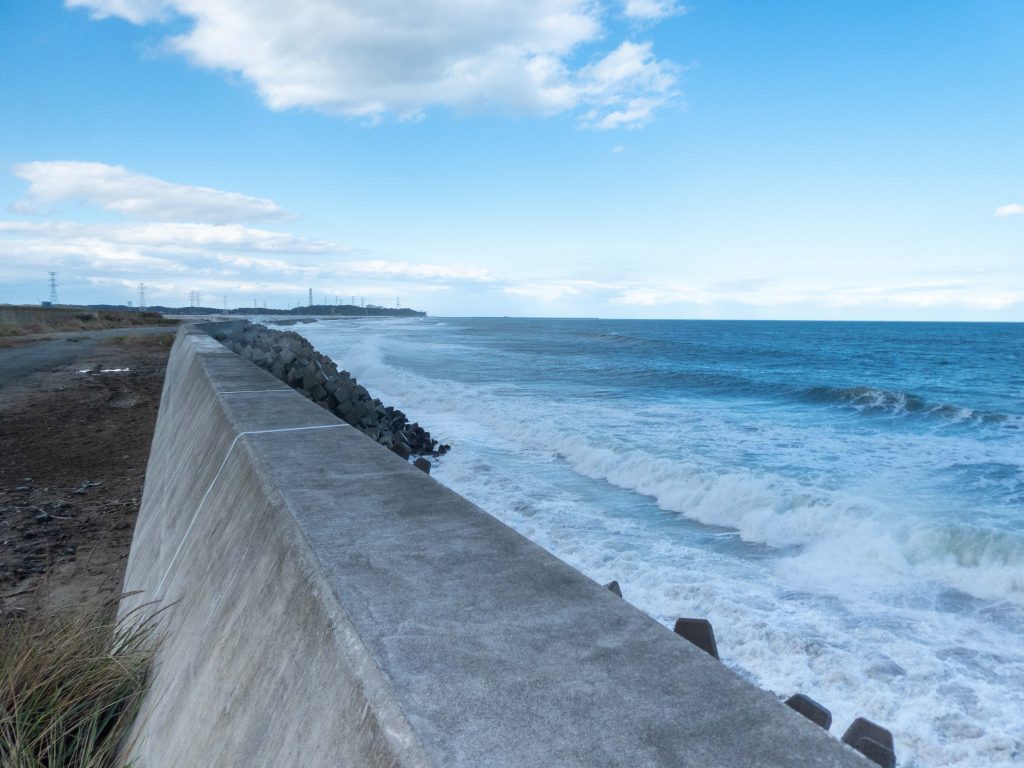
new tsunami wall near Minamisoma

We then drive north up the coast as far as Minamisoma to see how the construction of the new sea wall is getting along, then head back inland. We need to get back to Iitate to walk the dogs.

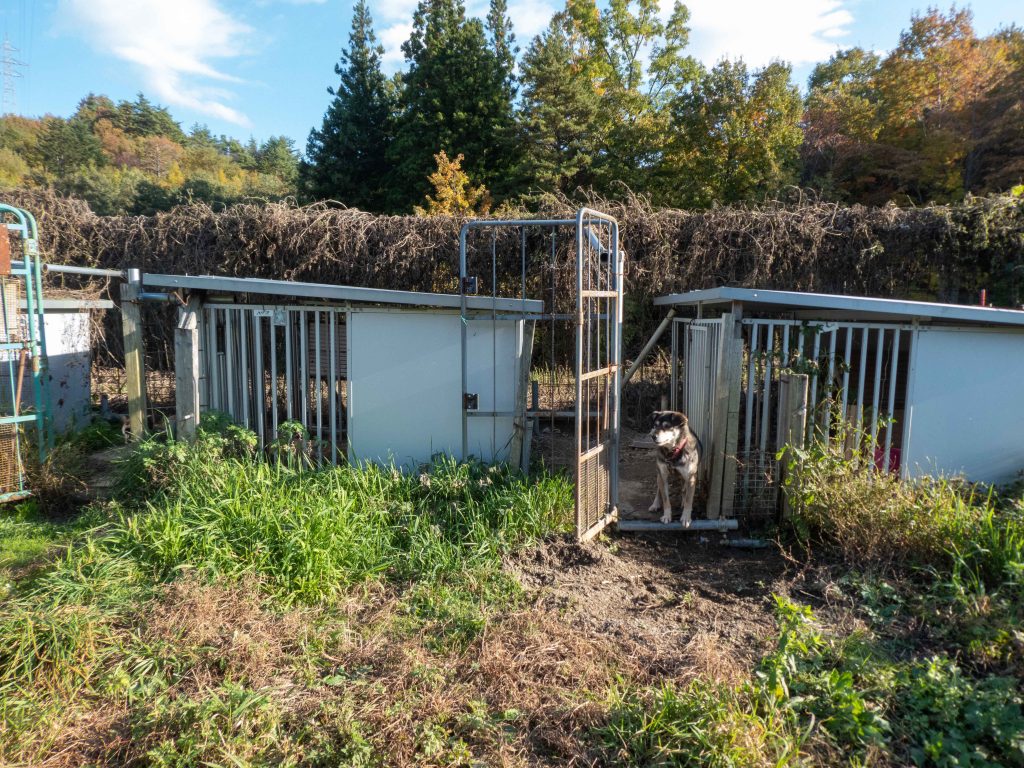
Iitate dog awaiting his walk
awaiting his walk

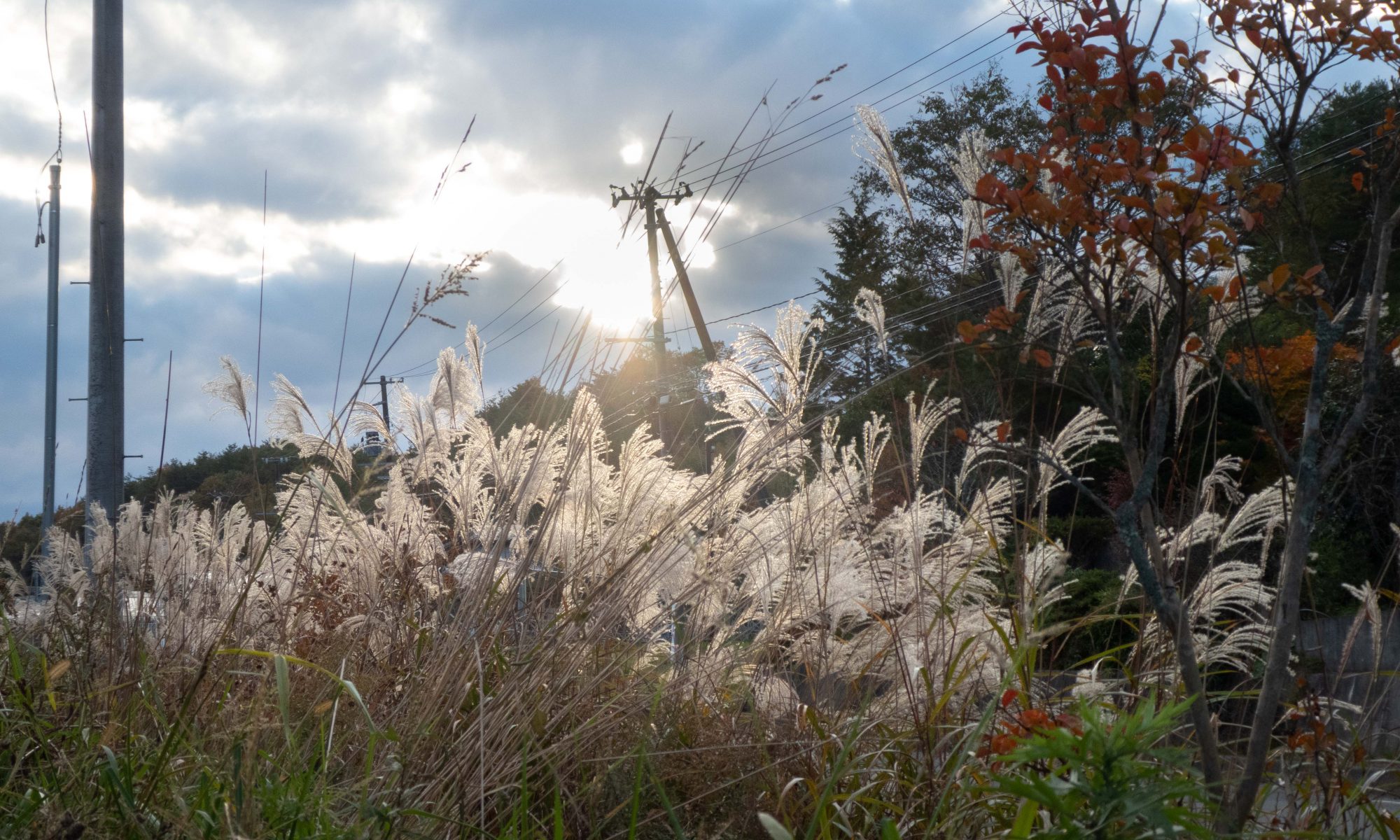
The pictures in these last two blogs show Hazuki Kajiwara, and Kanto-san (with the glasses); various of the Iitate rescue dogs; the scenery around Iitate, down to the coast and towards the reactor; then a little north to Minimasoma to look at the new tsunami-proof sea wall before returning to Iitate for some final dog walking.

Japan 2011 Triple Disaster 2: Iitate dog rescue, Fukushima

Dog at Iitate Rescue Centre

Over two days I travel around Fukushima Prefecture with Hazuki Kajiwara, who I met at the Minding Animals conference in Mexico in January 2018, where we were both presenting on an ‘Animals in Disasters’ panel. Hazuki’s PhD is on companion animals and the Japan 2011 Triple Disaster – earthquake, tsunami, and nuclear disaster, and when I came to Japan, she kindly agreed to show me around Iitate District, Soma County, Fukushima Prefecture, where she did some of her field work.

Bullet trains at Tokyo station

We take the bullet train from Tokyo ninety minutes north to Fukushima City, which lies in the centre of Honshu with mountains to the west, and hill-ranges to the east; hire a car and drive east to visit a dog and cat rescue centre in IItate Village in the hills between Fukushima City and the Fukushima coast.

After the reactor meltdown in March 2011, the government ordered an evacuation of the area and forbade people from taking animals with them. Some people left their companion animals to roam free, but others left them shut in, or tied up outside (normal practice in the rural farming communities). A few owners smuggled their pets out or went back in afterwards to save them, but most didn’t. As a result, it is estimated that up to 18,000 dogs and cats died of starvation, shut in, tied up, or unable to fend for themselves.

It is less clear how many other animals – production animals, horses, wild animals – were in the evacuation zone. We pass an old, deserted dairy farm by the road, but much of rural Fukushima is forested hills. Any farm animals that survived the early period were barred from the food chain and probably slaughtered during the later decontamination process, but statistics are not available. Soma County has a long equestrian tradition, but the fate of horses remains unclear. Of wild animals, a group of about five monkeys sit by the road as we drive past, and a small family of wild pigs disappears into the woods. There seem few birds, but it is Autumn, and as we drive, we don’t have time to spend looking.

Iitate was apparently not in the immediate evacuation zone but was included when the evacuation zone became an exclusion zone.

The Iitate dog and cat rescue started in 2011 to rescue some of the cats and dogs left behind in the initial evacuation zone. Various individuals and groups rescued or fed dogs and cats after the disaster, using different approaches and with different levels of regularity and commitment. Rescued dogs were put up for adoption whenever possible. However, some have complicated stories: broken homes or owners still involved in some way and refusing what might be a better life for their animals. Some owners still see no problem in leaving dogs tied up all the time and will not allow them to be rehomed while volunteers are prepared to feed them and take them for occasional short walks. The values of the rescuers and owners are at odds and this causes conflict, on top of the problems already faced by the dogs. Nevertheless, although rescued and rehomed animals were a tiny percentage of those left behind in the evacuation, the publicity they have generated has shone a light on a dark situation and it is hoped practice will change in future as it did in the US after Hurricane Katrina.

The Iitate centre currently has fifteen dogs and ten cats. Arriving on a Sunday afternoon, we meet four volunteers: Kanto-san (Mrs Kanto) who is currently the main volunteer looking after the centre; a man who comes up from Tokyo three weekends a month to help; and two women from Asakusa, Tokyo, who collect money and dog food from others in Tokyo and come up from time to time to deliver it.

We help walk the dogs on both days and visit some of the supported animals. Walking the dogs means just short lead walks up and down the road as there don’t seem to be open rural tracks, or footpaths through the woods, and none of the dogs seem trained to walk off (or on!) the lead.

Japan 2011 Triple Disaster 1: Introduction

Tsunami warning notice attached to a governemnt building in Namazu, a coastal city

Mid-afternoon, 11th March 2011, a magnitude 9.1 earthquake c75kms off-shore, mid-way up the east coast of Honshu, Japan’s largest island, sets off a massive tsunami which sweeps into Honshu’s east coast. Three onshore waves build up to 40 metres in height, wash up to several kilometres inland, and cause the deaths of around 19,000 people.

Damage from the earthquake and tsunami causes a reactor meltdown at the Daiichi nuclear power-plant between the small towns of Futaba and Okuma on the Fukushima coast. The meltdown releases radio-active material into sea-water, ground-water, and air. A plume of radio-active material blows inland.