
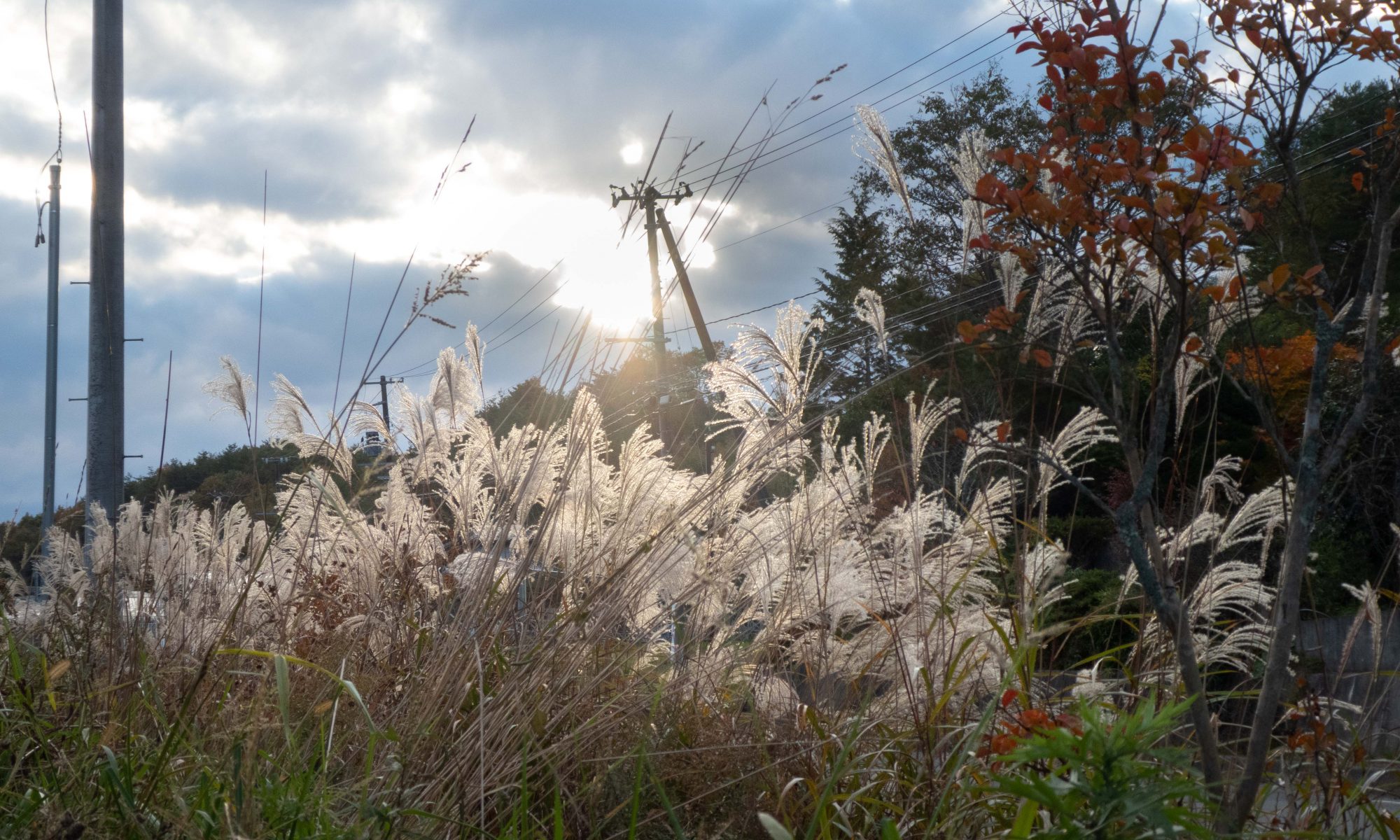
On the second day Hazuki, Kanto-san and I go down to the coast to see more of the area.
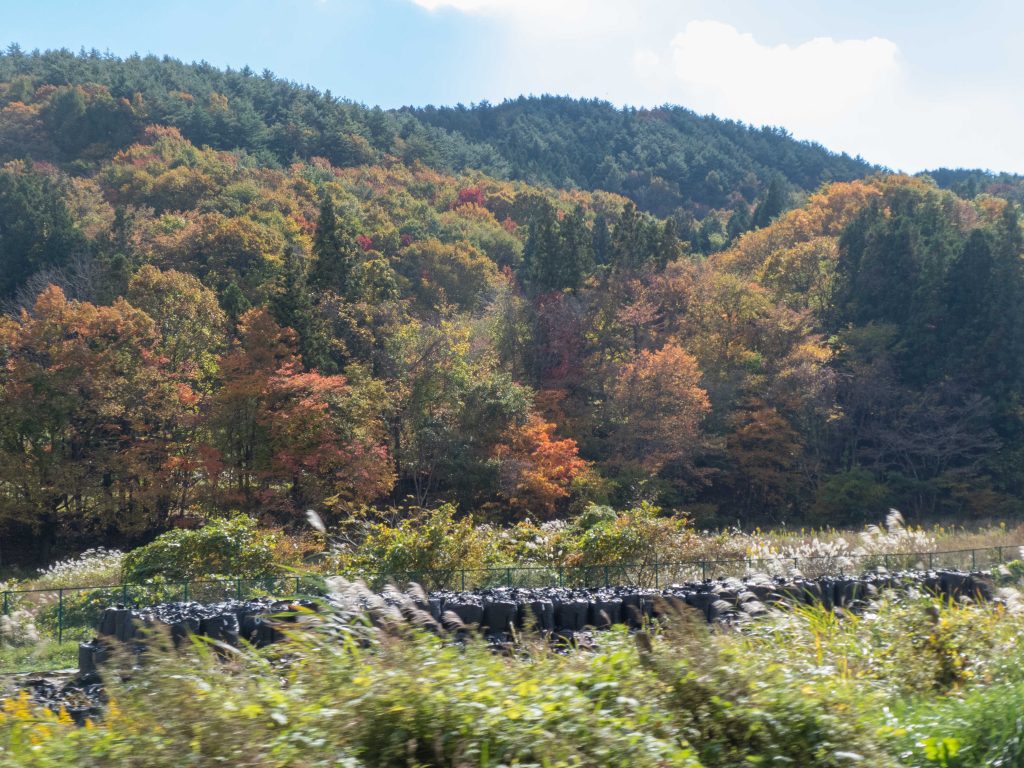
Iitate District is sparsely populated. The hills, covered with mostly deciduous forest, are turning shades of orange and brown in a mild sunny Autumn. In the valley bottoms where there was cultivated land, contaminated top soil has been scraped off and put in bags. The bags of soil sit there, apparently awaiting a decision about what to do with them.
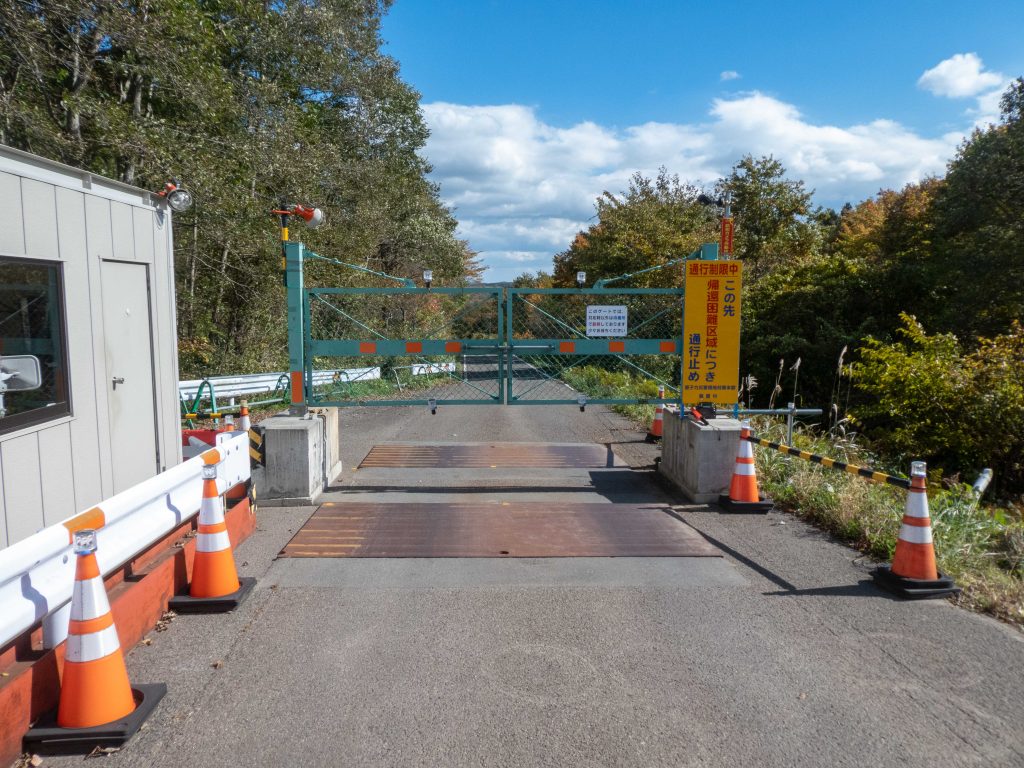
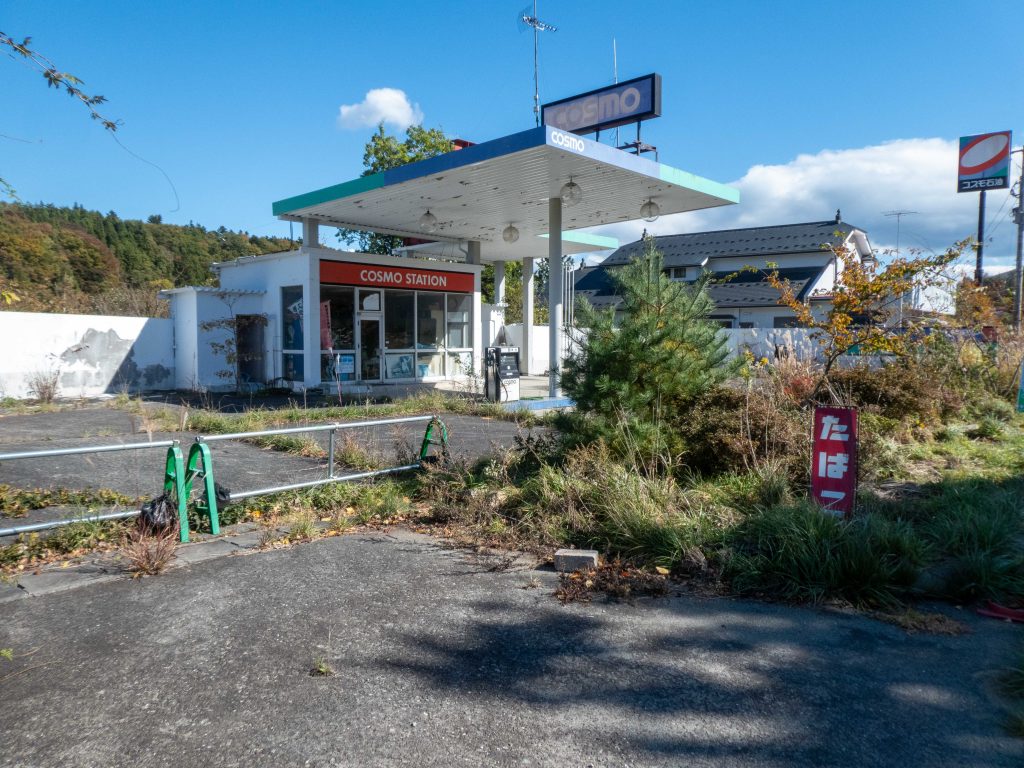
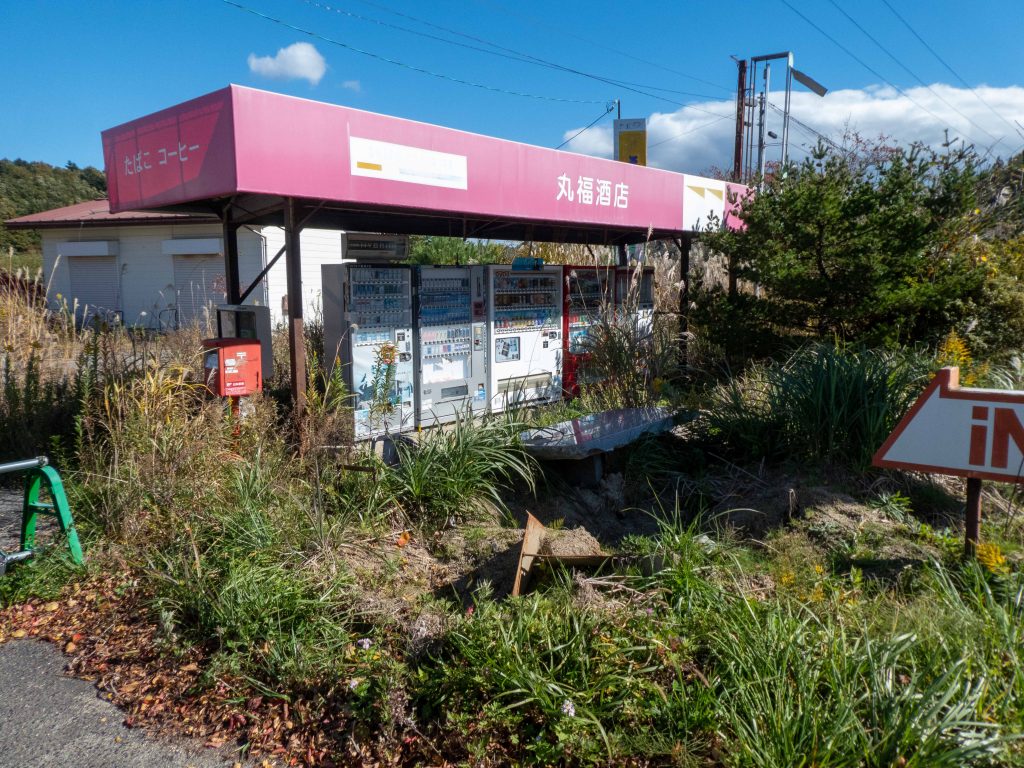
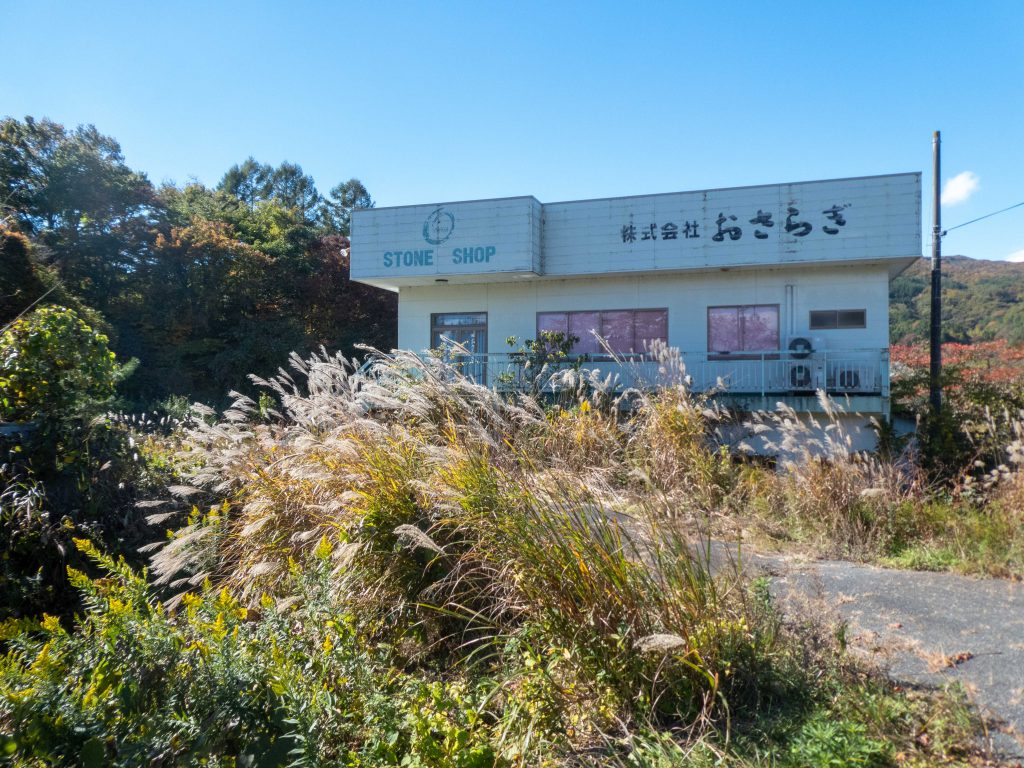
Leaving Iitate District, we drive over the watershed and down, on a road opened only for through-traffic, through a ‘red’ area that remains uninhabitable. Old service stations, vending machines still full of old snacks, shops, business and houses sit neglected. Some places look more cared for as if owners are returning from time to time. Government workers guard closed roads all day long throughout the exclusion zone; all day but not apparently all night, which simplified things in the early days of animal visiting and rescuing.
I am reminded of the wonderful ‘Chernobyl Prayer’ by Svetlana Alexievich with its descriptions and accounts of the area of Belorussia downwind of Chernobyl in the years after the Chernobyl nuclear disaster. I wonder how the Chernobyl area compares to what I am seeing here.
Geiger counters are everywhere from Iitate down to the coast showing background radiation. However, it seems difficult to make sense of the numbers or of the other aspects of this situation. We do not know enough to make sense of global data on radioactivity and its risks to life. Apparently, the company that ran the reactor is now responsible for the clean-up, despite a series of revelations that highlight how it continues to put shareholder profit above public safety. Two years before the disaster, an expert risk assessment highlighted that a massive tsunami was overdue and that tsunami protection was inadequate. The company apparently watered down the report and took no action. In the face of such evidence, there are huge pockets of public scepticism about the clean-up and advice to re-populate the affected area. Fukushima rice apparently sells for less than rice from elsewhere because of public fear. So even if farmers are safe from radiation, they are not safe from market forces.
Two things happened soon after the Fukushima disaster: the government held a ‘Deliberative Poll on Japan’s Energy and Environmental Policy Options’; and all nuclear powerplants in Japan were closed pending safety checks. It seems now, in 2018, that the government and the nuclear industry are keen to re-open those that were closed, and to build more. This nuclear power debate is happening all over the world, and radiation and its invisible effects remain a contentious issue .

We arrive at the coast. The main coast road has been open for years, a pragmatic necessity in such a mountainous country with the coastal strip so vital for transportation. But the coastal villages near the reactor are closed to all except those with right of access. Nevertheless, although most old businesses remain closed, new modern convenience stores have opened to cater for the decontamination workers and guards. We get as close to the reactor as we can before being turned back.
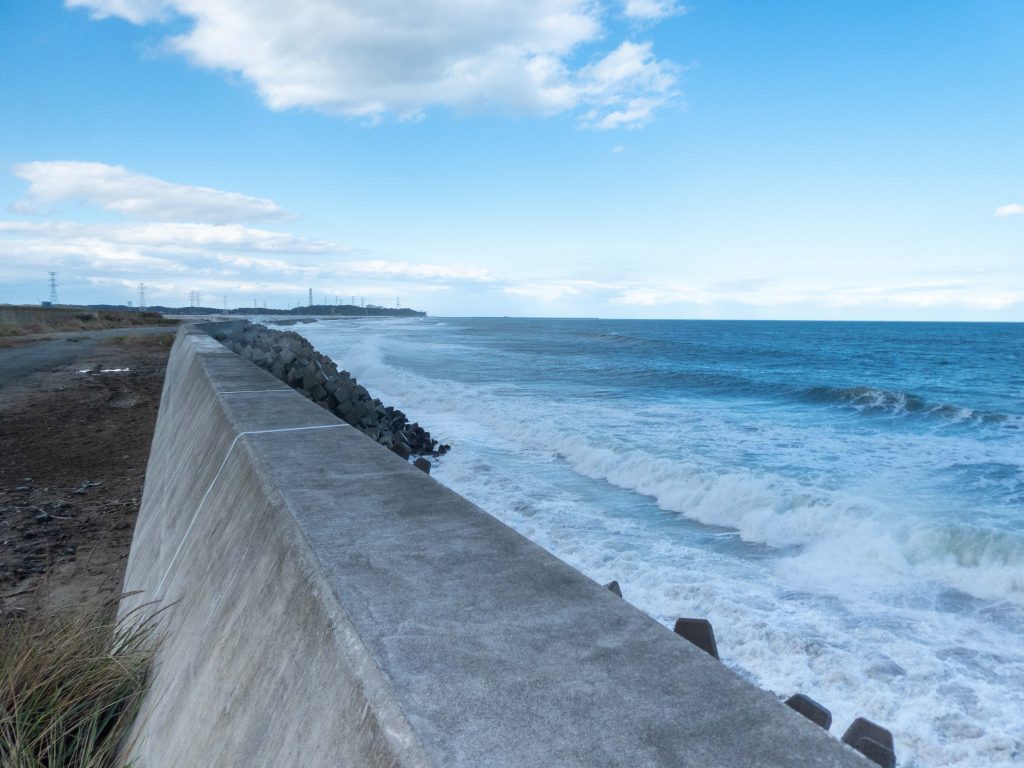
We then drive north up the coast as far as Minamisoma to see how the construction of the new sea wall is getting along, then head back inland. We need to get back to Iitate to walk the dogs.
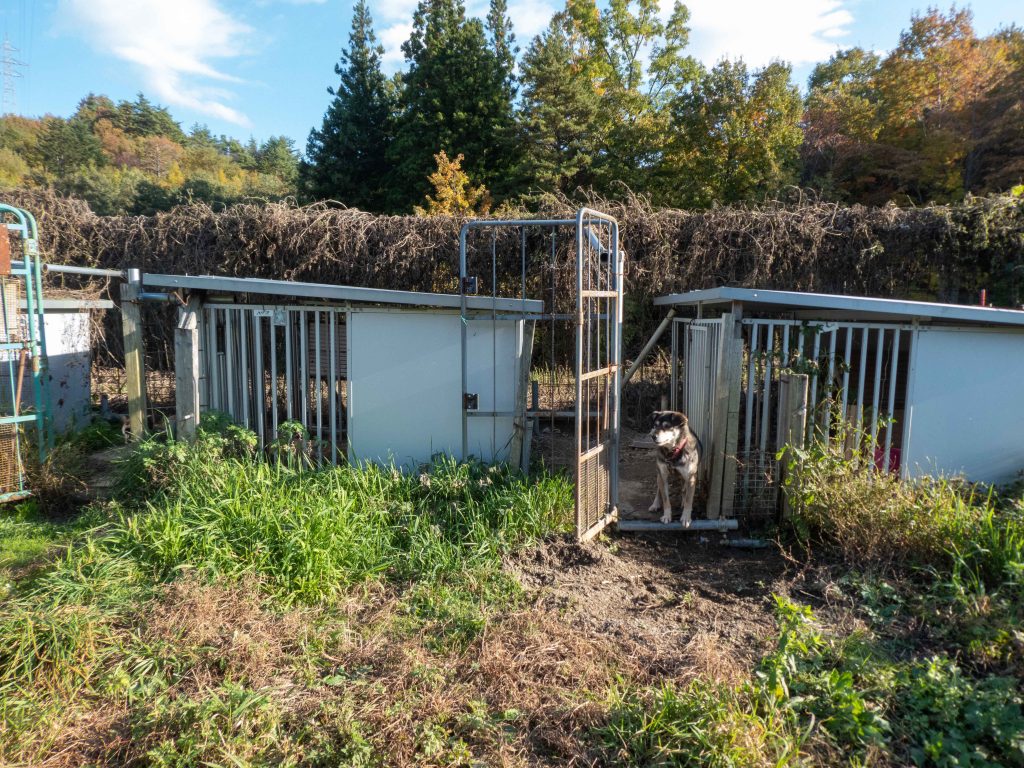
The pictures in these last two blogs show Hazuki Kajiwara, and Kanto-san (with the glasses); various of the Iitate rescue dogs; the scenery around Iitate, down to the coast and towards the reactor; then a little north to Minimasoma to look at the new tsunami-proof sea wall before returning to Iitate for some final dog walking.